Meat processing plants face some of the strictest hygiene requirements in the food industry. From slaughtering and cutting to packaging and storage, every stage of production carries a risk of bacterial contamination and cross-contamination.
Maintaining effective food safety in meat processing requires more than regular cleaning. A complete hygiene management system should include proper employee hygiene control, equipment cleaning, and contamination prevention solutions.
Investing in professional meat processing hygiene equipment helps companies meet food safety standards, improve production efficiency, and protect consumers from foodborne risks.
Why Hygiene Management Is Critical in Meat Processing Plants
Meat products provide an ideal environment for bacteria growth if hygiene controls are insufficient. Common risks include:
- Bacteria transferred through workers’ hands, gloves, and footwear
- Contaminants entering production areas from outside environments
- Cross-contamination between raw meat and finished products
- Poor employee hygiene practices
According to food safety guidelines, employee movement is one of the main causes of contamination inside food factories. Therefore, controlling personnel hygiene at production entrances is a key step in preventing contamination.
A well-designed meat processing plant hygiene system should control:
✓ Hand cleaning and disinfection
✓ Footwear cleaning and sanitizing
✓ Worker access control
✓ Production area separation
✓ Regular equipment sanitation
Key Hygiene Equipment for Meat Processing Plants
1. Hygiene Station: The First Line of Defense
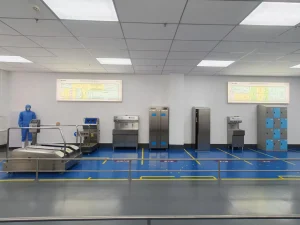
A hygiene station is one of the most important pieces of personnel hygiene equipment in modern meat processing facilities.
Installed at production entrances, hygiene stations provide multiple hygiene functions in one system, including:
- Hand washing
- Hand drying
- Hand disinfection
- Shoe sole cleaning and sanitizing
- Access control before entering production areas
By ensuring employees clean and disinfect their hands and footwear before entering the workshop, hygiene stations significantly reduce the risk of contaminants being brought into clean areas.
Benefits of Hygiene Stations:
- Reduce cross-contamination risks
- Improve employee hygiene compliance
- Save production space
- Create a standardized hygiene process
- Support HACCP and food safety management systems
For large meat processing plants, automatic hygiene stations allow multiple employees to complete hygiene procedures quickly without affecting production efficiency.
2. Boot Washer: Effective Footwear Cleaning Solution
Workers’ boots can carry dirt, bacteria, and organic materials from different areas of the factory. Without proper cleaning, contaminated footwear can spread microorganisms throughout production zones.
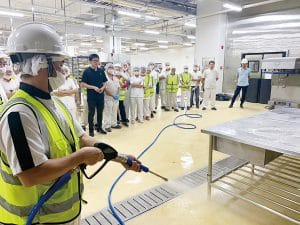
A professional boot washer is designed to clean and sanitize safety boots efficiently.
Typical boot washing functions include:
- High-pressure water cleaning
- Rotating brushes for sole and side cleaning
- Detergent application
- Disinfection process
Why Meat Plants Need Boot Washers:
✔ Remove meat residues and grease from boots
✔ Reduce bacterial transmission through footwear
✔ Improve workshop cleanliness
✔ Reduce manual cleaning time
Boot washers are commonly used in:
- Meat cutting rooms
- Slaughterhouses
- Poultry processing plants
- Sausage production lines
- Cold storage areas
3. Personnel Hygiene Equipment for Employee Safety Control
Employees are the most important factor in maintaining hygiene standards. Therefore, professional personnel hygiene equipment plays an essential role in food safety management.
Common equipment includes:
Hand Washing Systems
Automatic hand wash systems help ensure employees follow correct hand cleaning procedures:
- Wet hands
- Apply soap
- Wash hands for 15–20 seconds
- Rinse
- Dry hands
- Apply disinfectant
Hand Dryers
Automatic hand dryers reduce contact points and help prevent secondary contamination caused by shared towels.
Disinfection Systems
Hand and footwear disinfection equipment provides an additional protection barrier before employees enter production areas.
How Hygiene Equipment Improves Food Safety in Meat Processing
A complete hygiene system creates multiple protection barriers:
Step 1: Employee Entry Control
Workers must pass through hygiene equipment before entering production areas.
↓
Step 2: Hand and Footwear Cleaning
Hands and boots are cleaned and disinfected to remove contaminants.
↓
Step 3: Controlled Production Environment
Cleaner employees help maintain safer processing conditions.
↓
Step 4: Reduced Contamination Risk
Lower risk of bacteria spreading to meat products.
Choosing the Right Hygiene Equipment for Meat Processing Plants
When selecting meat processing hygiene equipment, companies should consider:
1. Production Scale
Small facilities may require individual boot washers and hand sanitation units, while large factories often need integrated hygiene stations.
2. Workshop Layout
Equipment should be installed at key hygiene control points:
- Employee entrances
- Changing rooms
- Production area entrances
- High-risk processing zones
3. Cleaning Requirements
Different areas may require different solutions depending on:
- Production type
- Contamination risk
- Cleaning frequency
- Food safety regulations
4. Material and Durability
Food processing equipment should use hygienic materials such as stainless steel, which provides:
- Corrosion resistance
- Easy cleaning
- Long service life
Conclusion
Effective hygiene management is essential for every meat processing plant. By implementing professional meat processing hygiene equipment, companies can create safer production environments, reduce contamination risks, and improve compliance with food safety standards.
Solutions such as hygiene stations, boot washers, and personnel hygiene equipment provide reliable protection against bacteria transfer and help maintain consistent hygiene practices.
A complete hygiene system is not only about meeting regulations — it is about building a safer, more efficient, and more trusted meat processing operation.
Related Products:
- Hygiene Station
- Boot Washer
- Hand Washing System
- Personnel Hygiene Equipment
- Meat Processing Cleaning Equipment