Choosing the right poultry processing hygiene equipment is one of the most important decisions for ensuring food safety, preventing cross-contamination, and improving production efficiency. In modern poultry processing plants, hygiene equipment is no longer viewed as individual machines but as part of a complete hygienic engineering system.
Unlike many manufacturing industries, poultry plants process raw biological materials with naturally occurring microorganisms. Without a properly designed hygiene management system, contaminants can spread rapidly through personnel movement, footwear, equipment, tools, water, and air, increasing the risk of cross-contamination, product recalls, production downtime, and regulatory non-compliance.
For this reason, selecting hygiene equipment should never be treated as purchasing standalone machines. Instead, it should be viewed as part of a comprehensive hygienic engineering strategy that integrates personnel hygiene, hygienic zoning, sanitation procedures, workflow optimization, and food safety management.
At WONE, we specialize in engineering-based hygiene solutions for food processing facilities. Rather than simply supplying equipment, we work with customers to design customized hygiene systems based on factory layout, production capacity, personnel flow, and operational requirements—helping processors build safer, smarter, and more efficient production environments.
Why Hygiene Equipment Is Critical in Poultry Processing
Poultry products are particularly susceptible to contamination from pathogens such as Salmonella spp., Campylobacter spp., and Listeria monocytogenes. These microorganisms can be transferred through direct product contact or indirectly via workers, footwear, tools, equipment, and environmental surfaces.
An effective hygiene system serves as a preventive barrier that minimizes contamination throughout the production process. Beyond protecting food safety, it also supports operational efficiency by reducing cleaning time, improving workflow, and facilitating compliance with internationally recognized food safety standards.
A well-designed hygiene system can help processors:
- Prevent cross-contamination between production zones
- Improve employee hygiene compliance
- Reduce microbiological risks
- Enhance production efficiency
- Minimize unplanned downtime
- Simplify sanitation management
- Support successful third-party and regulatory audits
- Protect product quality and brand reputation
For modern poultry processing plants, hygiene management is no longer limited to cleaning equipment—it is an integrated engineering discipline.
Start with Risk Assessment, Not Equipment Selection
One of the most common mistakes is selecting hygiene equipment based solely on budget or product specifications.
Professional hygiene planning begins with a risk assessment.
Before recommending any equipment, engineers should evaluate:
- Factory layout
- Processing capacity
- Number of employees per shift
- Production workflow
- Personnel movement
- Product flow
- Hygienic zoning
- Cleaning procedures
- Existing sanitation challenges
- Future expansion plans
Every poultry facility has unique operational characteristics. A processing plant handling 2,000 birds per day requires a very different hygiene strategy from one processing over 100,000 birds daily.
Choosing equipment without understanding these variables often results in bottlenecks, inconsistent hygiene practices, and unnecessary investment.
Understanding Hygienic Zoning
One of the core principles of hygienic factory design is Hygienic Zoning.
The objective is to prevent microorganisms from moving from contaminated areas into clean production environments.
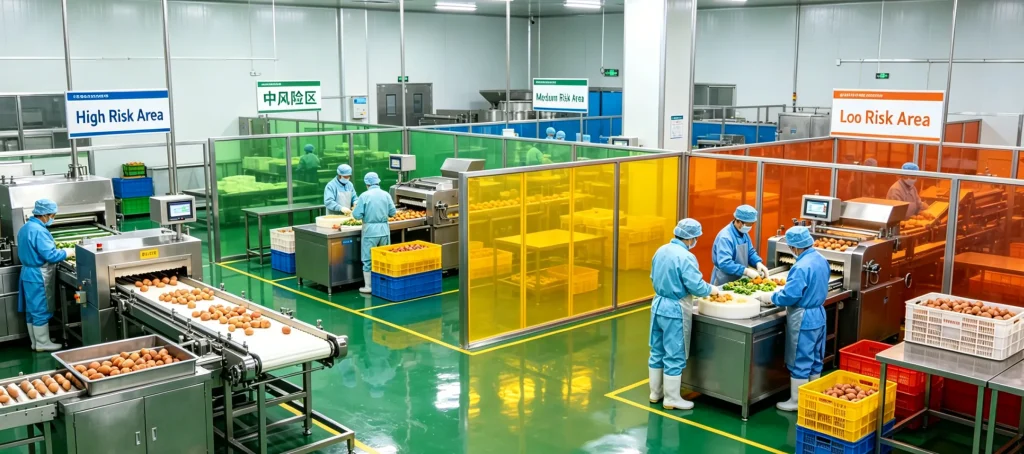
Typical poultry processing facilities are divided into:
- Low Care Area – Live bird receiving and dirty operations
- Transition Zone – Personnel hygiene barrier
- High Care Area – Cutting, trimming, deboning
- High Risk Area – Packaging of ready-to-eat or highly sensitive products
Suggested diagram: Hygienic zoning layout showing Low Care → Transition → High Care → High Risk.
Every transition between zones should include an appropriate hygiene barrier, such as a hygiene station, boot washer, or access control system, ensuring that personnel cannot bypass mandatory sanitation procedures.
Typical Contamination Routes in Poultry Processing
Cross-contamination can occur through multiple pathways.
The most common contamination routes include:
- Personnel movement
- Contaminated footwear
- Shared tools and equipment
- Cleaning utensils
- Airflow
- Water splash
- Material transportation
Selecting Hygiene Equipment for Each Processing Area
Rather than installing identical equipment throughout the facility, hygiene solutions should be selected according to the contamination risks associated with each processing stage.
| Processing Area | Primary Hygiene Risk | Recommended Solution |
|---|---|---|
| Employee Entrance | Personnel contamination | Hygiene Station with access control |
| Slaughter Area | Blood and organic residue | Foam Cleaning System |
| Evisceration | Pathogen transfer | Hygiene Station + Boot Washer |
| Cutting & Deboning | Product cross-contamination | Touch-free Hand Hygiene System |
| Packaging | Finished product contamination | Air Disinfection System |
| Cold Storage | Personnel movement | Boot Cleaning Station |
This risk-based approach improves hygiene efficiency while optimizing equipment investment.
Personnel Hygiene: The First Critical Control Point
Employees remain one of the most significant vectors for contamination within poultry processing facilities.
An effective personnel hygiene system should include:
- Automatic hand washing
- Touch-free soap dispensing
- Hand sanitizing
- High-speed hand drying
- Sole cleaning
- Boot washing and sanitizing
- Controlled access via turnstiles
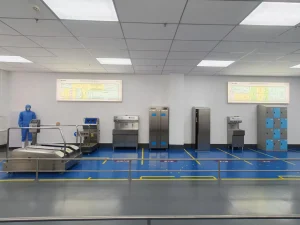
By integrating these functions into a single hygiene station, facilities can standardize sanitation procedures and ensure that every employee follows the required sequence before entering production.
Suggested diagram: Employee hygiene process flow (Changing Room → Boot Cleaning → Hand Washing → Sanitizing → Drying → Turnstile → Production Area).
Foam Cleaning Systems: Improving Sanitation Efficiency
Daily sanitation is essential in poultry processing, where blood, fat, feathers, and protein residues accumulate rapidly.
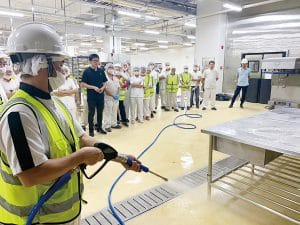
Foam cleaning systems provide consistent detergent application, allowing chemicals to adhere to vertical and irregular surfaces for sufficient contact time before rinsing.
Compared with conventional manual cleaning, foam systems offer several operational advantages:
- Uniform detergent coverage
- Reduced water consumption
- Lower chemical usage
- Improved cleaning consistency
- Reduced labor intensity
- Shorter sanitation cycles
Mobile foam cleaning units are ideal for flexible operations, while centralized foam systems are recommended for large-scale processing plants with multiple production lines.
Environmental Hygiene Beyond Surface Cleaning
Food safety depends not only on clean equipment but also on a hygienic processing environment.
Airborne microorganisms and dust particles can contribute to contamination, particularly in high-care and packaging areas.
Environmental hygiene solutions may include:
- Air disinfection systems
- Controlled airflow
- Positive air pressure in high-care zones
- Hygienic drainage design
- Scheduled environmental monitoring (EMP)
Integrating environmental controls with personnel hygiene and equipment sanitation creates multiple protective barriers throughout the facility.
Compliance with International Food Safety Standards
Hygiene equipment should support compliance with globally recognized food safety management systems, including:
- HACCP (Hazard Analysis and Critical Control Points)
- GMP (Good Manufacturing Practices)
- ISO 22000
- FSSC 22000
- BRCGS Global Standard for Food Safety
- USDA FSIS requirements
- EU Regulation (EC) No. 852/2004 on the hygiene of foodstuffs
Properly designed hygiene systems help manufacturers meet these requirements by standardizing sanitation procedures, controlling personnel movement, and reducing contamination risks.
Planning for Future Growth
Production capacity often increases as businesses expand.
Selecting modular and scalable hygiene equipment allows processors to accommodate future production lines, additional employees, and new processing areas without redesigning the entire hygiene system.
Key considerations include:
- Expandable hygiene stations
- Modular boot cleaning systems
- Centralized cleaning infrastructure
- Flexible equipment layouts
- Automation compatibility
Planning for growth reduces long-term costs and minimizes disruption during future upgrades.
WONE’s Engineering Approach to Hygiene System Design
At WONE, we believe effective hygiene begins long before equipment installation.
Our engineering team works closely with customers to develop complete hygiene solutions based on:
- Hygienic zoning assessment
- Personnel flow analysis
- Product flow optimization
- Factory layout planning
- Risk-based equipment selection
- Customized equipment configuration
- Utility planning (water, power, drainage)
- Installation guidance
- Commissioning support
- Technical after-sales service
Instead of recommending isolated machines, we design integrated hygiene systems that improve food safety, streamline operations, and maximize long-term return on investment.
Whether the project involves a new poultry processing facility or the modernization of an existing plant, our objective is to create hygiene solutions that align with production requirements, regulatory expectations, and future expansion plans.
Conclusion
Selecting hygiene equipment for a poultry processing plant is not simply a purchasing decision—it is an engineering decision that directly influences food safety, operational efficiency, regulatory compliance, and long-term business success.
The most effective hygiene systems are those designed around risk assessment, hygienic zoning, personnel flow, and production requirements rather than individual products. By integrating hygiene barriers, automated sanitation equipment, and intelligent facility planning, processors can significantly reduce contamination risks while creating more efficient and sustainable operations.
At WONE, we combine industry expertise, hygienic engineering principles, and customized system design to deliver complete hygiene solutions for poultry processing facilities worldwide. From personnel hygiene stations and boot cleaning systems to foam cleaning equipment and integrated sanitation layouts, we help manufacturers build production environments that meet today’s food safety expectations and tomorrow’s operational demands.
If you are planning a new poultry processing facility or upgrading an existing plant, our engineering team is ready to help you design a hygiene system tailored to your production process, compliance goals, and future growth.