1. A Completed Cleaning Task Does Not Guarantee Clean Equipment
In food manufacturing, employees may complete cleaning procedures, supervisors may inspect equipment, and cleaning records may be signed. But does this prove that the equipment meets the required hygiene standards?
Not necessarily.
Visible food residues may have been removed, but invisible organic residues, allergens or microorganisms may still remain on equipment surfaces.
For example, meat processing equipment may retain protein and fat residues around conveyor joints, while dairy equipment may have milk deposits in difficult-to-access areas.
This is why food manufacturers need more than cleaning procedures. They need effective methods to evaluate and verify cleaning results.
Two important concepts are cleaning validation and cleaning verification.
- Cleaning validation: Does the cleaning procedure work as intended?
- Cleaning verification: Did the cleaning procedure achieve the required result this time?
A completed cleaning task is not automatically a verified cleaning result.
2. Cleaning Verification vs. Cleaning Validation
Although these terms are sometimes used interchangeably, they serve different purposes.
Cleaning Validation
Cleaning validation evaluates whether a defined cleaning procedure can consistently achieve its intended cleaning outcome under specified conditions.
It considers factors such as:
- Food residue characteristics.
- Equipment design and surface materials.
- Cleaning chemical concentration.
- Water temperature and pressure.
- Contact time and mechanical action.
- Rinsing and sanitizing procedures.
For example, a meat processing factory should establish whether its cleaning procedure can effectively remove protein, fat and other organic residues from processing equipment.
The objective is to demonstrate that the selected cleaning procedure is suitable for the identified risks.
Cleaning Verification
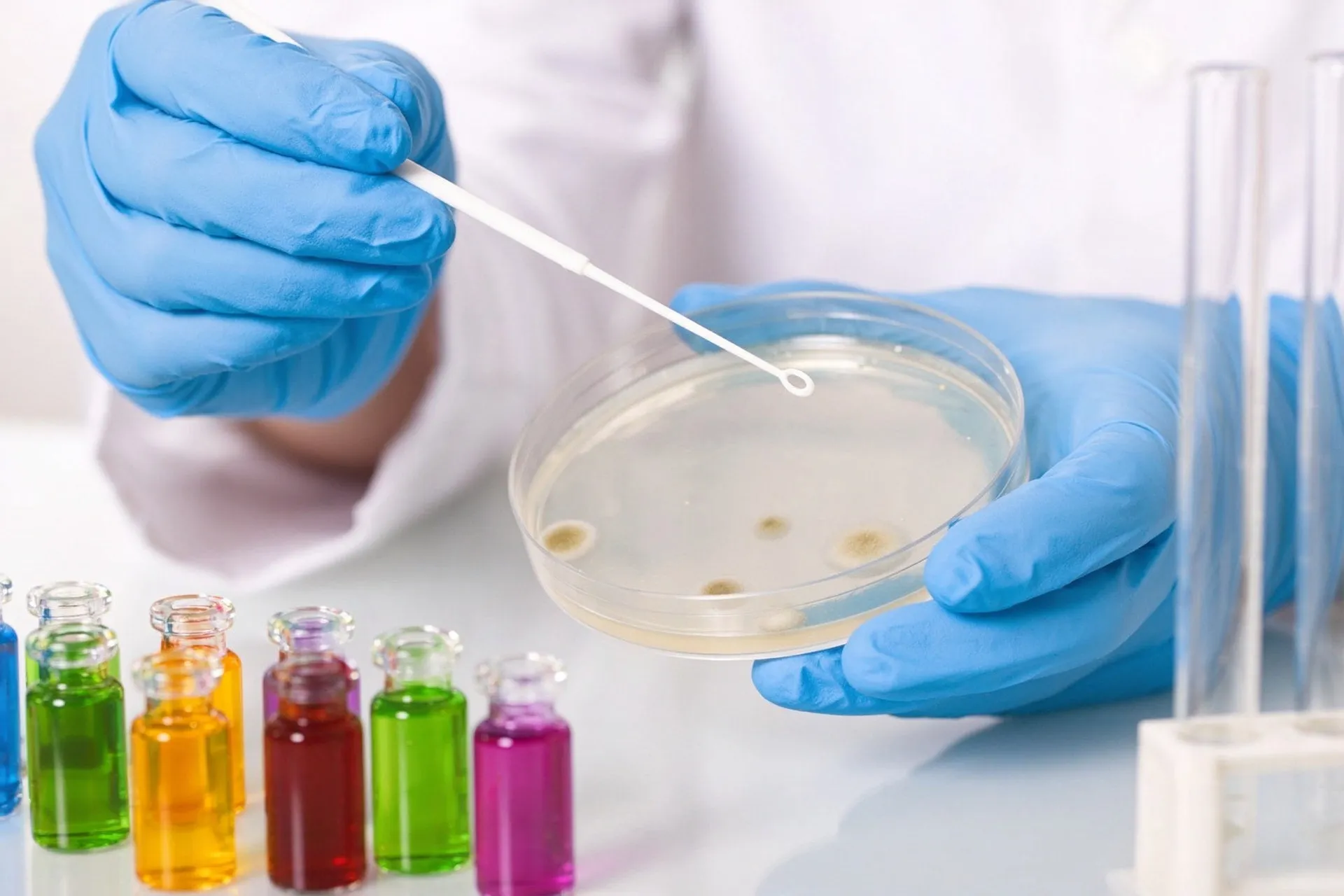
Cleaning verification checks whether the established cleaning procedure has achieved the required result during actual operations.
Common methods include:
- Visual inspection.
- ATP testing.
- Protein or allergen residue testing.
- Microbiological testing.
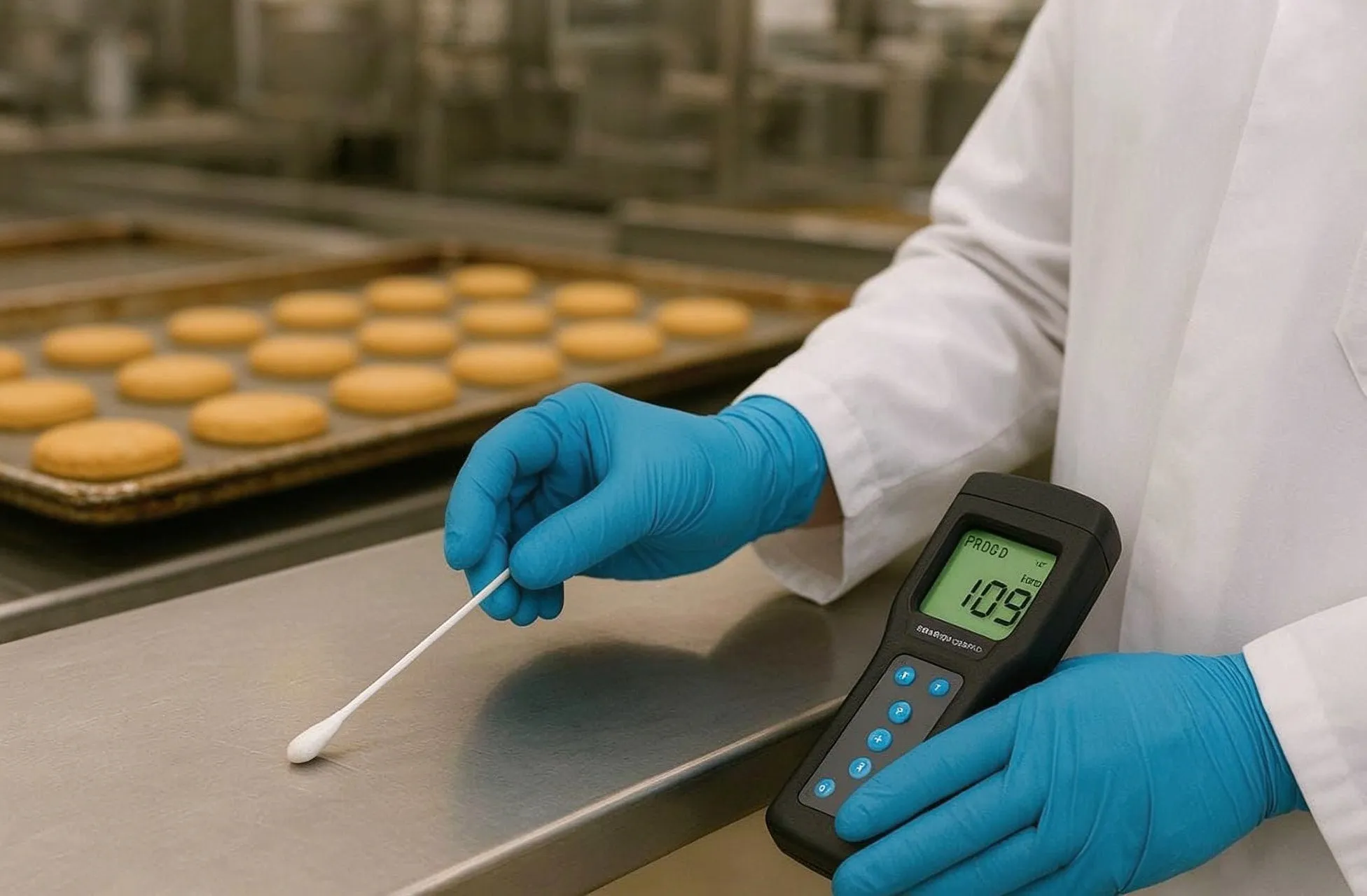
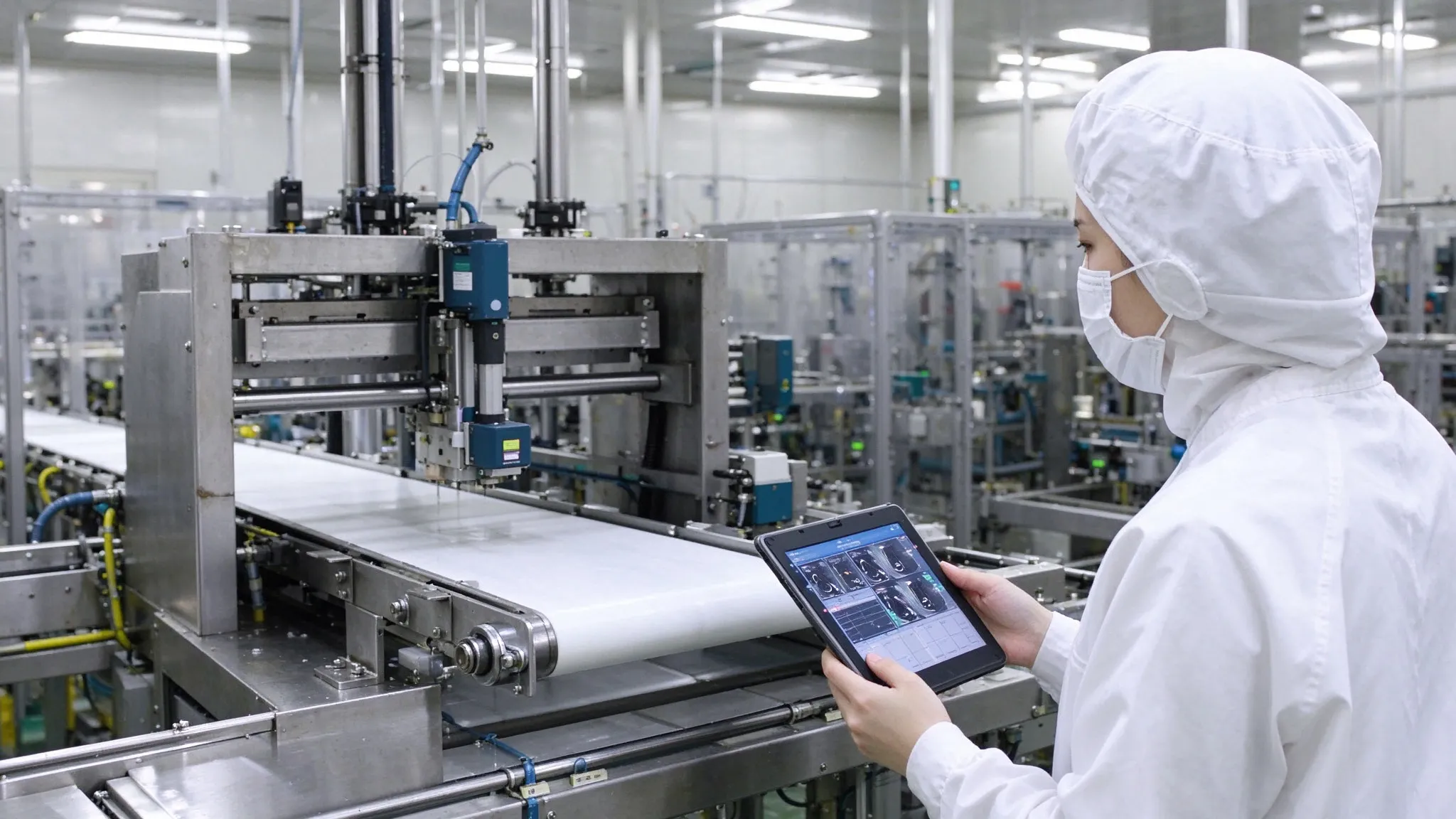
For example, after cleaning a conveyor belt, a supervisor may inspect the surface and use ATP testing at selected locations. Results are compared against the factory’s established acceptance criteria.
Key Differences
| Comparison | Cleaning Validation | Cleaning Verification |
|---|---|---|
| Purpose | Establish that the procedure works | Confirm actual cleaning results |
| Focus | Cleaning procedure | Cleaning outcome |
| Timing | Before implementation or after significant changes | During routine operations |
| Evidence | Technical studies and supporting data | Inspection and testing records |
| Main question | Does the procedure work? | Did it work this time? |
3. Three Common Cleaning Verification Methods
Different testing methods provide different types of evidence. No single method can demonstrate every aspect of cleaning effectiveness.
3.1 Visual Inspection
Visual inspection is usually the first step in cleaning verification.
Operators or supervisors examine equipment surfaces for visible food residues, grease, dirt, foam and standing water.
What it can identify:
- Visible food residues.
- Grease and accumulated dirt.
- Inadequate rinsing.
- Areas missed during cleaning.
Limitations:
Visual inspection cannot establish the absence of microorganisms or invisible allergen residues.
Equipment may look clean but still contain contamination that cannot be seen.
3.2 ATP Testing
ATP stands for adenosine triphosphate. ATP hygiene testing uses a swab and a luminometer to measure ATP-related signals on sampled surfaces. Results are commonly expressed in relative light units (RLU).
It is widely used for rapid hygiene monitoring in food factories.
What it can help identify:
- Residual biological material.
- Inadequate cleaning in selected areas.
- Differences in cleaning performance between shifts.
Limitations:
ATP testing does not identify specific pathogens or directly measure the number of viable microorganisms.
A high ATP result does not automatically indicate the presence of pathogens. Likewise, a low ATP result does not prove that pathogens are absent.
ATP testing should therefore be used as a hygiene monitoring tool, not as a replacement for microbiological testing.
3.3 Microbiological Testing
Microbiological testing evaluates selected microorganisms on equipment surfaces or within the processing environment.
Common methods include:
- Aerobic colony counts.
- Indicator organism testing.
- Specific pathogen testing.
- Environmental monitoring for Listeria species.
Results may be expressed as colony-forming units (CFU) or presence/absence, depending on the analytical method.
Limitations:
Microbiological testing only provides information about the collected samples and selected microorganisms. A negative result does not guarantee that the entire production environment is free from contamination.
Comparison of Testing Methods
| Method | What It Measures | Main Limitation |
|---|---|---|
| Visual inspection | Visible residues | Cannot detect invisible contamination |
| ATP testing | ATP-related biological residues | Cannot identify specific pathogens |
| Microbiological testing | Selected microorganisms | Limited by sampling and analytical methods |
These methods should complement one another according to the factory’s food safety risks.
4. Why One Testing Method Is Not Enough
A 2025 study published in the Journal of Food Protection evaluated visual inspection, ATP testing and microbiological analysis during cleaning and sanitizing operations at an avocado packing plant.
The study reported that:
- Listeria species were detected on 14% of food-contact surface samples before cleaning and sanitizing.
- They were still detected on 13% of samples after cleaning and sanitizing.
- The expected 3-log microbial reduction was not achieved on the tested surfaces.
These findings apply to the investigated facility, not the entire food industry.
However, they demonstrate an important point: passing one hygiene check does not necessarily mean that all microbiological risks have been controlled.
5. How to Set Cleaning Acceptance Criteria
Food factories should establish clear acceptance criteria before conducting routine cleaning verification.
A statement such as “the equipment looks clean” is not a sufficient standard.
Acceptance criteria should consider the type of residue, equipment characteristics, food safety risks and testing methods.
| Verification Method | Example Acceptance Criteria |
|---|---|
| Visual inspection | No visible food residues or grease |
| ATP testing | RLU within the factory’s established limit |
| Protein testing | Residue below the method-specific acceptance limit |
| Allergen testing | Allergen-specific result meets established criteria |
| Microbiological testing | Results meet applicable or site-specific limits |
There is no universal ATP RLU limit suitable for every factory, surface or testing instrument.
QA/QC teams should establish appropriate limits based on risk assessments, regulatory requirements, historical results and analytical methods.
Sampling locations are equally important.
Factories should prioritize areas where residues are likely to accumulate, such as conveyor joints, equipment connections, gaskets, cutting equipment and difficult-to-access surfaces.
6. When Should Cleaning Procedures Be Reassessed?
A cleaning procedure that worked previously may become less effective when production conditions change.
QA/QC teams should consider reassessment when:
- New products or raw materials are introduced.
- Equipment is replaced or modified.
- Cleaning chemicals are changed.
- Cleaning temperature or contact time changes.
- Repeated ATP or microbiological failures occur.
- Production schedules or operating conditions change.
For example, introducing a higher-fat dairy product may require a review of the existing cleaning chemical, temperature and contact time.
A reassessment does not automatically require a completely new validation study. The factory should evaluate the change and determine whether additional evidence or validation is necessary.
7. Building a Reliable Cleaning Verification Program
An effective cleaning verification program should connect cleaning procedures, inspection, testing, documentation and corrective actions.
A practical workflow includes:
- Define cleaning requirements: Identify equipment, residues and relevant food safety hazards.
- Establish cleaning procedures: Specify chemicals, concentrations, temperatures and contact times.
- Perform cleaning: Employees follow the documented SOP.
- Conduct visual inspection: Check equipment surfaces and difficult-to-clean areas.
- Perform appropriate testing: Use ATP, protein, allergen-specific or microbiological methods according to risk.
- Evaluate results: Compare findings against established acceptance criteria.
- Document results: Record inspection findings, test results and responsible personnel.
- Take corrective action: Reclean, investigate failures and perform follow-up verification.
- Review performance: Analyze recurring problems and reassess cleaning procedures when necessary.
What Should a Cleaning Verification Record Include?
A useful cleaning record should contain:
- Date and time.
- Production area and equipment identification.
- Cleaning procedure or SOP reference.
- Responsible cleaning personnel.
- Relevant cleaning parameters.
- Visual inspection results.
- ATP or other test results, where applicable.
- Acceptance criteria.
- Corrective actions.
- Final approval by the responsible supervisor or QA personnel.
Records should provide traceable evidence rather than simply confirming that a cleaning task was completed.
8. Industrial Foam Cleaning Equipment for Standardized Food Factory Sanitation
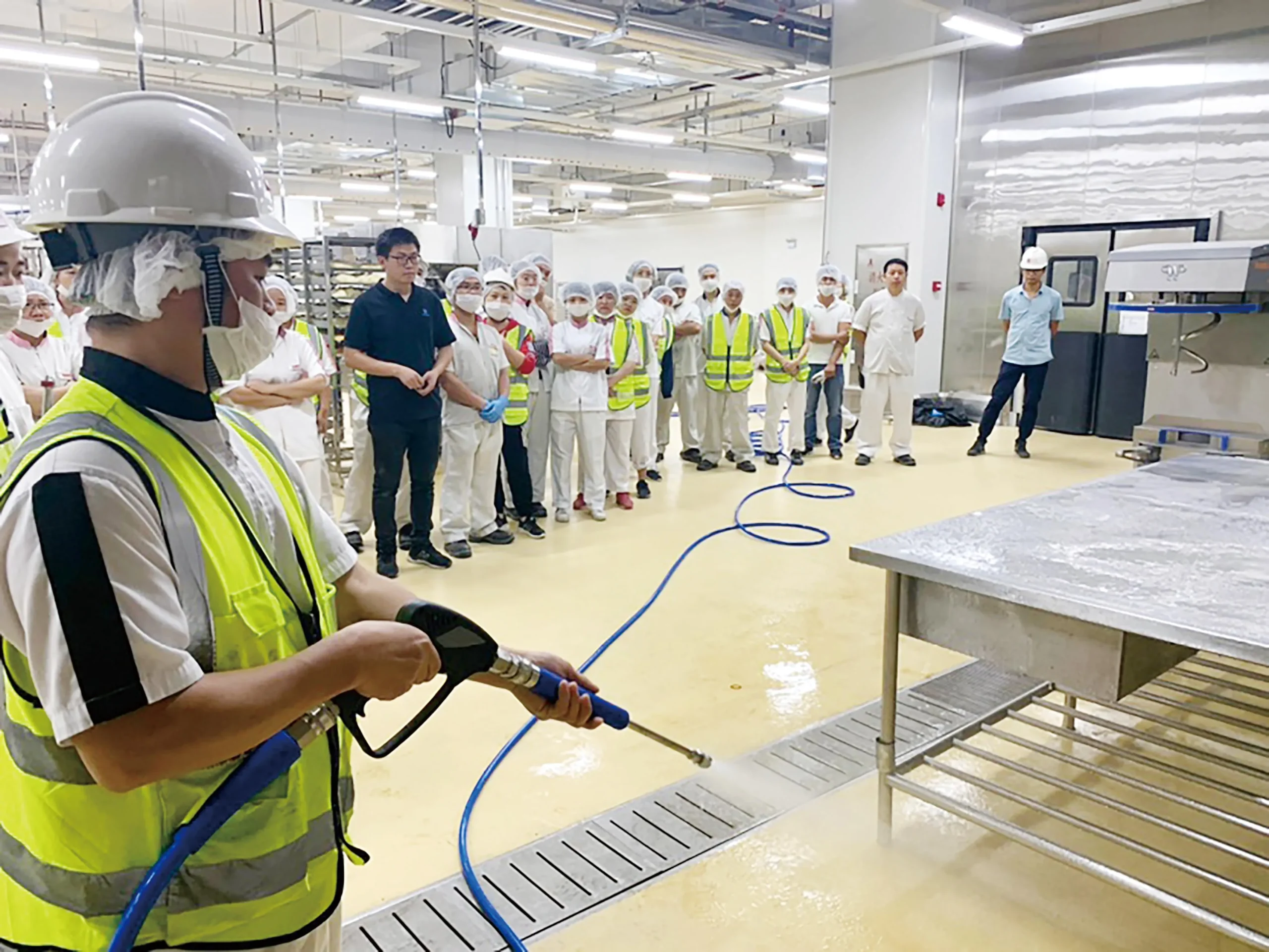
Cleaning verification depends not only on inspection and testing but also on how consistently cleaning procedures are performed.
In food processing facilities, manual cleaning can lead to variations in chemical application, foam coverage, water pressure and cleaning time between operators and production shifts.
Industrial foam cleaning equipment helps standardize these operations by providing controlled cleaning modes and more consistent application of cleaning solutions.
8.1 How Industrial Foam Cleaning Machines Improve Cleaning Operations
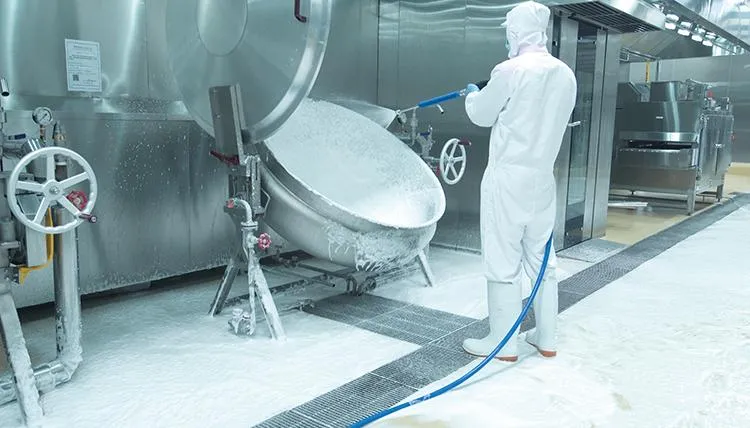
A professional foam cleaning machine can support several stages of open-plant cleaning in food manufacturing facilities.
1. Pre-rinsing
Water rinsing helps remove loose food residues and surface contamination before applying cleaning chemicals.
2. Foam Application
The machine applies alkaline or acidic cleaning foam to designated equipment and production areas. Suitable cleaning chemicals should be selected according to the type of residue and surface material.
3. Chemical Contact Time
Cleaning foam remains on the surface for the specified contact time, allowing the cleaning chemical to work according to its instructions.
4. Final Rinsing
Surfaces are thoroughly rinsed to remove loosened residues and cleaning chemical residues.
5. Disinfection
An appropriate disinfectant is applied according to the sanitation procedure, including its specified concentration and contact time. Any required final rinsing should follow the chemical manufacturer’s instructions.
A standardized cleaning sequence helps operators follow consistent procedures across production areas and shifts.
8.2 WONE Clean Industrial Foam Cleaning Equipment
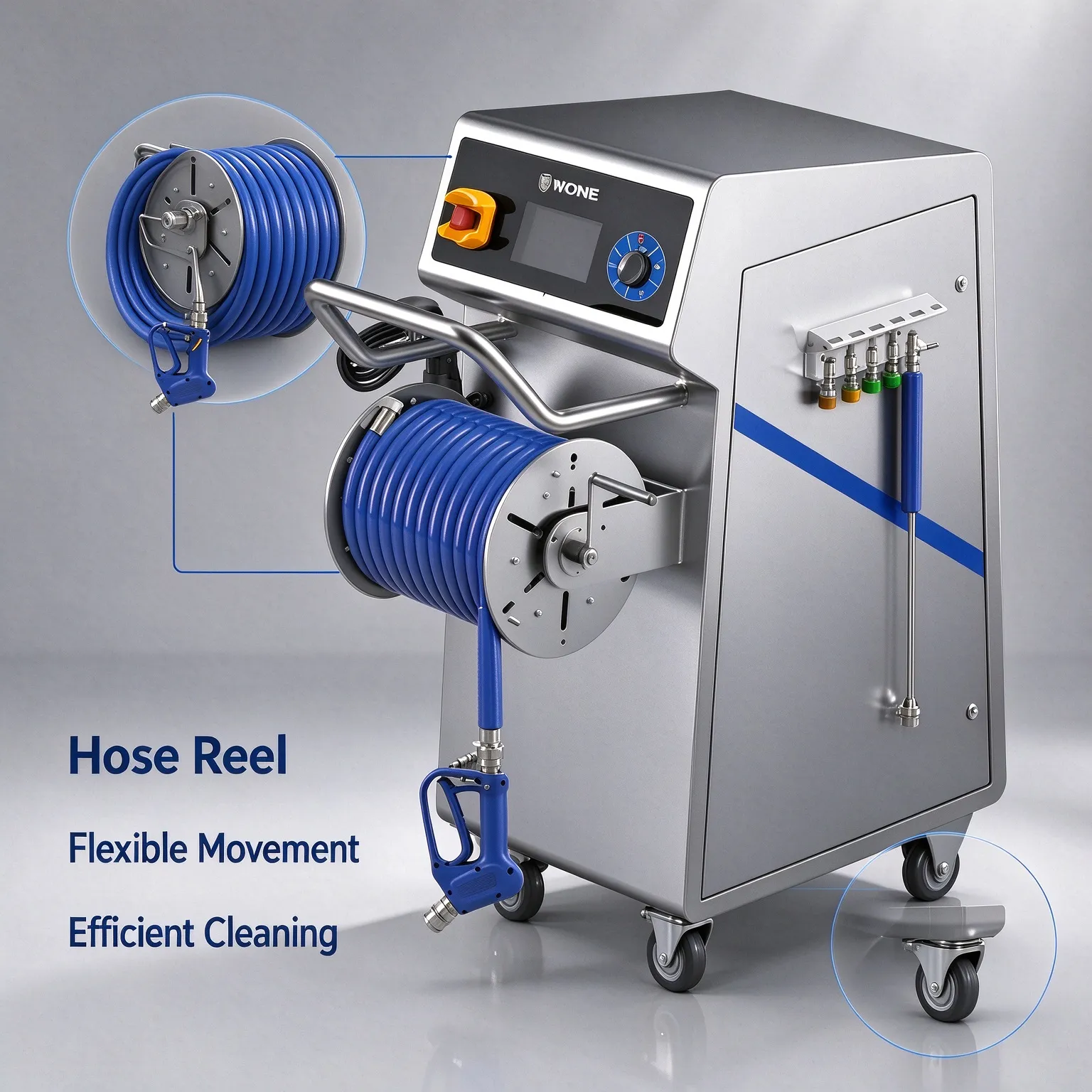
WONE Clean provides industrial foam cleaning equipment for food processing facilities and other high-hygiene manufacturing environments.
Our EFC series foam cleaning machines are designed to support daily open-plant cleaning operations, including equipment, floors, walls and other designated production areas.
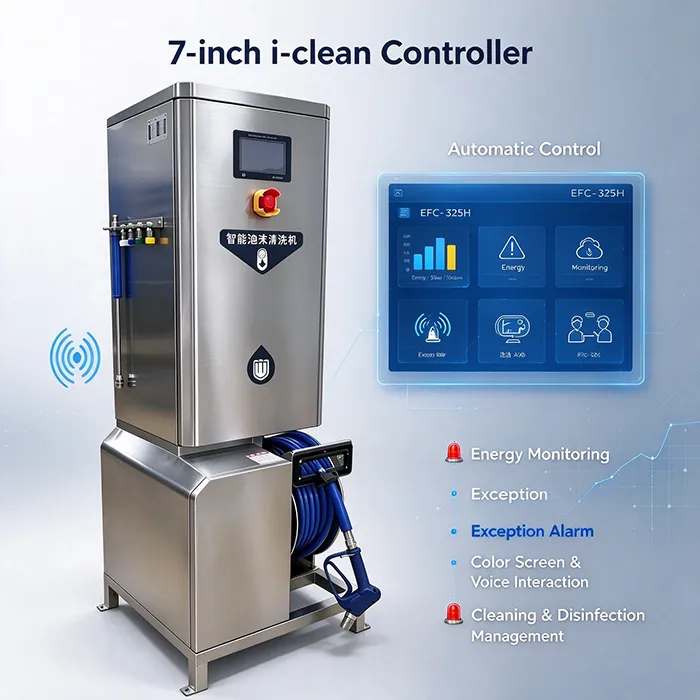
EFC-325H Fixed Foam Cleaning Machine
Designed for facilities requiring a fixed industrial cleaning system.
Key features include:
- Four operating modes: Rinse, Alkaline Foam A, Acidic Foam B and Disinfection.
- Touchscreen operation for selecting cleaning modes.
- i-clean intelligent control for cleaning process management.
- Water flow capacity above 3 m³/h.
- 25 m cleaning hose for operational coverage.
- Suitable for industrial cleaning applications requiring a centralized fixed installation.
EFC-325W Mobile Foam Cleaning Machine
Designed for facilities that require greater flexibility when moving between different cleaning areas.
Its mobile configuration supports cleaning operations across different production zones without relying on a single fixed cleaning position.
It is suitable for food factories that need a flexible cleaning solution for different equipment and production areas.
8.3 Choosing the Right Foam Cleaning Equipment
The appropriate cleaning system depends on factory layout, cleaning frequency, production area and operational requirements.
| Factory Requirement | Suitable Equipment Direction |
|---|---|
| Fixed cleaning locations | EFC-325H Fixed Foam Cleaning Machine |
| Multiple cleaning areas | EFC-325W Mobile Foam Cleaning Machine |
| Different cleaning chemical applications | Equipment with multiple cleaning modes |
| More standardized cleaning operations | Equipment with controlled operating modes and process management |
The final equipment selection should consider the factory’s water supply, electrical requirements, cleaning chemicals, production layout and sanitation procedures.
8.4 From Standardized Cleaning to Verified Results
Industrial foam cleaning equipment helps improve the consistency of cleaning operations, but it does not independently verify whether equipment surfaces meet microbiological or allergen acceptance criteria.
Food manufacturers should combine standardized cleaning procedures with visual inspection, ATP testing, allergen-specific testing or microbiological analysis where appropriate.
At WONE Clean, we provide industrial hygiene and cleaning equipment solutions to help food manufacturers establish more standardized and manageable cleaning operations.
Looking for a suitable foam cleaning system for your food factory?
Contact WONE Clean to discuss your production layout, cleaning requirements and equipment selection.
9. Conclusion: Cleaning Must Be Supported by Evidence
Completing a cleaning task does not automatically demonstrate that equipment meets the required hygiene standards.
Cleaning validation establishes whether a cleaning procedure is capable of achieving its intended outcome, while cleaning verification checks whether the required result has been achieved during actual operations.
Visual inspection, ATP testing and microbiological analysis provide different types of evidence. Their selection should depend on the equipment, residues and food safety risks.
For food manufacturers, an effective cleaning management system should be standardized, measurable, documented and regularly reviewed.
Cleaning is an operation. Verification is evidence that the required result has been achieved.
Frequently Asked Questions
1. What is the difference between cleaning verification and validation?
Validation evaluates whether a cleaning procedure works under specified conditions. Verification checks whether it achieves the required result during actual operations.
2. Is visual inspection enough to verify cleaning?
No. Visual inspection identifies visible residues but cannot establish the absence of microorganisms or allergens.
3. Does ATP testing detect pathogens?
No. ATP testing measures ATP-related signals and cannot identify specific pathogens or prove their absence.
4. How often should food factories perform cleaning verification?
Frequency should be based on food safety risks, equipment, production conditions and applicable requirements.
5. Does every food processing machine require microbiological testing?
Not necessarily. Testing should be selected according to identified hazards and the factory’s food safety and environmental monitoring programs.