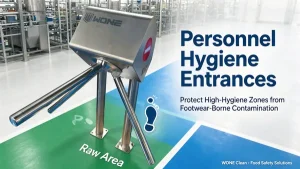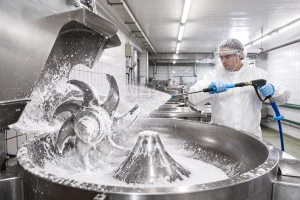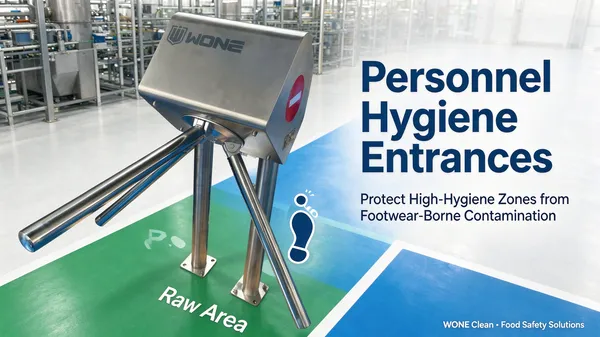
Cross-contamination in food processing plants does not always come from raw materials or production equipment. Employees moving between different production areas can also transfer contaminants through their hands, workwear, footwear, and cleaning tools.
For example, an employee may walk from a raw meat handling area into a cooked product packaging area without changing footwear or following the correct hygiene procedure. Contaminants carried on the soles of work boots may then reach floors in areas with higher hygiene requirements.
This is a common challenge in meat processing plants, seafood factories, central kitchens, bakeries, dairy plants, and other food manufacturing facilities.
Preventing cross-contamination requires more than installing handwashing stations. Food manufacturers need to control personnel movement, establish appropriate hygiene zones, manage footwear, and design effective personnel hygiene entrances.
1. How Does Personnel Movement Cause Cross-Contamination?
Employees can become a route for transferring contaminants between different production areas.
During daily operations, workers may move between raw material receiving, processing, cleaning, packaging, and storage areas. If hygiene procedures are not properly followed, contaminants can travel with them.
Common contamination pathways include:
- Hands: Employees may touch raw ingredients, equipment, door handles, and finished products without proper hand hygiene.
- Footwear: Shoe soles and work boots can carry dirt, organic residues, and microorganisms from one production area to another.
- Workwear: Protective clothing can become contaminated during raw material handling or cleaning activities.
- Cleaning tools: Brushes, hoses, and cleaning equipment shared between different hygiene zones can transfer contaminants.
- Maintenance activities: Technicians entering production areas may bring contaminants from workshops or external areas.
For example, in a meat processing plant, employees working with raw meat should not move directly into cooked meat packaging areas without following the required hygiene and clothing-change procedures.
The same issue occurs in seafood processing, where workers may move between raw seafood preparation, cooking, peeling, and final packaging.
The key point is that contamination control must consider how people move through the factory, not just how individual production areas are cleaned.
2. How to Divide a Food Factory into Hygiene Zones
A practical way to control personnel movement is to divide the factory into hygiene zones based on product risk and production processes.
The exact zoning system depends on the factory layout, product characteristics, processing methods, and applicable food safety requirements.
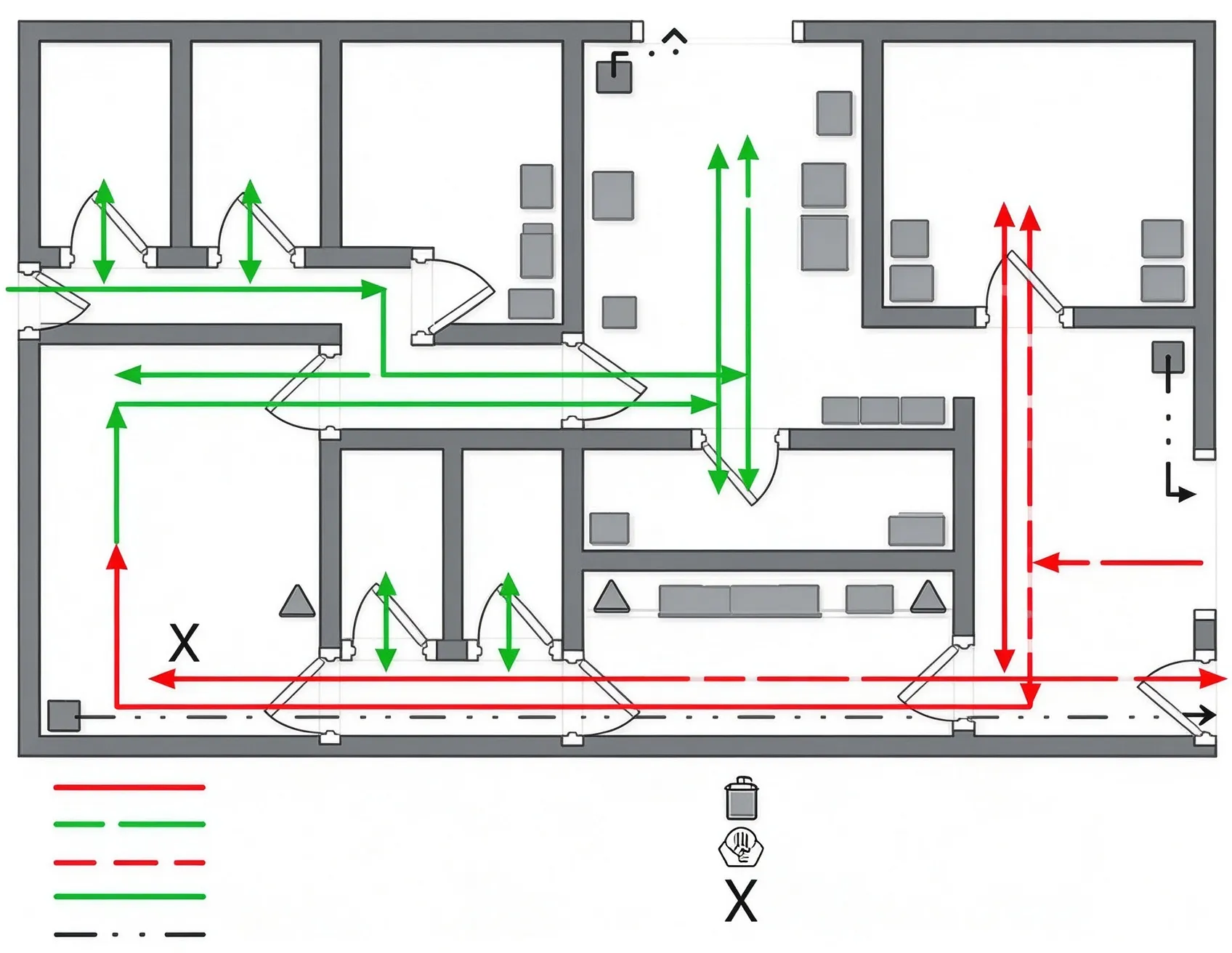
A typical example includes four functional areas:
| Hygiene zone | Typical activities | Main control measures |
|---|---|---|
| Raw Material Area | Meat receiving, seafood handling, raw ingredient preparation | Control contamination from incoming materials |
| General Processing Area | Cutting, mixing, preparation, and initial processing | Manage personnel hygiene and equipment cleanliness |
| High-Hygiene Area | Post-cooking handling and other high-risk processing | Strict personnel access and footwear controls |
| Finished Product Area | Final packaging and product handling | Prevent recontamination of finished products |
These are practical examples rather than a universal or legally mandatory four-level classification.
For food manufacturers, the most important principle is to prevent uncontrolled movement from lower-hygiene areas into higher-hygiene areas.
Personnel routes should be planned alongside material and product flows. Where possible, raw materials, finished products, employees, and waste should have separate routes.
If employees must enter different hygiene zones, the factory should establish clear procedures for changing footwear, washing hands, disinfecting hands where required, and changing protective clothing.
3. Why Is Footwear an Important Cross-Contamination Pathway?
Footwear is often overlooked in food factory hygiene management.
Unlike hands, which employees may wash several times during a shift, work boots can remain in contact with contaminated floors throughout the working day.
Footwear may carry:
- Soil and dirt from external areas.
- Blood, fat, and organic residues from meat processing.
- Fish residues and wastewater from seafood production.
- Food particles from preparation and processing areas.
- Microorganisms transferred from contaminated floors.
The risk increases when employees use the same footwear in different production zones.
For example, a worker entering a cooked product packaging area wearing boots previously used in a raw meat handling area may transfer contaminants even if the production equipment has been thoroughly cleaned.
Food factories should distinguish between three different footwear hygiene processes:
1. Sole Cleaning
Removes dirt and visible residues from the bottom of footwear through mechanical brushing or other suitable cleaning methods.
2. Boot Washing
Cleans the boot surface, including the upper, sides, and sole. This is particularly important in wet processing environments where organic residues can accumulate on work boots.
3. Footwear Disinfection
Uses an appropriate disinfectant under controlled conditions to reduce microorganisms on footwear surfaces.
These processes are not interchangeable. Sole cleaning does not automatically mean that the footwear has been fully washed or disinfected.
Effective footwear hygiene also depends on correct detergent or disinfectant concentration, contact time, equipment maintenance, and regular cleaning.
A hygiene station should therefore be selected according to the actual contamination risks and footwear used in the factory.
4. How to Design an Effective Personnel Hygiene Entrance
A personnel hygiene entrance should be designed around the actual movement of employees rather than simply placing several machines near a doorway.
A typical personnel hygiene process may include:
Step 1: Changing Area
Employees change into designated workwear and store personal belongings separately from production clothing.
Step 2: Hand Washing
Employees wash their hands using soap and running water, followed by proper rinsing and drying.
Step 3: Footwear Control
Depending on the hygiene requirements, employees change footwear or pass through suitable footwear cleaning and washing equipment.
Step 4: Hand Disinfection
Where required by the food safety procedure, employees apply an appropriate hand disinfectant after washing and drying their hands.
Step 5: Access Control
Employees enter the designated production area after completing the required hygiene procedures.
The actual sequence should be adapted to the factory layout and risk assessment. For example, footwear changing may need to take place at a physical hygiene boundary to prevent cleaned footwear from contacting contaminated floors.
For food factories with higher hygiene requirements, personnel hygiene stations can integrate handwashing, hand disinfection, sole cleaning, and access control into a more organized entrance process.
WONE Clean provides personnel hygiene stations and footwear cleaning equipment designed for food processing environments. Equipment selection can be based on employee numbers, footwear types, available space, and the required hygiene procedures.
5. How to Calculate Personnel Hygiene Equipment Capacity
One common mistake is choosing hygiene equipment based only on the total number of employees.
The more important factor is how many employees need to pass through the entrance during the busiest shift-change period.
Consider a meat processing plant with the following conditions:
- Total employees: 120
- Main shift-change period: 15 minutes
- Average passage time: 30 seconds per person
The required personnel flow rate is:
120 ÷ 15 = 8 employees per minute
If a two-person hygiene station allows two employees to complete the process every 30 seconds, its theoretical capacity is:
2 × 60 ÷ 0.5 = 240 people per hour
This is a theoretical figure, not a guaranteed real operating capacity.
Actual throughput may be lower because of differences in employee operation time, footwear cleaning requirements, handwashing procedures, equipment cycle times, and queuing.
For a more accurate equipment selection, manufacturers should consider:
- Number of employees entering each hygiene zone.
- Number of employees changing shifts simultaneously.
- Actual time required for each hygiene procedure.
- Number of entrances and available space.
- Whether employees use separate entrances for different hygiene zones.
- Equipment cycle time and practical operating capacity.
For larger factories, separating personnel entrances by hygiene zone may be more effective than sending all employees through a single entrance.
6. How to Prevent Cross-Contamination During Staff Movement
Installing hygiene equipment is only one part of the solution. Consistent daily management is equally important.
Food manufacturers should establish the following procedures:
Separate personnel routes
Avoid unnecessary movement between raw material areas and finished product areas. Where possible, provide separate entrances and dedicated routes.
Assign footwear to specific zones
Use designated footwear for different hygiene zones. Establish clear changing procedures when employees need to move between areas.
Standardize hand hygiene
Provide accessible handwashing facilities and establish clear procedures for handwashing and disinfection.
Separate cleaning tools
Cleaning brushes, hoses, and other equipment should be assigned to specific hygiene zones to prevent cross-contamination.
Control maintenance access
Maintenance personnel should follow the same relevant hygiene and protective clothing requirements as production employees before entering processing areas.
Maintain hygiene equipment
Clean and inspect brushes, drainage systems, detergent containers, and disinfection equipment regularly.
Keep inspection records
Record hygiene inspections, equipment maintenance, cleaning schedules, and corrective actions when problems are identified.
These measures help turn personnel hygiene from an individual responsibility into a controlled factory management process.
7. Common Mistakes in Food Factory Hygiene Entrance Design
Even when hygiene equipment is installed, some design and management problems can reduce its effectiveness.
- Only installing handwashing equipment: Footwear and workwear may remain uncontrolled contamination pathways.
- No clear hygiene boundary: Employees may walk across contaminated floors after changing into clean footwear.
- Insufficient equipment capacity: Long queues may encourage employees to bypass hygiene procedures.
- Using the same footwear in different zones: Contaminants can be transferred between areas.
- Neglecting equipment cleaning: Dirty brushes and poorly maintained equipment may become additional contamination sources.
- Ignoring different hygiene requirements: Raw material handling and finished product packaging should not automatically share the same personnel movement procedures.
- No inspection records: Without regular checks, factories may struggle to identify repeated hygiene problems.
A well-designed personnel hygiene entrance should combine suitable equipment, practical employee flow, clear hygiene boundaries, and consistent operating procedures.
Conclusion
Preventing cross-contamination through personnel movement and footwear requires a systematic approach to food factory hygiene.
Employees should follow controlled routes between production areas, use footwear assigned to specific hygiene zones, and complete the required handwashing and footwear hygiene procedures before entering designated areas.
For food manufacturers, the goal is not simply to install more hygiene equipment. It is to build a personnel hygiene system that employees can follow consistently without disrupting production.
Contact WONE Clean to discuss your personnel hygiene entrance requirements.
Frequently Asked Questions
How does footwear cause cross-contamination in food factories?
Footwear can carry dirt, organic residues, and microorganisms from contaminated floors into other production areas. Using the same boots across different hygiene zones increases the risk of cross-contamination.
How should food processing plants separate hygiene zones?
Factories should divide areas according to product risk and processing stages. Personnel routes, footwear requirements, protective clothing, and hygiene procedures should be established for each zone.
How many hygiene stations does a food factory need?
The number depends on employee flow, shift-change time, equipment capacity, entrance layout, and hygiene requirements. Total employee numbers alone are not sufficient for equipment selection.
What is the difference between boot washing and sole cleaning?
Sole cleaning removes dirt and residues from the bottom of footwear. Boot washing cleans the boot surface, including its upper and sole. They serve different purposes and should be selected according to the factory’s hygiene risks.
How can food factories control employee movement?
Factories can use separate personnel routes, designated footwear, controlled hygiene entrances, access management, and clear procedures for movement between hygiene zones.
How do you calculate personnel hygiene entrance capacity?
Divide the number of employees passing through the entrance by the available shift-change time to calculate the required flow rate. Then compare this with the practical throughput of the selected equipment.
Not sure which cleaning solution is right for your factory? Talk to our team about your cleaning requirements.