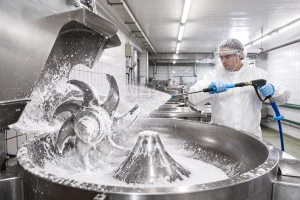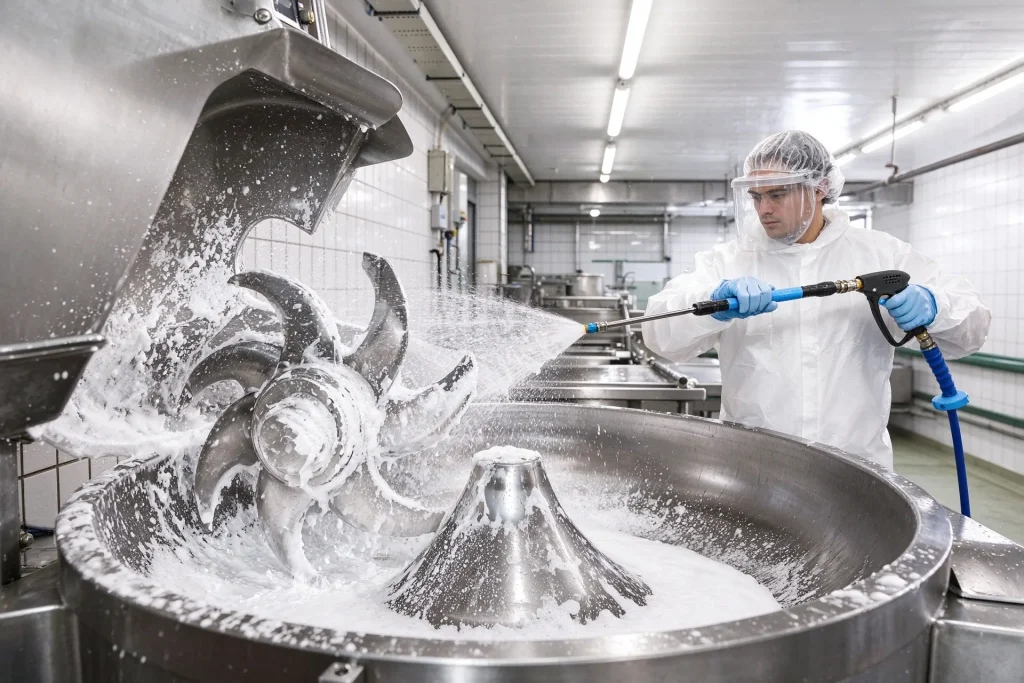
Cleaning food processing equipment every day does not always mean it is clean. Food residues may remain on conveyors, cutting machines, mixing tanks, and other production surfaces.
These residues can lead to unpleasant odors, hygiene risks, and potential cross-contamination. So, why does equipment still get dirty after cleaning?
Let’s look at seven common causes and practical ways to improve cleaning results.
Why Does Food Residue Remain After Cleaning?
Different food products leave different types of soil. As a result, one cleaning method may not work for every production area.
| Food industry | Common residues | Cleaning challenges |
|---|---|---|
| Meat processing | Blood, fat, protein | Grease and protein buildup |
| Seafood processing | Fish oil, mucus, protein | Sticky residues and strong odors |
| Dairy processing | Milk fat, protein, minerals | Fat and mineral deposits |
| Bakery | Flour, dough, oil, syrup | Dry and sticky residues |
| Seasoning production | Oil, pigments, sauces | Heavy and difficult-to-remove buildup |
| Frozen food | Food particles, scale | Residues around equipment and condensation areas |
| Pet food | Animal fat, meat protein, starch | Greasy and mixed organic residues |
For example, a meat processing conveyor may collect fat and protein around belt joints. Meanwhile, a bakery mixer may accumulate dried dough in corners and around moving parts.
The key is to match the cleaning method to the type of residue and equipment.
7 Common Food Processing Equipment Cleaning Problems
1. Using the Wrong Detergent
Different residues require different cleaning chemicals.
Alkaline detergents often help remove fat, oil, and protein-based soils. In contrast, acidic cleaners are commonly used for suitable mineral deposits.
Therefore, choose chemicals according to the soil type, equipment material, and chemical supplier’s instructions.
Never mix acidic cleaners with chlorine-containing products, as this can release toxic gas.
2. Incorrect Chemical Concentration
Too little detergent may not remove stubborn residues. However, using too much does not automatically improve cleaning.
Instead, follow the recommended concentration and check the chemical dosing system regularly.
3. Insufficient Contact Time
Detergent needs enough time to work on the surface.
If workers rinse it off too quickly, grease and protein residues may remain. For this reason, follow the recommended contact time and avoid letting chemicals dry on equipment unless the product instructions allow it.
4. Inadequate Mechanical Action
Some residues need more than chemical treatment.
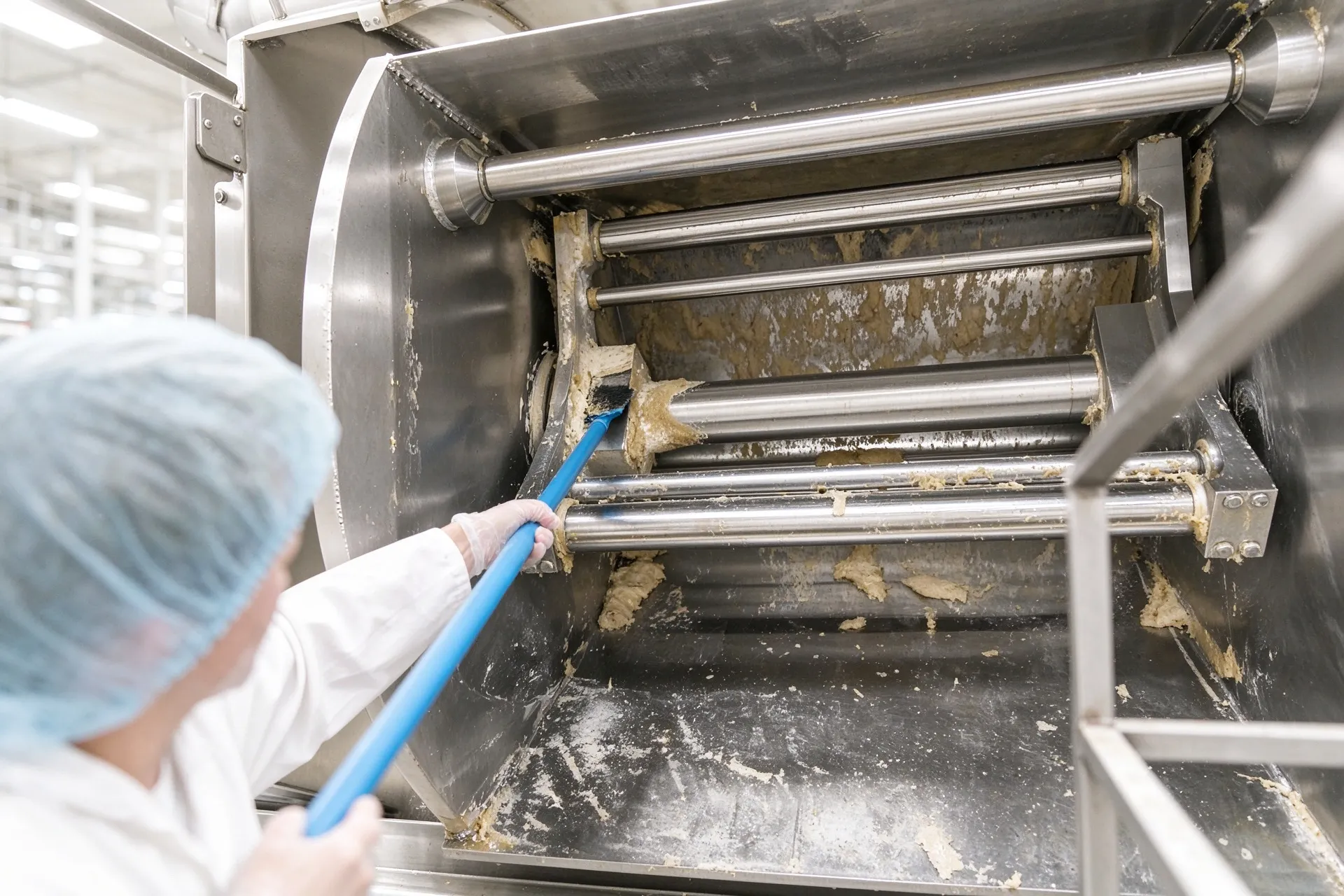
For example, dried dough, thick sauces, and stubborn deposits around machine joints may require manual brushing or suitable mechanical action.
Foam cleaning can improve detergent coverage on accessible surfaces. However, it cannot replace brushing, equipment disassembly, or CIP where these methods are necessary.
5. Incorrect Water Temperature
Water temperature affects cleaning performance, but hotter water is not always better.
Unsuitable temperatures may make certain residues harder to remove or create other cleaning problems. Therefore, select the temperature according to the soil type, detergent instructions, and equipment requirements.
6. Hard-to-Reach Areas
Food residues often hide in places that workers cannot easily see or reach.
Common examples include:
- Conveyor belt joints and undersides
- Cutting machine blades and connections
- Mixer corners and internal surfaces
- Pipes, valves, and equipment connections
- Seals, gaps, and drainage areas
Consequently, some equipment needs partial disassembly or a dedicated cleaning procedure.
7. Inconsistent Cleaning Procedures
Different workers may use different amounts of detergent, cleaning times, or brushing methods.
As a result, cleaning quality can vary between shifts.
A clear SOP helps standardize the process. It should define the cleaning method, chemical concentration, contact time, inspection points, and verification requirements.
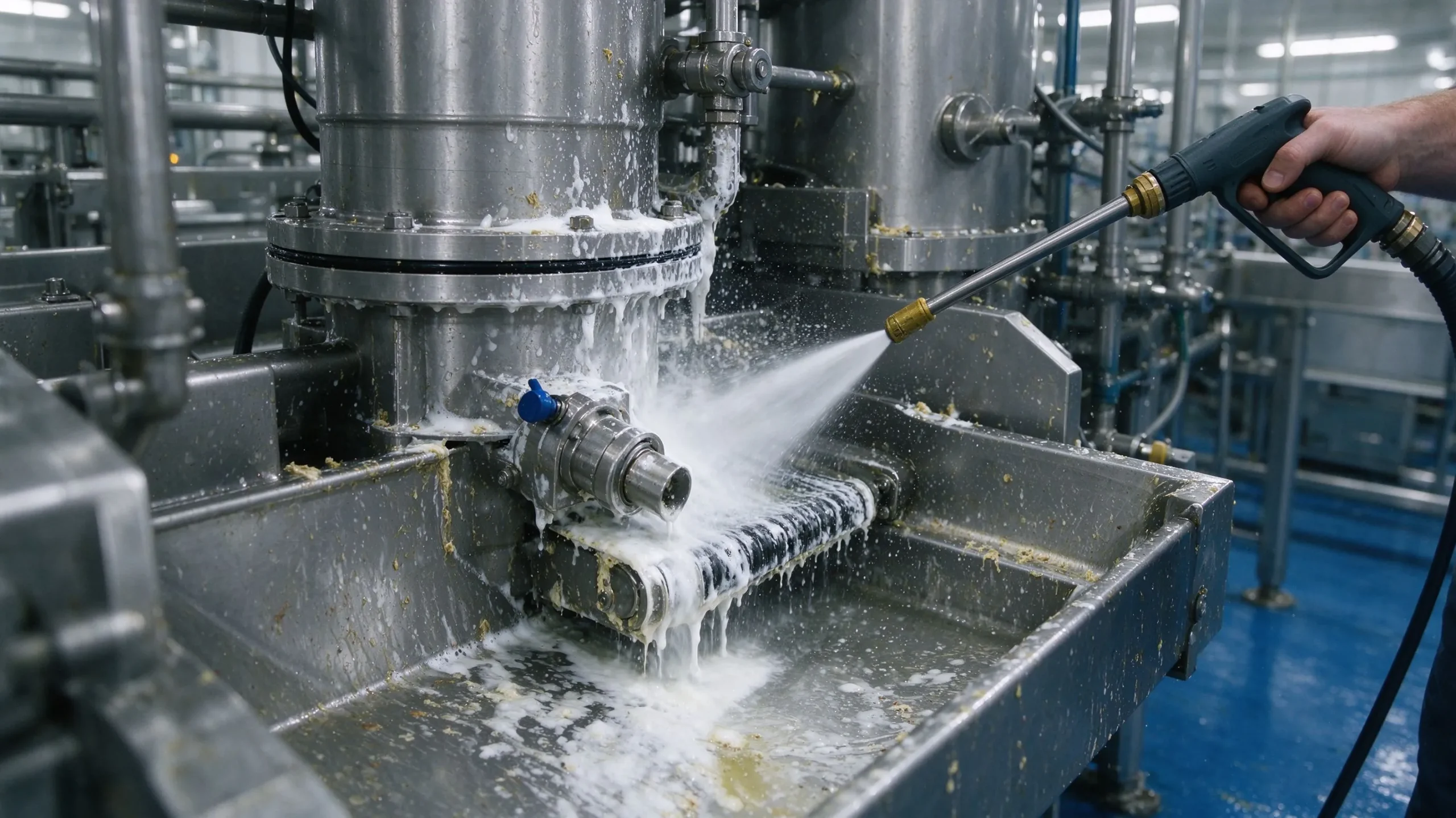
How to Choose the Right Cleaning Method
The TACT principle provides a useful way to understand cleaning performance:
- Time: How long the detergent remains in contact with the soil
- Action: Mechanical action, such as brushing or spraying
- Chemistry: The type and concentration of detergent
- Temperature: The water temperature during cleaning
These four factors work together. Increasing water pressure or temperature alone does not guarantee better results.
For example:
- Fat and oil: Use a suitable alkaline detergent and appropriate mechanical action.
- Protein: Select a suitable detergent and prevent residues from drying on surfaces.
- Starch and dough: Remove loose material first, then use a suitable cleaning method.
- Mineral deposits: Consider an appropriate acidic cleaner after checking material compatibility.
- Mixed residues: A combination of pre-rinsing, detergent application, and manual cleaning may be necessary.
Always follow chemical instructions and validate the procedure under actual production conditions.
How to Verify Cleaning Effectiveness
A surface may look clean but still contain residues. Therefore, food factories should use suitable verification methods.
1. Visual Inspection
Check for visible food particles, grease, stains, and buildup.
Visual inspection is quick and easy. However, it cannot detect all invisible residues or microorganisms.
2. ATP Testing
ATP testing provides a rapid indication of organic contamination on sampled surfaces.
It is useful for routine hygiene checks, especially when factories want immediate feedback after cleaning.
However, ATP testing does not identify specific bacteria or prove that a surface is free from pathogens. Set acceptable limits according to the testing system, site procedures, and risk assessment.
3. Microbiological Swab Testing
Microbiological testing helps assess the presence of selected microorganisms or indicators.
It provides more specific information than visual inspection or ATP testing. However, results usually take longer, and sampling only represents the locations tested.
Depending on the production risk, factories may also use protein residue tests, allergen swabs, and environmental monitoring.
A Practical Cleaning Procedure for Food Equipment
For many open-plant food processing areas, a general cleaning sequence may include:
- Remove loose food debris.
- Pre-rinse when the equipment and production environment allow it.
- Apply a suitable detergent.
- Use foam cleaning or manual brushing as required.
- Rinse according to the chemical instructions.
- Apply an approved sanitizer or disinfectant.
- Inspect and verify the cleaning result.
This is a general reference, not a universal SOP. Low-moisture production areas may require dry cleaning, while internal pipework and tank systems may need validated CIP procedures.
When Should You Review Your Cleaning System?
A cleaning procedure may need improvement when you notice:
- ATP results repeatedly exceed site limits.
- Microbiological tests show recurring problems.
- Workers need more time to clean the same equipment.
- Chemical consumption keeps increasing.
- Cleaning results vary significantly between shifts.
- Workers find hidden residues after equipment disassembly.
Instead of simply increasing cleaning time or chemical dosage, identify the actual cause.
Track useful information such as cleaning time, detergent concentration, water temperature, water consumption, and verification results. Comparing these records helps identify recurring problems and evaluate improvements.
Choosing the Right Equipment for Food Processing Cleaning
A good cleaning procedure needs the right equipment to support it. While manual brushing is still important for stubborn residues and hard-to-reach areas, cleaning large production surfaces manually can take considerable time and effort.
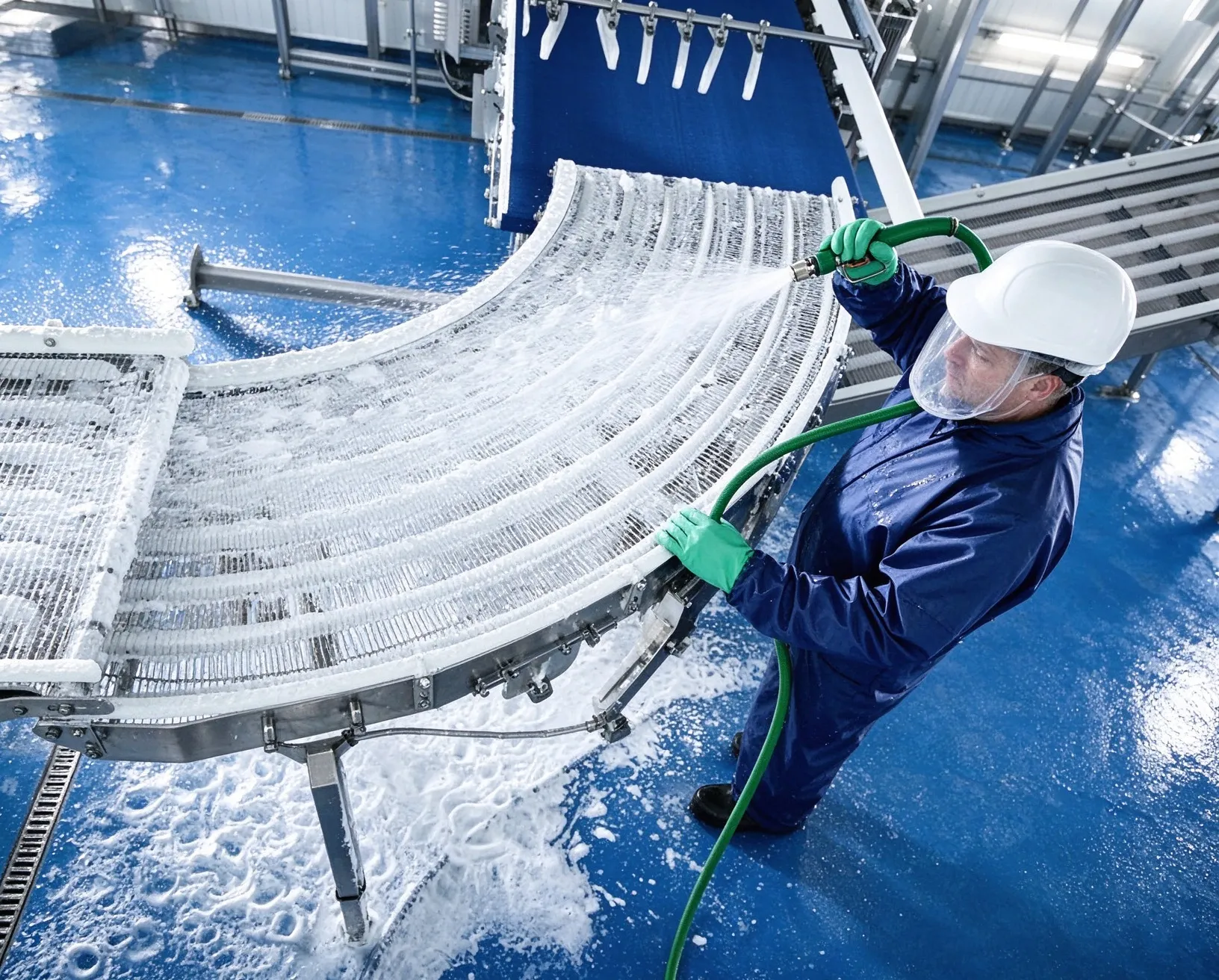
For this reason, many food factories use industrial foam cleaning equipment to improve their daily cleaning operations.
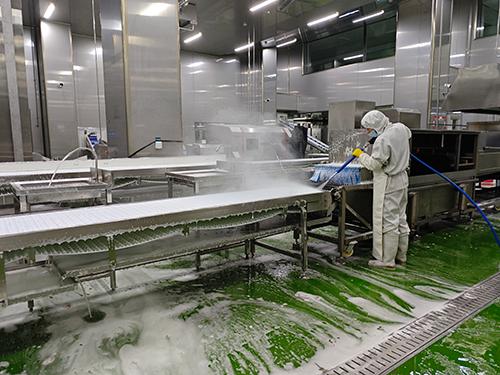
Foam cleaning equipment applies detergent to accessible equipment surfaces, helping cover areas such as processing tables, conveyor belts, machine exteriors, and production floors. It also helps workers follow a more consistent detergent application process.
WONE Clean offers industrial foam cleaning equipment designed for food processing environments.
Depending on the production area and cleaning requirements, factories can choose different equipment configurations:
- Fixed foam cleaning systems: Suitable for designated cleaning areas and regular sanitation operations.
- Mobile foam cleaning machines: Allow workers to move between production areas and clean different pieces of equipment.
- Multi-function cleaning systems: Support different cleaning stages, including rinsing, alkaline foam, acidic foam, and disinfection, depending on the model.
These systems can support daily cleaning of accessible equipment surfaces. For internal pipelines, complex components, and hidden areas, factories should still use suitable manual cleaning, disassembly, or CIP procedures.
Choosing the Right Cleaning Equipment for Your Food Factory
Frequently Asked Questions
Why is food processing equipment still dirty after cleaning?
Common causes include unsuitable detergents, incorrect chemical concentration, insufficient contact time, poor mechanical action, and hard-to-reach areas.
What is the best way to remove fat and protein from food equipment?
Choose a detergent suitable for the specific residue, follow the recommended concentration and contact time, and use brushing or other mechanical action when necessary.
Does ATP testing detect bacteria?
No. ATP testing detects ATP-related signals on surfaces. It does not identify specific bacteria or confirm that a surface is free from pathogens.
How often should food processing equipment be cleaned?
Cleaning frequency depends on the food product, production process, equipment design, contamination risk, and factory sanitation procedures.
What is the difference between cleaning and sanitizing?
Cleaning removes food residues, grease, and other soils. Sanitizing reduces microorganisms when the correct product and procedure are used. Sanitizing cannot replace proper cleaning.
How can food factories verify cleaning effectiveness?
Factories can combine visual inspection, ATP testing, microbiological swabs, and other risk-based checks. Regular records also help identify recurring cleaning problems and evaluate improvements.
Can foam cleaning equipment replace manual cleaning?
No. Foam cleaning equipment helps apply detergent across accessible surfaces, but stubborn residues and hard-to-reach areas may still require manual brushing, equipment disassembly, or CIP.
Not sure which cleaning solution is right for your factory? Talk to our team about your cleaning requirements.