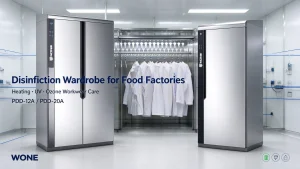
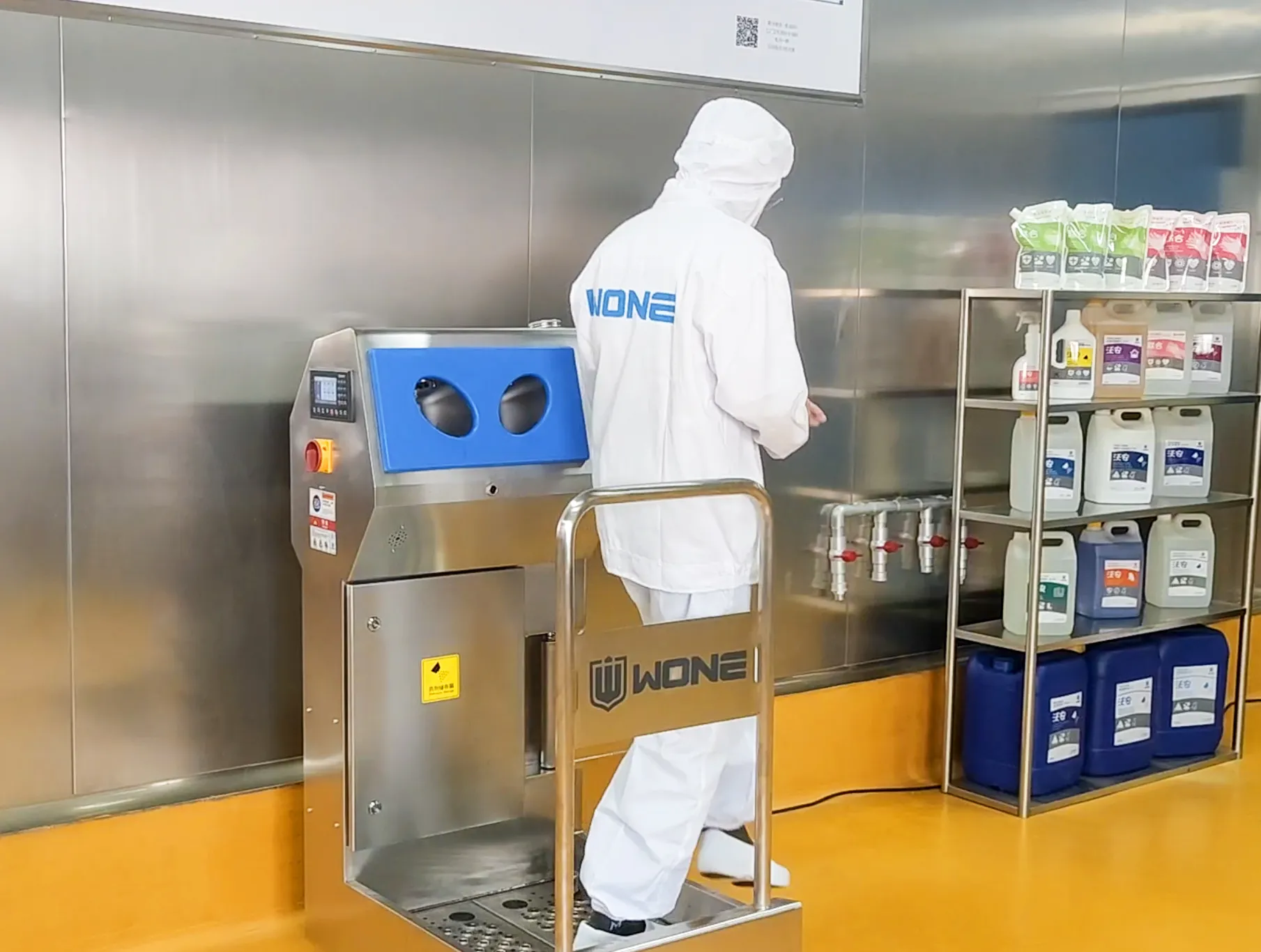
In food processing facilities, personnel hygiene starts before workers enter the production area. Employees may carry contaminants on their hands, shoes and work boots, making entrance hygiene an important part of daily factory management.
For meat processing plants, poultry factories, seafood facilities and central kitchens, controlling personnel hygiene requires more than simply providing handwashing facilities.
A well-planned entrance hygiene system should consider both hand and footwear disinfection, especially when employees move between changing rooms, general production areas and higher-hygiene zones.
A hand and boot disinfection station combines these two functions in one system, helping food factories establish a more consistent hygiene process at designated entrances.
But what should you consider before purchasing one? Let’s look at the key functions, design features and installation requirements.
1. Why Is Personnel Disinfection Important at Food Factory Entrances?
Employees move through different areas throughout their working day. Their hands and footwear may come into contact with raw materials, production equipment, floors and other potentially contaminated surfaces.
Without a clear entrance hygiene procedure, employees may enter production areas without completing the required disinfection steps.
Two important areas need attention:
Hand Hygiene
Hands can come into contact with raw ingredients, equipment, packaging materials and frequently touched surfaces. Hand disinfection helps support the factory’s personnel hygiene procedures.
Footwear Hygiene
Work shoes and boots may carry dirt and microorganisms from floors and other working environments. Footwear disinfection helps reduce the risk of transferring contaminants between designated areas.
These two procedures serve different purposes and should not be treated as interchangeable.
For food factories with different hygiene zones, installing suitable personnel disinfection equipment at designated entrances can help make daily hygiene procedures more consistent.
2. Hand Disinfection vs. Boot Disinfection: Why Consider Both?
Some factories install hand disinfection equipment but overlook footwear hygiene. Others use separate equipment for different personnel hygiene procedures.
When planning a factory entrance, it is worth considering whether both functions are needed.
| Hygiene procedure | Main purpose |
|---|---|
| Hand disinfection | Supports hand hygiene before entering production areas |
| Boot disinfection | Helps reduce contamination risks associated with work footwear |
Combining these functions in one personnel disinfection station can simplify the entrance layout and provide a more organized hygiene process.
For example, meat processing plants, poultry processing facilities and seafood factories may need to manage personnel movement between different production zones.
The exact equipment configuration should depend on the factory’s hygiene zoning, production activities and risk assessment.
3. What Should You Look for in an Automatic Personnel Disinfection Station?
Not all disinfection stations offer the same functions. Before purchasing equipment, food factory managers should consider several practical features.
Automatic Sensor Operation
Manual operation can result in inconsistent procedures, especially when many employees enter the production area during shift changes.
Sensor technology allows the equipment to operate automatically during the personnel hygiene process, reducing the need for manual operation.
Adjustable Disinfection Time
Different factories may have different personnel hygiene procedures.
The ability to adjust the hygiene operation time allows the equipment settings to be aligned with the factory’s requirements.
Automatic Chemical Concentration Control
Disinfectant concentration is an important factor in disinfection management.
Incorrect concentration may affect the expected disinfection performance or result in unnecessary chemical consumption.
An automatic chemical concentration control system helps maintain the configured chemical concentration during operation.
The actual disinfectant type and concentration should always follow the chemical manufacturer’s instructions and the factory’s validated hygiene procedures.
Sanitizer Empty Alarm
Running out of disinfectant during production can interrupt normal hygiene procedures.
A sanitizer empty alarm helps remind operators when the disinfectant supply needs attention.
Anti-Splash Design
Disinfectant spraying should be controlled within the equipment area.
An anti-splash design helps reduce liquid splashing outside the station and keeps the surrounding entrance area cleaner.
Stainless Steel Construction
Food processing environments require equipment that can withstand regular cleaning and daily industrial use.
SS304 stainless steel is commonly used in food industry equipment because of its corrosion resistance and suitability for hygienic equipment construction.
For this reason, the equipment material and welding quality should also be considered when selecting a personnel hygiene station.
4. Why Does Split-Structure Design Matter for Factory Entrances?
Factory entrances do not always have the same layout.
Some facilities have narrow personnel passages, while others have wider entrances or different installation arrangements.
Choosing equipment without checking the available space may create problems during installation and daily operation.
A split-structure design provides greater flexibility when arranging the equipment according to the entrance layout.
Before purchasing a personnel disinfection station, consider:
- Available entrance width and installation space.
- Personnel entry and exit direction.
- Location of water supply and drainage.
- Distance from nearby doors and equipment.
- Space required for employees to complete the hygiene procedure.
It is also helpful to prepare entrance photos and a simple floor plan before requesting a quotation.
This allows the equipment supplier to better understand the installation conditions and recommend a suitable arrangement.
5. Where Are Hand and Boot Disinfection Stations Used?
In food factories, employees do not stay in one place throughout the working day. They move between raw material handling, processing, packaging and other production areas.
When workers enter designated production zones, their hands and work boots may need to go through specific hygiene procedures.
A hand and boot disinfection station can be installed at these entrance points to support daily personnel hygiene management.
Meat Processing Plants
In meat processing plants, workers handle raw meat during cutting, trimming, deboning and portioning. They also move between processing rooms, equipment areas and packaging sections.
Before entering designated production areas, employees may need to complete hand and boot disinfection procedures.
Installing a personnel disinfection station at the entrance to the processing area helps establish a clear hygiene checkpoint before workers enter.
Poultry Processing Facilities
Poultry factories usually have several production stages, including slaughtering, defeathering, evisceration, carcass washing, cutting and packaging.
Employees working in these areas may need to move between different processing sections during their shifts.
A hand and boot disinfection station can be positioned at entrances to designated processing zones, helping workers follow the required hygiene procedures when moving between areas.
Seafood Processing Factories
Seafood processing workers handle fresh fish, shrimp, shellfish and other aquatic products during sorting, washing, filleting and packing.
Floors in these areas are often wet, and employees frequently move between raw material handling and processing sections.
Installing hand and boot disinfection equipment at selected workshop entrances helps support personnel hygiene procedures before employees enter production areas.
Dairy Processing Plants
Dairy factories handle milk through several stages, including raw milk reception, filtration, pasteurization, processing and packaging.
Workers may need to access different rooms where milk and finished products are handled.
Personnel disinfection stations can be installed at designated entrances to processing and packaging areas, according to the factory’s hygiene zoning requirements.
Central Kitchens and Ready-to-Eat Food Facilities
Central kitchens usually separate ingredient preparation, vegetable washing, meat preparation, cooking, cooling and food portioning.
For example, employees entering a cooked-food portioning and packaging area may need to follow different hygiene procedures from those working in raw ingredient preparation.
Hand and boot disinfection stations can be installed at the entrances to selected production zones, helping maintain a consistent personnel hygiene procedure before employees enter these areas.
Where Should the Equipment Be Installed?
The installation location should follow the factory’s personnel movement route and hygiene zoning plan.
Typical locations include:
- Entrances between changing rooms and production areas.
- Access points to designated high-hygiene processing zones.
- Entrances to food cutting, processing and packaging rooms.
- Personnel access points between different production sections.
Before selecting the equipment, consider the entrance width, employee traffic, water supply and drainage conditions.
The goal is to make the hygiene process part of the normal employee entry procedure, rather than an additional step that workers may overlook.
6. WONE PHB-22TC Personnel Disinfection Guard
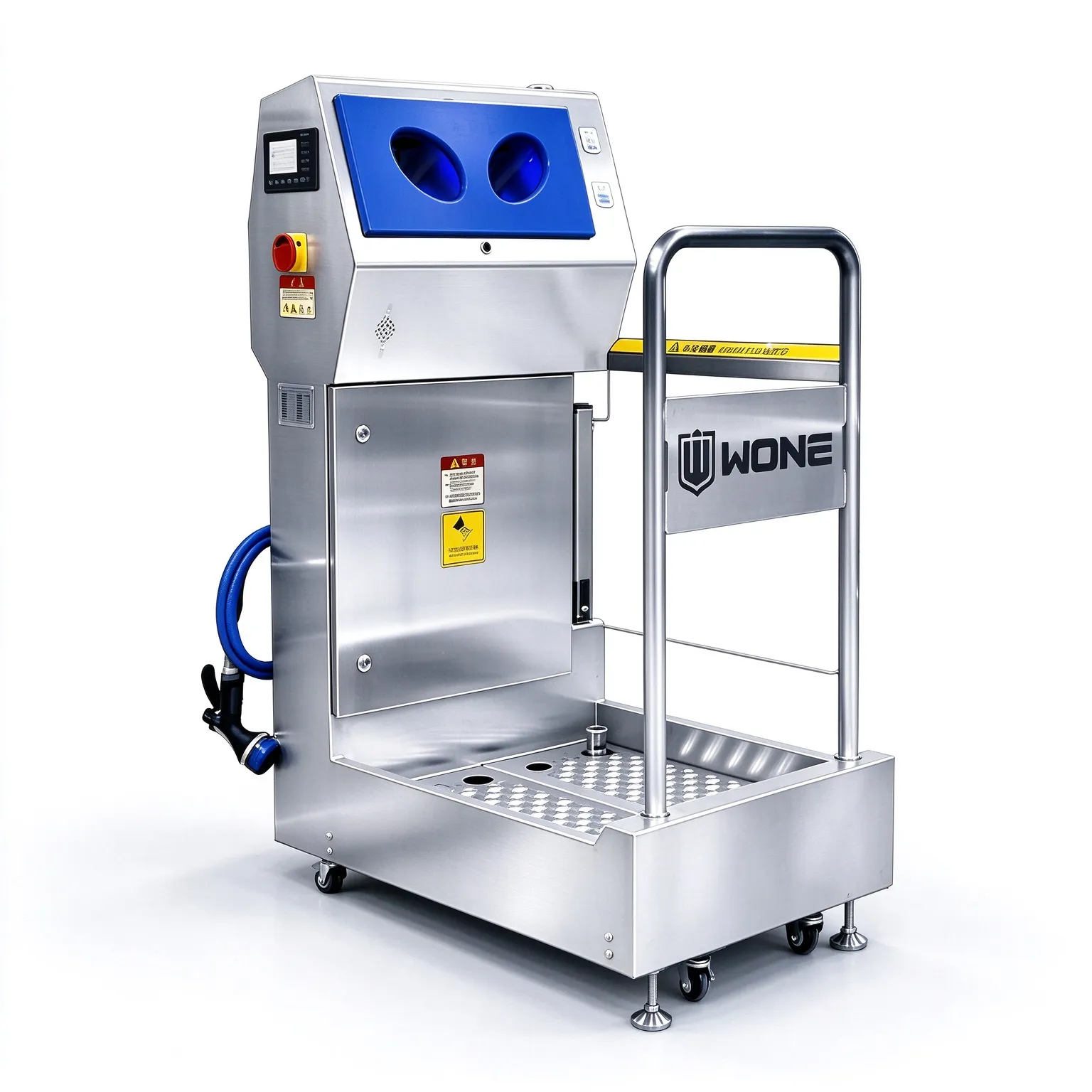
The WONE PHB-22TC is designed for food processing facilities that need both hand and footwear disinfection at workshop entrances.
It combines several practical features:
- Dual Disinfection: Hand and shoes & boots disinfection in one system.
- i-clean System: Adjustable hygiene time, chemical dosage, automatic concentration control and sanitizer empty alarm.
- Sensor Operation: Automatic personnel hygiene process.
- Split Structure: Suitable for different workshop entrance layouts.
- Anti-Splash Design: Helps keep disinfectant spray within the equipment area.
- SS304 Construction: Stainless steel structure with automatic welding.
Suitable for meat, poultry, seafood and other food processing facilities.
[View PHB-22TC Product Details]
7. What Should You Prepare Before Requesting a Quotation?
Choosing the right personnel disinfection station is not only about selecting a model. The installation environment and number of employees also matter.
Before requesting a quotation, it is helpful to prepare the following information:
| Information | Why It Matters |
|---|---|
| Factory industry | Helps identify the hygiene requirements |
| Entrance width | Helps confirm equipment placement |
| Number of employees per shift | Helps evaluate personnel traffic |
| Production area layout | Helps determine the installation location |
| Water supply | Confirms the available connection |
| Drainage conditions | Confirms the wastewater outlet arrangement |
| Power supply | Checks electrical compatibility |
If possible, send your factory entrance photos and floor plan to the equipment supplier.
This makes it easier to discuss the equipment configuration before installation.
8. Frequently Asked Questions
Q1: What is a hand and boot disinfection station?
It is a personnel hygiene device that combines hand disinfection and footwear disinfection functions. It is used at designated entrances in food processing facilities to support personnel hygiene procedures.
Q2: Can one station disinfect both hands and boots?
Yes. The WONE PHB-22TC integrates hand disinfection and shoes and boots disinfection functions in one system.
Q3: Is the PHB-22TC suitable for narrow factory entrances?
The PHB-22TC features a split-structure design to accommodate different workshop entrance layouts. However, the available installation space should be checked before ordering.
Q4: How does the i-clean system manage disinfectant?
The i-clean system supports adjustable hygiene time, adjustable chemical dosage, automatic chemical concentration control and a sanitizer empty alarm.
Q5: What are the installation requirements?
The PHB-22TC operates on 220V/50Hz power, has a DN15 water inlet and an OD50 mm water outlet. Its operating temperature should be above 2°C. The actual installation conditions should be confirmed before ordering.
Q6: Which industries can use this equipment?
Typical applications include meat processing, poultry processing, seafood processing, dairy production, central kitchens and other food processing facilities with personnel hygiene requirements.
9. Looking for a Personnel Disinfection Solution?
Planning a new food factory or upgrading your workshop entrance?
Contact WONE Clean to discuss your personnel hygiene requirements and find a suitable disinfection station for your facility.