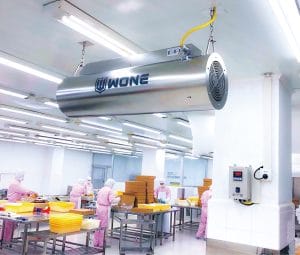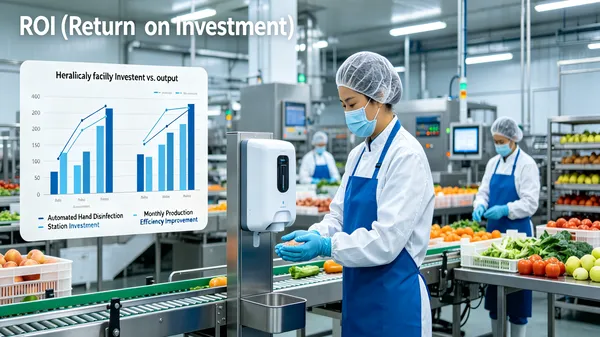
In modern food processing, food factory hygiene ROI is one of the most important performance indicators for plant managers and decision-makers. A well-designed hygiene system is not just about compliance—it directly reduces operating costs, improves audit results, and prevents contamination losses.
For food factories, investing in hygiene equipment such as hand disinfection stations, entrance systems, and stainless steel structures is a long-term profitability strategy.
1. Where Hygiene Costs Actually Come From (Hidden Loss Breakdown)
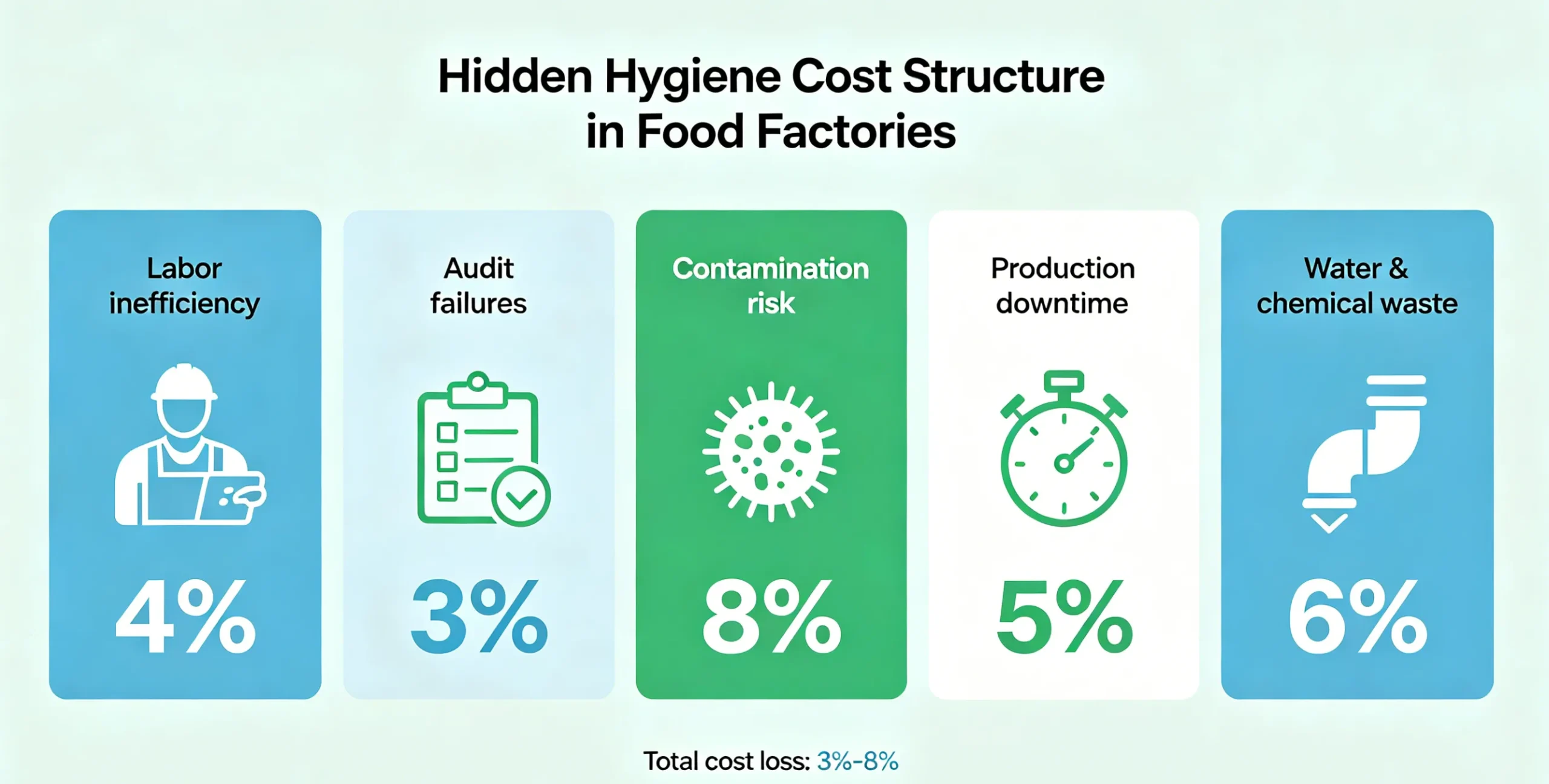
Most factories underestimate hygiene-related losses. The cost is not only equipment—it is downtime, labor inefficiency, and contamination risk.
Hidden Cost Structure in Food Factories
| Cost Type | Description | Impact Level |
|---|---|---|
| Labor inefficiency | Manual cleaning, inconsistent procedures | High |
| Audit failures | Non-compliance corrections, re-audits | Very High |
| Contamination risk | Product recall, waste | Critical |
| Production downtime | Cleaning delays, line stoppage | High |
| Water & chemical waste | Uncontrolled usage | Medium |
In many plants, hidden hygiene cost = 3%–8% of total production cost annually
2. ROI Logic: How Cleaning Equipment Generates Payback
Investing in modern hygiene systems improves ROI in 3 main ways:
ROI Contribution Model
| Factor | Before Upgrade | After Hygiene System | Result |
|---|---|---|---|
| Labor time | High manual dependency | Automated entry process | ↓ 20–40% labor time |
| Audit performance | Unstable | Standardized compliance | ↑ Pass rate |
| Contamination risk | Medium–High | Controlled barrier system | ↓ Risk significantly |
3. Entrance Hygiene Station: The First ROI Point
The entrance hygiene station for food factory is the most important control point in the entire plant.
It ensures every worker enters production areas through a standardized hygiene process.
Typical Entry Workflow (Process Flow)
Employee Entry
      ↓
Hand Washing
      ↓
Hand Disinfection Station
      ↓
Boot Cleaning / Disinfection
      ↓
Drying System
      ↓
Access Control (Turnstile)
      ↓
High-Risk Production Area
This flow reduces human variation and ensures 100% standardized hygiene compliance
4. Hand Hygiene: The Highest ROI Control Point
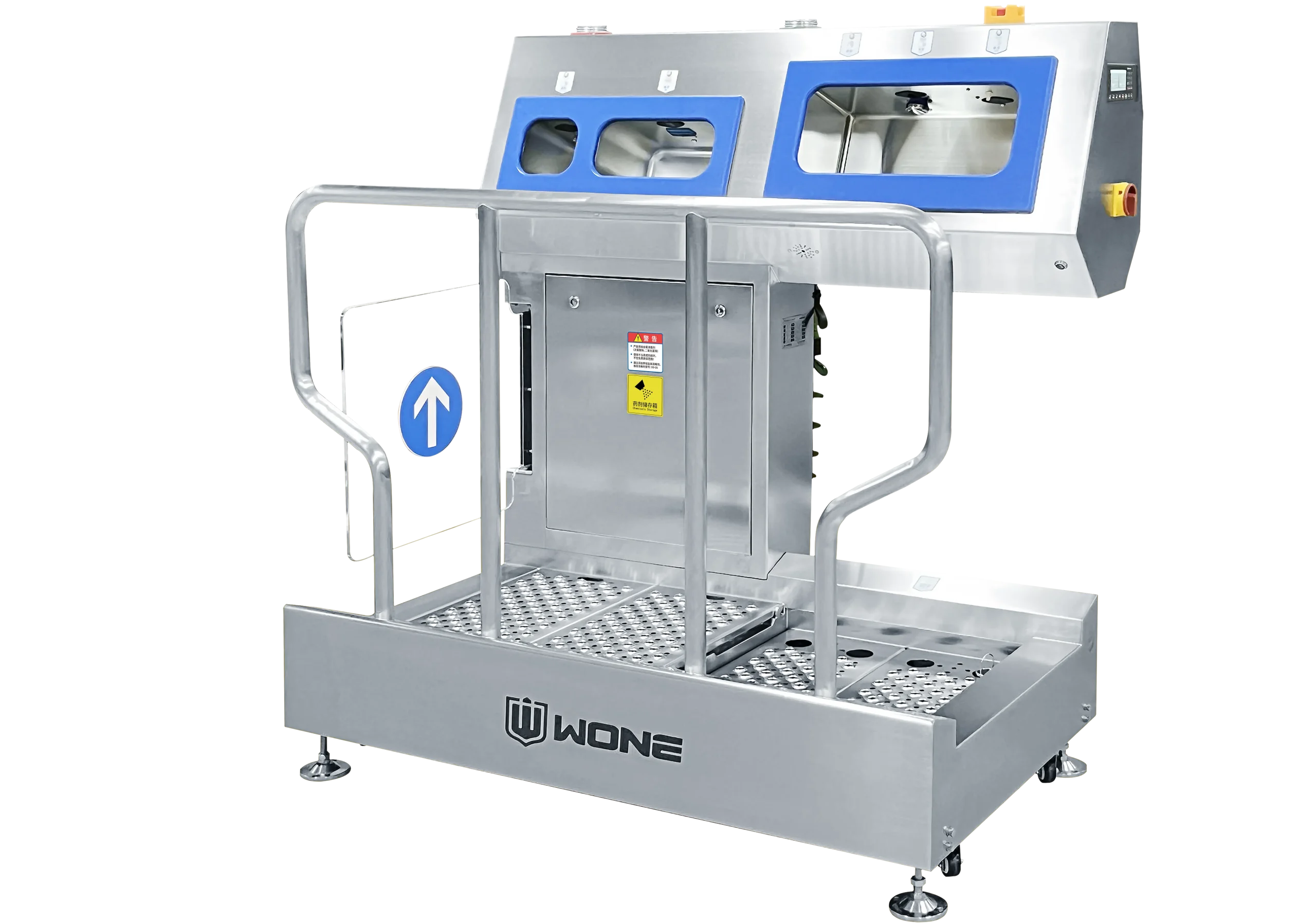
A hand disinfection station is one of the most cost-effective hygiene investments in food processing.
Why It Matters
- Hands are the #1 contamination source
- Manual disinfection is inconsistent
- Automation improves compliance instantly
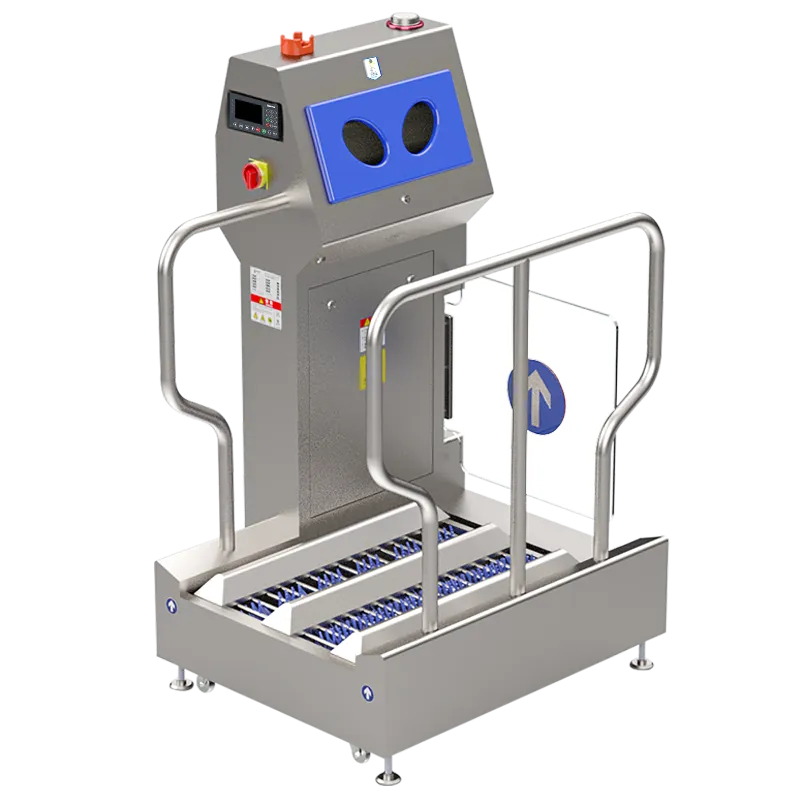
Impact Comparison
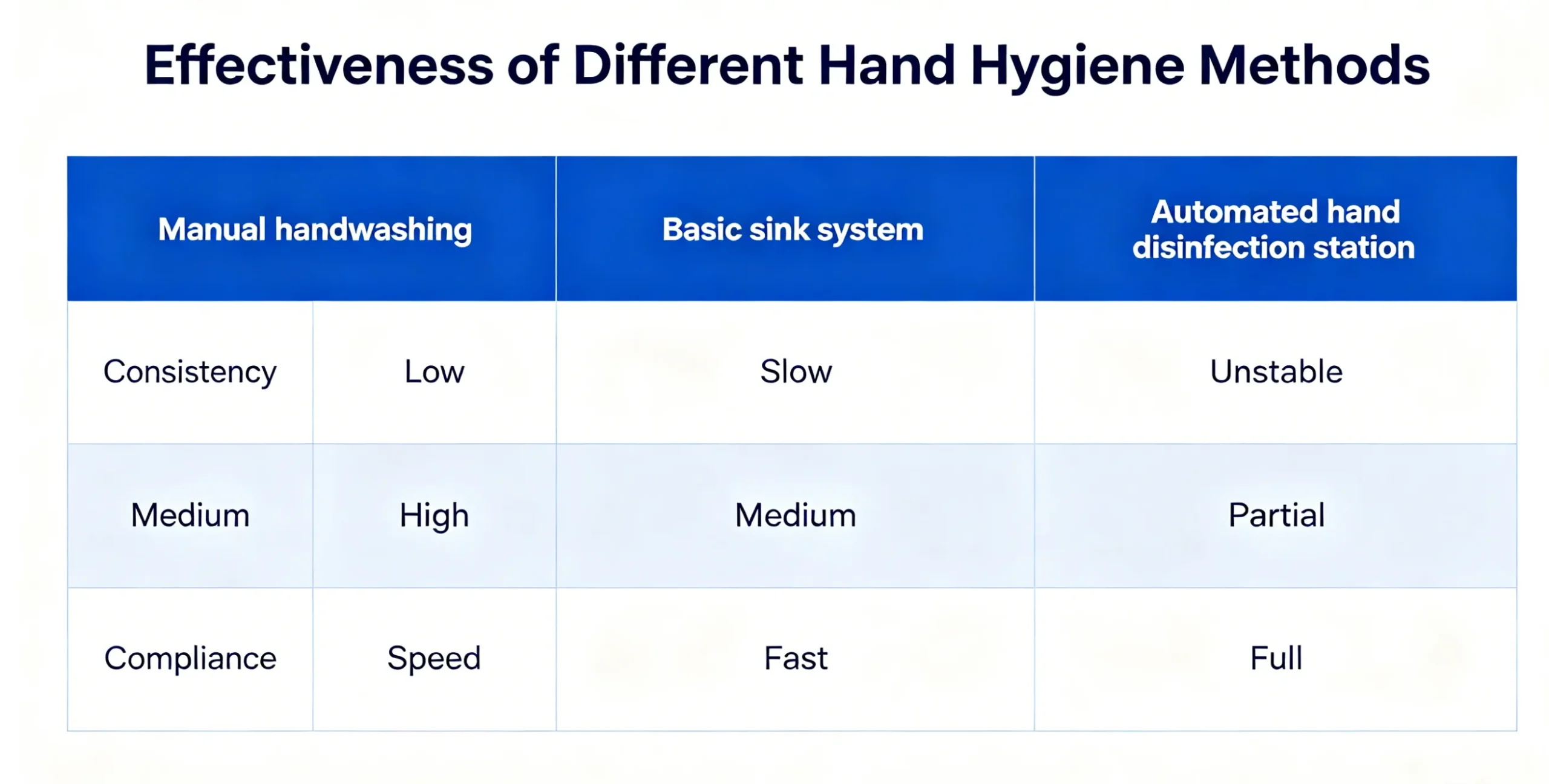
| Method | Consistency | Speed | Compliance |
|---|---|---|---|
| Manual handwashing | Low | Slow | Unstable |
| Basic sink system | Medium | Medium | Partial |
| Automated hand disinfection station | High | Fast | Full compliance |
5. Stainless Steel Hygiene System = Long-Term Cost Reduction
A stainless steel hygiene system is widely used in food factories due to durability and hygiene performance.
Material Performance Comparison
| Material | Hygiene Level | Durability | Maintenance Cost |
|---|---|---|---|
| Plastic | Medium | Low | Medium |
| Painted steel | Medium | Medium | High |
| Stainless steel | Very High | Very High | Low |
Stainless steel systems significantly reduce lifetime operational costs.
6. Food Factory Hygiene Layout Plan (Critical for ROI)
Even the best equipment fails if layout design is wrong.
A proper food factory hygiene layout plan ensures smooth flow and eliminates contamination crossover.
Optimized Layout Principle
Dirty Zone → Transition Zone → Clean Zone → High-Risk Production Zone
Key Layout Rules
- One-way employee movement
- No backward crossing
- Hygiene station at every transition point
- Clear zoning separation
- Minimal congestion points
7. ROI Timeline (Realistic Payback View)
Typical ROI Timeline After Investment
| Period | Result |
|---|---|
| 0–3 months | Training + system stabilization |
| 3–6 months | Reduced labor dependency |
| 6–12 months | Audit improvements visible |
| 12–24 months | Full ROI achieved |
Most factories recover investment through labor + waste + audit savings
8. Audit Success Factors (What Inspectors Actually Check)
Auditors focus on physical system evidence—not just documents.
Audit Checklist Focus
| Area | What They Check |
|---|---|
| Entry control | Is hygiene enforced at entry? |
| Standardization | Is process consistent for all staff? |
| Equipment condition | Is system clean and functional? |
| Flow control | Is contamination risk eliminated? |
A well-designed hygiene system significantly increases audit pass probability.
9. Hygiene = ROI Engine
Investing in cleaning equipment is not a cost decision—it is a production efficiency strategy.
Factories with structured hygiene systems achieve:
- Lower labor cost
- Higher audit success rate
- Reduced contamination risk
- More stable production flow
- Stronger global compliance readiness
At Woneclean, we design hygiene solutions specifically for food processing environments, focusing on:
- Hand disinfection stations
- Entrance hygiene systems
- Stainless steel hygiene infrastructure
- Full hygiene layout planning
Because in modern food manufacturing, hygiene is not compliance—it is profit protection.