

Employee hygiene management plays a critical role in modern food processing facilities. While companies invest heavily in advanced production equipment, automation systems, and quality control procedures, many contamination risks still come from employee movement and human activities.
It comes through the people.
Employees move between different areas every day. They touch equipment, raw materials, packaging materials, and finished products. Without effective hygiene control at the entrance of production areas, microorganisms can easily be transferred from outside environments into high-care production zones.
Food safety is not only about controlling what happens during production. It starts with controlling what enters the production environment.
That is why employee hygiene management has become a critical part of modern food manufacturing.
Employee Hygiene Management: Controlling Human-Related Contamination Risks
When discussing contamination risks, many factories focus on:
- Raw material quality
- Equipment cleaning
- Water quality
- Temperature control
- Chemical management
These factors are essential, but people are often the missing link.
Human activities create continuous contamination opportunities:
- Hands touch multiple surfaces throughout the day
- Footwear carries bacteria from different areas
- Clothing collects dust and microorganisms
- Employees move between zones with different hygiene requirements
According to food safety management principles, preventing contamination is always more effective than correcting contamination after it happens.
Once microorganisms enter a production area, eliminating them becomes much more difficult.
Therefore, controlling personnel movement is one of the most efficient ways to reduce risks.
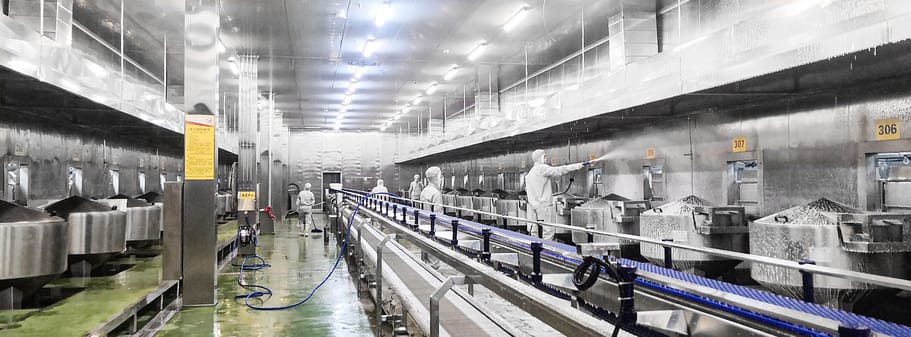
2. The Problem With Traditional Hygiene Practices
Many food factories still rely on simple hygiene procedures:
- Manual hand washing
- Basic disinfectant containers
- Employees remembering cleaning steps themselves
- Random supervision by managers
Although these methods appear simple, they have several weaknesses.
Lack of Consistency
Different employees may perform hygiene procedures differently.
Some may:
- Wash hands too quickly
- Use insufficient disinfectant
- Skip certain steps when production pressure increases
Human behavior is difficult to control without a structured system.
Lack of Data Visibility
Traditional hygiene methods usually cannot answer important questions:
- How many employees passed through the hygiene entrance today?
- Was disinfectant dosage sufficient?
- Which shift had the highest usage?
- Was the hygiene process completed correctly?
Without data, managers can only rely on observation and assumptions.
Modern food safety requires measurable control, not only procedures written on paper.
3. From Hygiene Equipment to Hygiene Management System
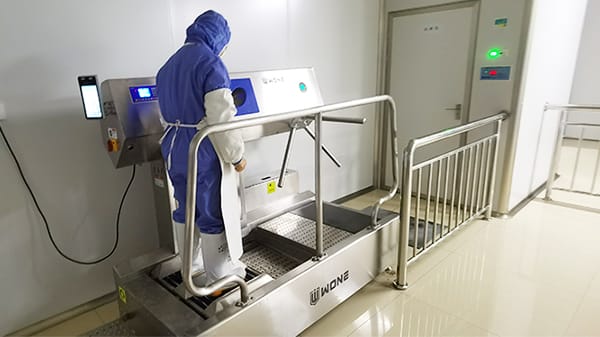
A professional hygiene entrance is not simply a machine for washing hands or cleaning boots.
It is a control point designed to manage employee behavior before entering critical areas.
A complete personnel hygiene system normally integrates:
Hand Cleaning
Effective hand washing removes visible contamination and prepares employees for disinfection.
Automatic Soap Dispensing
Controlled chemical dosing ensures every employee receives the correct amount of cleaning solution.
Hand Drying
Proper drying reduces remaining moisture where microorganisms may survive.
Hand Disinfection
A final disinfection step reduces microbial load before entering production areas.
Footwear Cleaning and Disinfection
Boots can transfer contamination from floors, storage areas, and external zones. Automatic boot cleaning helps maintain separation between hygiene zones.
Together, these processes create a controlled hygiene barrier.
4. Data-Driven Hygiene: The Future of Food Factory Management
The next generation of food factories is moving from manual management to digital hygiene control.
A smart hygiene system can provide valuable operational information:
- Employee entry records
- Chemical consumption monitoring
- Hygiene process tracking
- Abnormal operation alerts
- Usage statistics by production period
This data helps managers understand whether hygiene procedures are truly being followed.
For example:
A factory may require 500 employees to pass through a hygiene station every shift.
If the system records only 350 completed hygiene cycles, managers immediately know there is a potential compliance issue.
This changes hygiene management from:
“Do employees follow the rules?”
to:
“We have data proving whether the process is working.”
5. Hygiene Control Is Also About Production Efficiency
Some companies believe hygiene equipment only increases investment costs.
However, poor hygiene control can create much higher hidden costs:
- Product recalls
- Production interruptions
- Customer complaints
- Additional cleaning procedures
- Brand reputation damage
A well-designed hygiene entrance improves not only food safety but also operational efficiency.
Employees follow a standardized process.
Managers have better visibility.
Production areas maintain more stable hygiene conditions.
The goal is not simply cleaning people before entering production.
The goal is creating a reliable hygiene management system.
6. Building a Strong Hygiene Culture Inside Food Factories
Equipment alone cannot guarantee food safety.
The most successful food manufacturers combine:
People + Process + Technology
People need awareness.
Processes need clear standards.
Technology provides reliable execution and monitoring.
When employees understand that hygiene procedures are part of production quality — not just a company rule — compliance becomes part of the factory culture.
A strong hygiene culture reduces risks before they become problems.
Conclusion: The Entrance Is the Beginning of Food Safety
The production line may be where food is processed, but the hygiene entrance is where food safety begins.
As food regulations become stricter and consumers demand higher quality standards, factories can no longer depend only on manual supervision.
Future-ready food manufacturers need intelligent hygiene solutions that provide:
- Reliable contamination control
- Standardized employee procedures
- Digital traceability
- Long-term operational improvement
Investing in personnel hygiene management is not simply investing in equipment.
It is investing in safer products, stronger compliance, and the future of food manufacturing.
About Woneclean
Woneclean provides professional hygiene solutions for food processing industries, including personnel hygiene stations, foam cleaning systems, air disinfection solutions, and customized hygiene management equipment.
Modern food manufacturers need reliable employee hygiene management systems to maintain food safety standards and improve operational control.