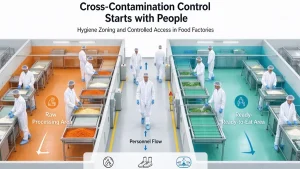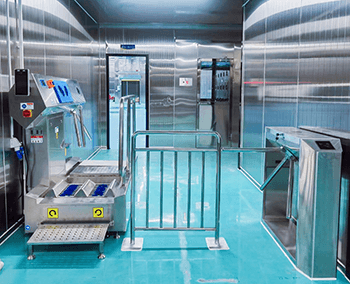
A hygiene station is not just a handwashing sink at the entrance of a food factory. The right system should match the hygiene risk, worker flow, footwear condition, production environment, and available space.
But not every food processing plant needs the same hygiene station.
A bakery with 30 workers does not have the same requirements as a meat processing plant with 200 workers. A wet seafood factory may need stronger boot cleaning, while a dry food plant may focus more on hand hygiene and controlled personnel entry.
So, how do you choose the right hygiene station for a food processing plant?
1. Start by Identifying Your Hygiene Requirements
Before looking at equipment models, look at the movement of people inside the factory.
Ask these questions:
- How many workers enter the production area per shift?
- Do workers move from a low-hygiene area to a high-hygiene area?
- Are hands or footwear likely to carry contamination?
- Are workers wearing low shoes, safety shoes, or full rubber boots?
- Is the production area wet, oily, or heavily contaminated?
- Does every employee need to pass a controlled entrance?
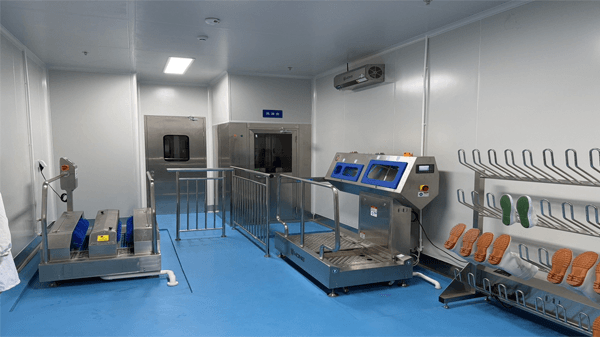
The hygiene station should be installed at a real hygiene transition point, such as:
Changing Room → Hygiene Station → Production Area
Codex recommends that handwashing facilities are conveniently located and that employees can access them when returning to food handling areas.
-
2. Decide Which Functions You Actually Need
A common mistake is choosing a station based only on how many functions it has.
Instead, match the functions to the factory.
Factory condition Recommended functions Bakery / dry food Hand washing + drying + hand disinfection Dairy / beverage Hand washing + drying + disinfection Meat / poultry Hand hygiene + boot sole cleaning/disinfection Seafood Hand hygiene + stronger footwear cleaning High-risk production Hand hygiene + footwear hygiene + access control Heavy contamination Full boot washing rather than sole cleaning only For example, if workers only need to clean their boot soles before entering a production area, a full boot washer may be unnecessary.
On the other hand, meat, poultry and seafood plants can have organic residues, grease, blood or other contamination on the upper part of boots. In these environments, full boot cleaning may make more sense than a simple sole brush.
Related guide: How to Choose the Right Boot Washer for a Food Plant
3. Choose Equipment That Meets Food Safety Standards
Capacity is one of the most important factors when choosing a hygiene station.
Do not calculate only the total number of employees. Look at how many workers need to pass through the hygiene area at the same time.
For example, a factory may have 100 workers per shift, but if 30 employees arrive at the production entrance within a few minutes, a single-user station may create a queue.
A simple way to estimate the required capacity is:
Required capacity = peak workers ÷ available hygiene time
For example, if 20 workers need to pass through an entrance within 5 minutes, the hygiene system needs enough capacity to handle this peak flow without creating a long waiting line.
For larger food factories, consider:
- Multi-user handwashing stations
- Dual-user hygiene stations
- Multiple hygiene lanes
- Separate entrances for different production zones
- Turnstile or access control
The goal is simple: the hygiene process should control personnel flow without becoming a production bottleneck.
-
-
Food-grade stainless steel construction
-
Smooth and easy-to-clean surfaces
-
Minimal dirt-collecting corners
-
Proper drainage
-
Anti-splash design
-
Easy access to brushes and components
-
Corrosion resistance
-
-
Food-grade stainless steel construction
-
Smooth and easy-to-clean surfaces
-
Minimal dirt-collecting corners
-
Proper drainage
-
Anti-splash design
-
Easy access to brushes and components
-
Corrosion resistance
-
Replaceable wear parts
Replaceable wear parts
4. Select the Right Footwear Cleaning Type
Different factories require different shoe sanitising systems. Below is a comparison:
Hygiene Station Types Comparison
Type of Hygienic Equipment Best For Includes Advantages Boot Sole Cleaning Machine Standard food processing plants Rotating brushes, sanitiser dosing Fast foot cleaning, small footprint Full Boot Cleaning Station Meat, poultry, seafood plants Upper boot brushes, deep cleaning High-level hygiene, suitable for wet areas Walk-Through Disinfection Bath High-microbiology control areas Disinfection tank, sensors Strong disinfection, ideal for critical zones Hand & Boot Hygiene Combo Station Medium–large factories Handwashing + boot cleaning + turnstile Complete hygiene control, controlled entry
5.Look at Hygiene Design and Materials
Food factory equipment is exposed to water, detergents, disinfectants and frequent cleaning.
The important question is not simply:
“Is it stainless steel?”
Check the actual construction.
Look for:
-
Food-grade stainless steel construction
-
Smooth and easy-to-clean surfaces
-
Minimal dirt-collecting corners
-
Proper drainage
-
Anti-splash design
-
Easy access to brushes and components
-
Corrosion resistance
-
Replaceable wear parts
Codex recommends hygienically designed surfaces that are durable, smooth, non-absorbent and easy to clean and disinfect.
For frequently used personnel hygiene equipment, these details can have more impact on long-term operation than the initial purchase price.
-
-
What to Check Before Requesting a Quote
Before contacting a hygiene equipment supplier, prepare these six pieces of information:
-
Food type: meat, seafood, bakery, dairy, beverage, etc.
-
Number of workers: total and peak entry flow.
-
Boot type: low shoes, safety shoes or full rubber boots.
-
Main hygiene requirement: hand washing, hand disinfection, sole cleaning or full boot cleaning.
-
Installation space: available length × width × height.
-
Entrance requirement: open access or controlled access.
With this information, the supplier can recommend a more suitable configuration instead of simply sending a product catalogue.
FAQ
How many hygiene stations does a food factory need?
It depends on worker flow, entrance layout and hygiene zoning. The peak number of employees entering at the same time is more useful than total employee numbers.Do all food factories need a boot washer?
No. If footwear contamination is a significant risk, boot or sole cleaning may be necessary. The required equipment depends on the production environment and hygiene zoning.Is a handwashing station enough for a high-risk food factory?
Not always. Meat, poultry, seafood and other high-risk environments may also require footwear cleaning, hand disinfection and controlled personnel access.What material is suitable for a food factory hygiene station?
Stainless steel is commonly used, but the overall hygienic design is equally important. Surfaces should be durable, easy to clean and resistant to the chemicals and cleaning conditions used in the plant.What information should I provide when asking for a hygiene station quotation?
Provide the food type, number of workers, peak worker flow, footwear type, required functions and available installation space. A factory layout or entrance photo is also useful.The key is not to buy the station with the most functions. Choose the station that matches the actual contamination risk and worker flow of your plant.
Internal link suggestion: Hygiene Station PBW-24
Internal link suggestion: How to Choose the Boot Washer for a Food Plant
Internal link suggestion: Handwashing Station for Food Plants -