In the food processing industry, food processing air quality is no longer a secondary consideration—it is a fundamental component of plant design and food safety management. Modern facilities must address air hygiene from the earliest planning stage, as uncontrolled airflow can introduce microbial contamination risks throughout raw material handling, processing, packaging, and storage areas.
According to Food Processing, modern food and beverage facilities must prioritize food safety and air quality (food processing air quality) from the very beginning of plant design. Proper air environment control is essential to maintaining hygienic operations and preventing contamination.
Why Air Quality Is a Hidden Food Safety Risk in Food Processing
Air handling systems play a critical role in food safety design. Poorly managed air can carry microorganisms, dust, and allergens into contact with food or surfaces. The article notes:
If air handling systems for high-risk allergens are not properly zoned, contamination can spread from one area to another.
— Food Processing
This demonstrates that air zoning and maintaining clean air levels in each functional area are indispensable elements of food plant design.
How Air Quality Impacts Food Safety and Cross-Contamination
Food factories are typically divided into different hygiene zones according to risk levels, and air is one of the most common carriers of contaminants between zones. From raw material areas to production, packaging, and storage, airborne microorganisms and particles can travel with airflow. Relying solely on conventional ventilation or filtration systems often fails to maintain consistent microbial control.
This is why many food processing facilities are integrating air disinfection systems (air disinfection system for food processing) alongside traditional HVAC and filtration to proactively manage air quality.
Air Disinfection Systems in Modern Food Processing Plants
Air disinfection systems provide several critical benefits in food processing environments:
Enhanced Microbial Control: Air disinfection devices continuously reduce airborne bacteria, mold, and other microbial contaminants, complementing standard ventilation.
Improved Air Cleanliness in Critical Zones: Packaging, filling, and other sensitive areas maintain stable air hygiene levels, reducing the risk of contamination.
Synergy with Air Zoning Design: Aligned with the air zoning principles mentioned in Food Processing, disinfection systems minimize cross-zone contamination.
Supports Preventive Food Safety Management: By shifting risk control upstream, air safety becomes manageable and sustainable rather than reactive.
Integrating Air Disinfection into Hygienic Plant Design
1. Risk-Based Air Zoning
Each hygiene zone should have independent or differentiated air handling strategies to prevent airflow mixing and contamination (food processing plant air quality).
2.Deploy Standalone Air Disinfection Equipment in Key Areas
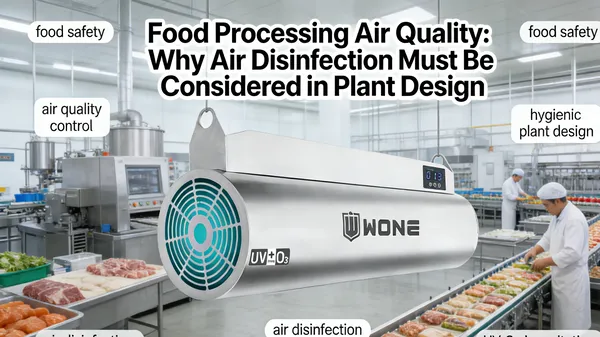
Critical zones such as packaging areas, finished product storage, or areas with high personnel activity benefit from continuous microbial control. For example, industrial-grade Wone Air Disinfection Machine AUT-200 / AUT-300 can maintain stable air hygiene in high-risk zones without disrupting operations.
3.Complement Central Ventilation
Air disinfection devices do not replace HVAC systems but enhance air safety reliability in production areas (air sanitation in food factories).
4.Monitoring and Maintenance
Regular microbial air monitoring ensures the equipment functions effectively over time (air hygiene in food processing plants).
Practical Air Quality Control Strategies for Food Factories
Define air cleanliness levels for each zone and apply air disinfection accordingly.
Use UV-C or HEPA-based air disinfection systems in high-risk areas as a supplement to existing ventilation.
Incorporate air disinfection planning into the early design stage, synchronized with airflow zoning.
Establish ongoing air quality monitoring and maintenance procedures.
Conclusion: Air Safety Should Be a Default in Food Plant Design
Food safety design is never about a single step or piece of equipment. As emphasized by Food Processing, every decision in plant design directly affects controllable food safety risks.
Air should no longer be considered invisible or difficult to manage. With proper zoning and the integration of air disinfection systems, such as the Wone AUT series, food processing facilities can more effectively reduce microbial contamination risk, enhancing overall production safety and reliability.
Air safety is not only a regulatory requirement—it is a core element of achieving high food safety standards.