Rewritten Introduction:
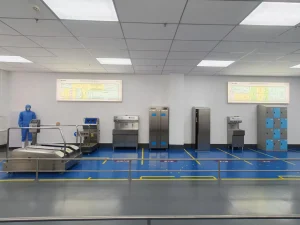
Food Hygiene Dressing Room is a critical control point in global food factories, acting as the first barrier to prevent contamination before personnel enter production areas.
Across global food safety frameworks, including Codex Alimentarius, EU hygiene regulations, FDA GMP rules, and national standards such as China’s GB system, there is a consistent principle:
All personnel entering high-care or clean production areas must pass a controlled hygiene transition system: changing → handwashing → disinfection.
1. Global Regulatory Foundations (Traceable References)
Food Hygiene Dressing Room design must follow strict international food safety regulations such as Codex, EU 852/2004, and FDA GMP requirements.
1.1 Codex Alimentarius (International Standard)
📌 Document: CXC 1-1969 – General Principles of Food Hygiene
Key requirements:
- Food handlers must maintain personal hygiene
- Adequate changing facilities must be provided
- Cross-contamination must be prevented through hygiene control
📎 Official source:
https://www.fao.org/fao-who-codexalimentarius/codex-texts/codes-of-practice/en/
1.2 European Union Food Hygiene Regulation
📌 Regulation (EC) No 852/2004
Key requirements:
- Adequate changing facilities must be available
- Appropriate handwashing facilities must be provided
- Cross-contamination must be effectively controlled
📎 Official EU law portal:
https://eur-lex.europa.eu/legal-content/EN/TXT/?uri=CELEX:32004R0852
1.3 United States FDA GMP Requirements
📌 21 CFR Part 117 – Current Good Manufacturing Practice
Key requirements:
- Personnel must maintain cleanliness and hygiene
- Sanitary facilities must be provided
- Food contamination must be prevented through hygiene controls
📎 Official regulation:
https://www.ecfr.gov/current/title-21/chapter-I/subchapter-B/part-117
1.4 China National Food Safety Standards (GB System)
📌 GB 14881 – General Hygienic Practice for Food Production
Key requirements:
- Changing rooms must be established at production entrances
- Personal clothing and workwear must be separated
- Handwashing and disinfection facilities must be provided in clean areas
- Cross-contamination pathways must be prevented
📎 National standards database:
http://c.gb688.cn/bzgk/gb/
2. Common Global Design Logic for Dressing Rooms
Despite different regulatory systems, global standards converge into four core principles:
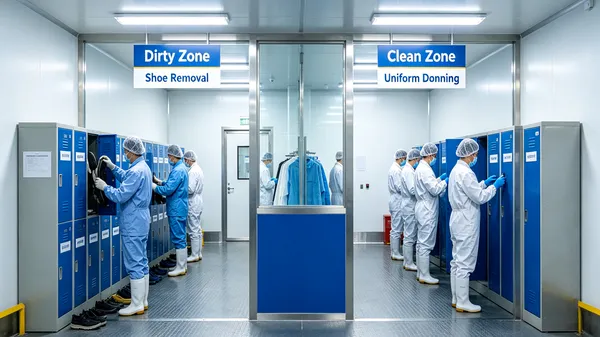
2.1 Controlled Entry Through Hygiene Zones
All major standards require:
- Dressing rooms at production entry points
- Physical separation between clean and non-clean areas
- Multi-stage entry systems for high-care zones
👉 Core logic:
Replace human behavior control with physical system control
2.2 Strict Separation of Personal Items
Global regulations consistently require:
- Personal clothing must be separated from workwear
- Shoes, bags, and personal belongings must not enter production areas
- Dedicated lockers or storage systems must be provided
👉 Objective:
Eliminate external contamination sources at entry level
2.3 Mandatory Handwashing & Disinfection Control Point
Before entering clean production areas, personnel must:
- Wash hands
- Dry hands
- Disinfect hands
In high-risk sectors (e.g., dairy, infant formula, medical foods), regulations may even:
- Reduce washing steps and focus on disinfection efficiency
- Require multi-stage hygiene transitions
2.4 Engineering-Level Handwashing System Design
Global standards increasingly define technical requirements:
- Non-hand-operated faucets (sensor, foot, elbow-operated)
- Anti-backflow drainage systems
- Hygienic, non-porous materials
- Dedicated drying systems (paper towels or air dryers)
- Clear visual hygiene instructions
👉 Industry trend:
From “having facilities” → to “engineered hygiene systems”
3. Industry-Specific Risk-Based Requirements
High-Risk Sectors (Meat, Ready-to-Eat, Cooked Foods)
- Multi-stage changing rooms
- Direct connection to production areas
- Shower and sanitation buffer zones
- Mandatory boot disinfection systems
Medium-High Risk (Dairy, Infant Formula, Medical Foods)
- Complete hygiene transition system at entry
- Changing + washing + disinfection sequence
- In some cases, washing may be replaced by disinfection only
Medium-Low Risk (Beverages, Bakery, Confectionery)
- Standard changing + handwashing system
- Focus on procedural compliance
- Simplified but mandatory hygiene flow
4. Global Regulatory Trend (2024–2026)
Across Codex, EU, FDA, and national food safety updates, three clear trends are emerging:
4.1 From “Rooms” to “Integrated Hygiene Systems”
Dressing rooms are evolving into:
- Personnel flow control systems
- Contamination barrier systems
- Behavioral compliance systems
4.2 From Guidance to Audit-Critical Infrastructure
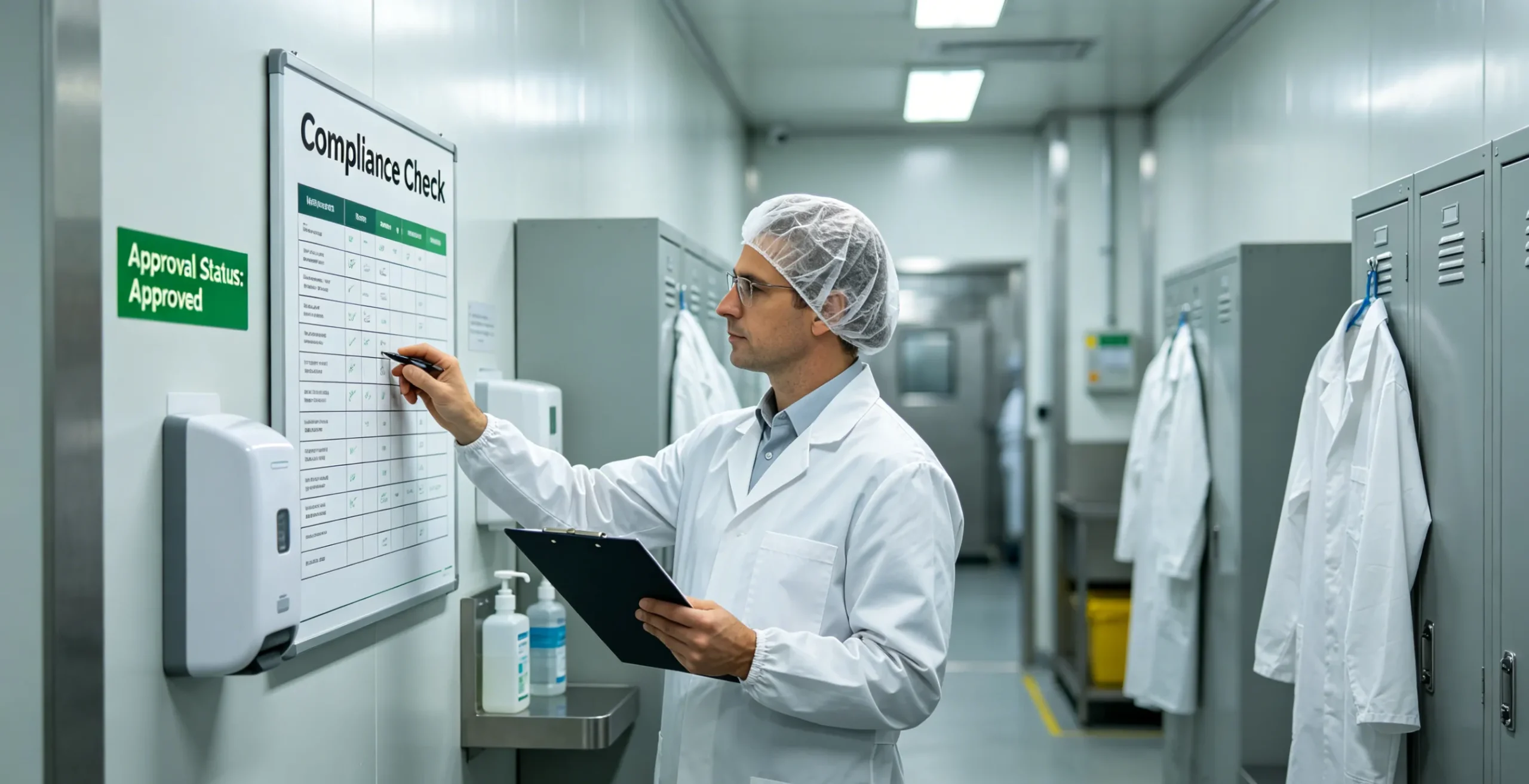
In certification audits (BRCGS, FSSC 22000, ISO 22000), dressing rooms are now a critical inspection point, evaluating:
- Personnel flow design
- Hand hygiene compliance
- Cross-contamination risks
4.3 From Facilities to Risk-Control Engineering
Modern food factory design is shifting toward:
It is no longer about whether a dressing room exists, but whether it effectively prevents contamination risk.
5. Regulatory Traceability Matrix
| Control Requirement | Codex | EU 852/2004 | FDA 21 CFR 117 | GB 14881 |
|---|---|---|---|---|
| Changing facilities | ✔ | ✔ | ✔ | ✔ |
| Handwashing systems | ✔ | ✔ | ✔ | ✔ |
| Cross-contamination control | ✔ | ✔ | ✔ | ✔ |
| Personal item separation | ✔ | ✔ | ✔ | ✔ |
| Hygiene zoning | Recommended | Required | Required | Required |
6. Conclusion: Dressing Room as the First Engineering Control Point
Global food safety regulations consistently agree on one principle:
Food safety does not start on the production line—it starts before entry into the production area.
The design quality of dressing and hygiene systems directly impacts:
- Compliance risk level
- Audit performance
- Contamination prevention capability
- HACCP system effectiveness
Woneclean Perspective
From real-world global food factory projects, one key insight is clear:
👉 The difference between passing and failing audits is often not whether a dressing room exists—but whether the hygiene system is properly engineered.
A well-designed Food Hygiene Dressing Room directly determines audit performance, contamination risk level, and overall food safety compliance in factories.