- Why Layout Planning Matters in the Food Industry
Designing a food factory layout is not only about workflow efficiency—it’s a crucial step to ensure hygiene, safety, and compliance with international food standards such as HACCP and GMP.
A well-planned layout separates clean and unclean zones, prevents cross-contamination, and creates a structured flow from personnel entry to production.
As a trusted hygiene station manufacturer, WONE specializes in developing smart sanitation equipment that supports every step of the hygiene control process—from hand disinfection to boot washing and air purification.
- Personnel Flow and Changing Room Design
A critical part of factory layout planning is the design of the personnel entrance and changing area. The changing room design for food industry must encourage one-way movement—from street clothes to clean uniforms—while preventing contamination between areas.
An effective setup includes:
Locker zones for personal items
Boot changing benches with separation barriers
Hand and boot disinfection stations before entry
Installing an entrance sanitation station ensures every employee passes through a controlled hygiene checkpoint before entering the processing area. WONE’s modular stations integrate automatic hand disinfection, boot washers, and turnstile control, maintaining strict hygiene compliance.
- Boot Washers and Hand Disinfection Solutions
In modern food factories, boot washers and hand disinfection systems form the foundation of personal hygiene. Unclean boots can carry bacteria from non-production areas into sensitive zones, leading to contamination risks.
WONE provides a full range of boot washing stations—from compact sole cleaners to fully automated industrial boot washer systems. Each model is built with stainless steel construction, durable brushes, and automatic dosing of disinfectant to ensure effective cleaning within seconds.
Combined with WONE’s hand disinfection food industry units, these systems create a complete hygiene barrier, ensuring both hands and footwear meet sanitation requirements before entry.
- Air Disinfection and Environmental Hygiene
Clean air is just as important as clean surfaces. Contaminated air can spread microorganisms throughout the production area, especially in temperature-controlled environments.
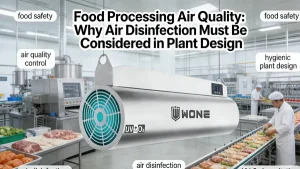
WONE’s air disinfection machines use UV and filtration technology to continuously remove bacteria, mold spores, and odors. These systems can be installed in packaging zones, cold rooms, or general production areas, helping maintain optimal air quality and supporting food safety compliance.
- Integrating Hygiene Equipment into Factory Design
Effective hygiene planning involves integrating equipment into the layout—not adding it as an afterthought. WONE works with global clients to design sanitation zones that optimize space while meeting HACCP guidelines.
Typical layout integrations include:
Hygiene station lines at every production entrance
Centralized cleaning systems with foam, rinse, and disinfect functions
Air disinfection units in high-risk or enclosed zones
Visual separation between raw and finished product areas
Automation and data tracking are also becoming essential. WONE’s smart hygiene systems can record disinfection cycles, monitor usage, and alert supervisors to maintenance needs—bringing hygiene management into the digital era.
- Building a Hygiene-First Factory with WONE
At the core of every successful food factory layout is hygiene. From boot wash stations and entrance sanitation systems to air disinfection machines, WONE provides professional, integrated solutions designed for the food industry.
As an experienced hygiene station manufacturer, WONE helps food processors create cleaner, safer, and more efficient working environments.
Contact WONE today to learn how to plan a hygiene-focused layout that meets your factory’s unique needs and industry standards.