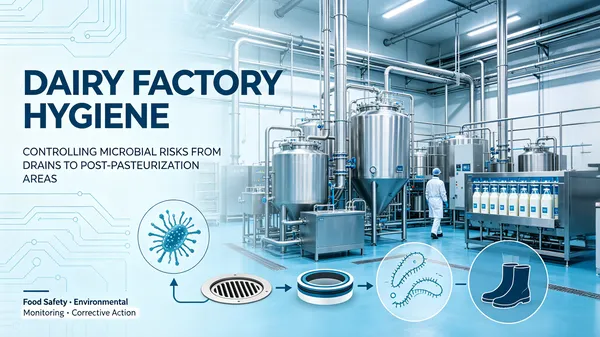
Dairy factory hygiene is essential for controlling microorganisms throughout the production environment. From drains and equipment to personnel, footwear, and post-pasteurization areas, multiple contamination routes can affect dairy food safety. Therefore, an effective dairy factory hygiene program should combine hygienic design, personnel hygiene, controlled cleaning, environmental monitoring, and corrective action.
The 2024 Rizo-López Foods outbreak clearly illustrates this risk. CDC reported 26 illnesses across 11 states, 23 hospitalizations, and 2 deaths. In addition, FDA found L. monocytogenes in environmental samples that matched the outbreak strain.
As a result, dairy manufacturers should ask two important questions:
Where can microorganisms survive?
What route could allow them to reach the product?
These questions provide a practical starting point for developing an effective dairy factory hygiene program.
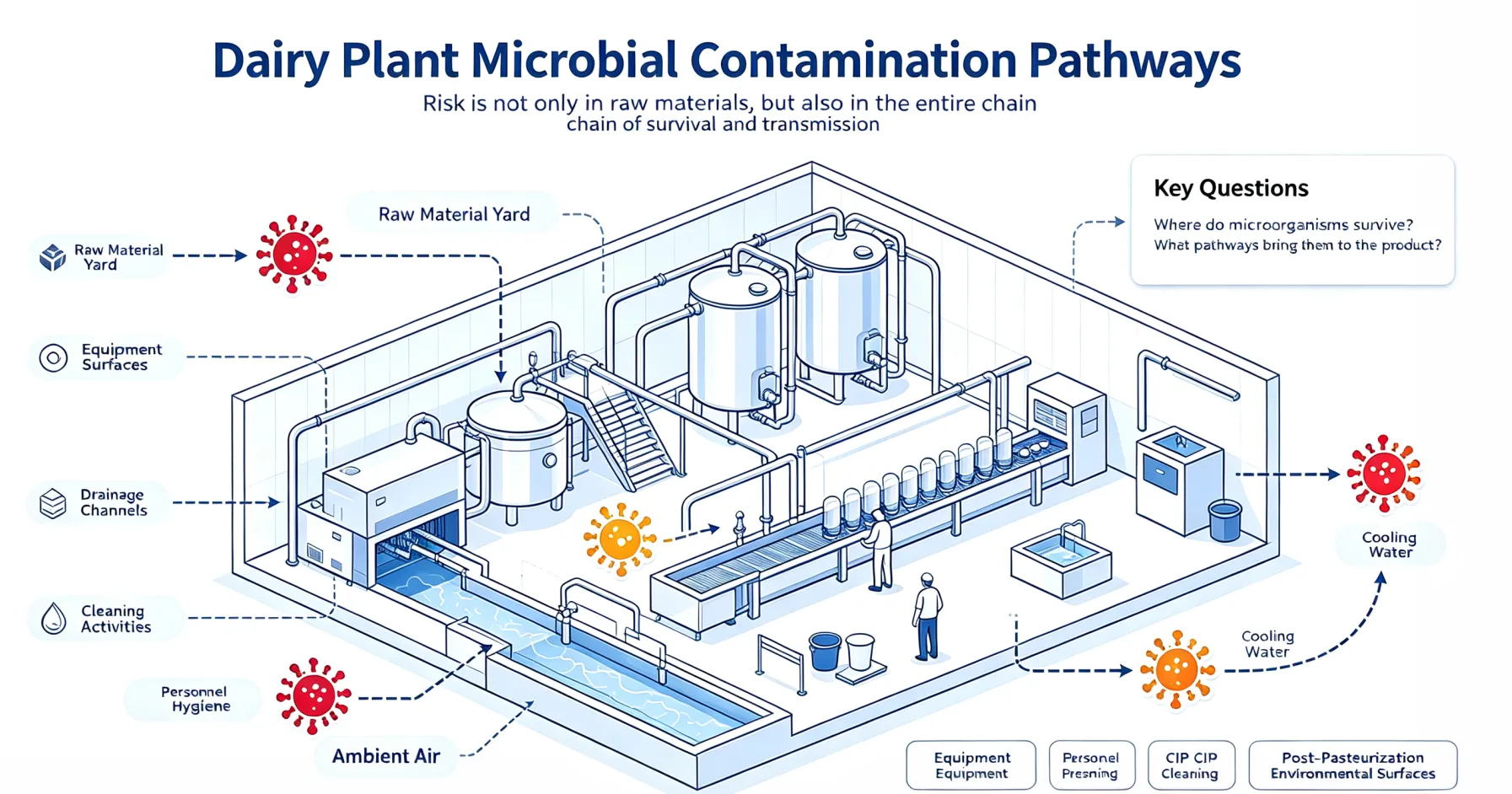
Where Are the Main Microbial Risks?
1. Drains and Wet Areas
Dairy processing generates water and organic residues every day. Consequently, drains can collect milk residues, soil, moisture, and microorganisms, creating conditions where contamination can persist.
More importantly, contamination does not always remain inside the drain. Water, footwear, wheels, and cleaning tools can transfer microorganisms into surrounding areas. For this reason, the condition of drains and nearby floors should be considered part of the overall environmental hygiene program.
A typical contamination pathway may look like this:
Drain → Floor → Wheels → Footwear → Equipment → Production Area
FDA environmental sampling guidance includes floors, drains, carts, and equipment housing, rather than focusing only on food-contact surfaces.
Particular attention should be given to standing water, poor drainage, dirty drains, water moving from dirty to clean areas, shared cleaning tools, and equipment wheels crossing hygiene zones. Therefore, dairy factories should improve drainage, control water movement, separate cleaning tools by hygiene zone, and include drains and surrounding areas in environmental monitoring.
2. Equipment and Hidden Harborage Sites
A production line may look clean while microorganisms remain in difficult-to-clean locations. For example, common risk points include gaskets and seals, valves and pumps, pipe connections, conveyor interfaces, equipment frames, cracks, and damaged surfaces.
However, visible soil is not always the main problem. Persistent moisture combined with organic residues can create microbial harborage sites that are difficult to identify during routine inspections.
When the same location repeatedly produces positive environmental results, simply increasing cleaning frequency may not solve the underlying problem. Instead, the investigation should also consider equipment design, maintenance, drainage, and potential harborage sites.
Therefore, dairy manufacturers should regularly inspect equipment seals, joints, connections, drainage points, and difficult-to-access components. Where necessary, damaged parts should be repaired or replaced, while hygienic design improvements can reduce future contamination risks.
3. Personnel and Footwear
Personnel can become a mobile contamination route between hygiene zones. For instance, a worker may move through:
Changing Room → Hygiene Entrance → Production → Processing → Packaging
During this movement, hands, footwear, protective clothing, and mobile tools can transfer microorganisms from one area to another.
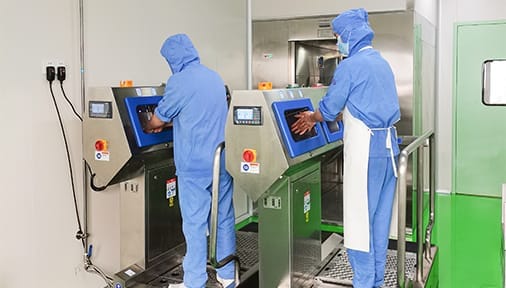
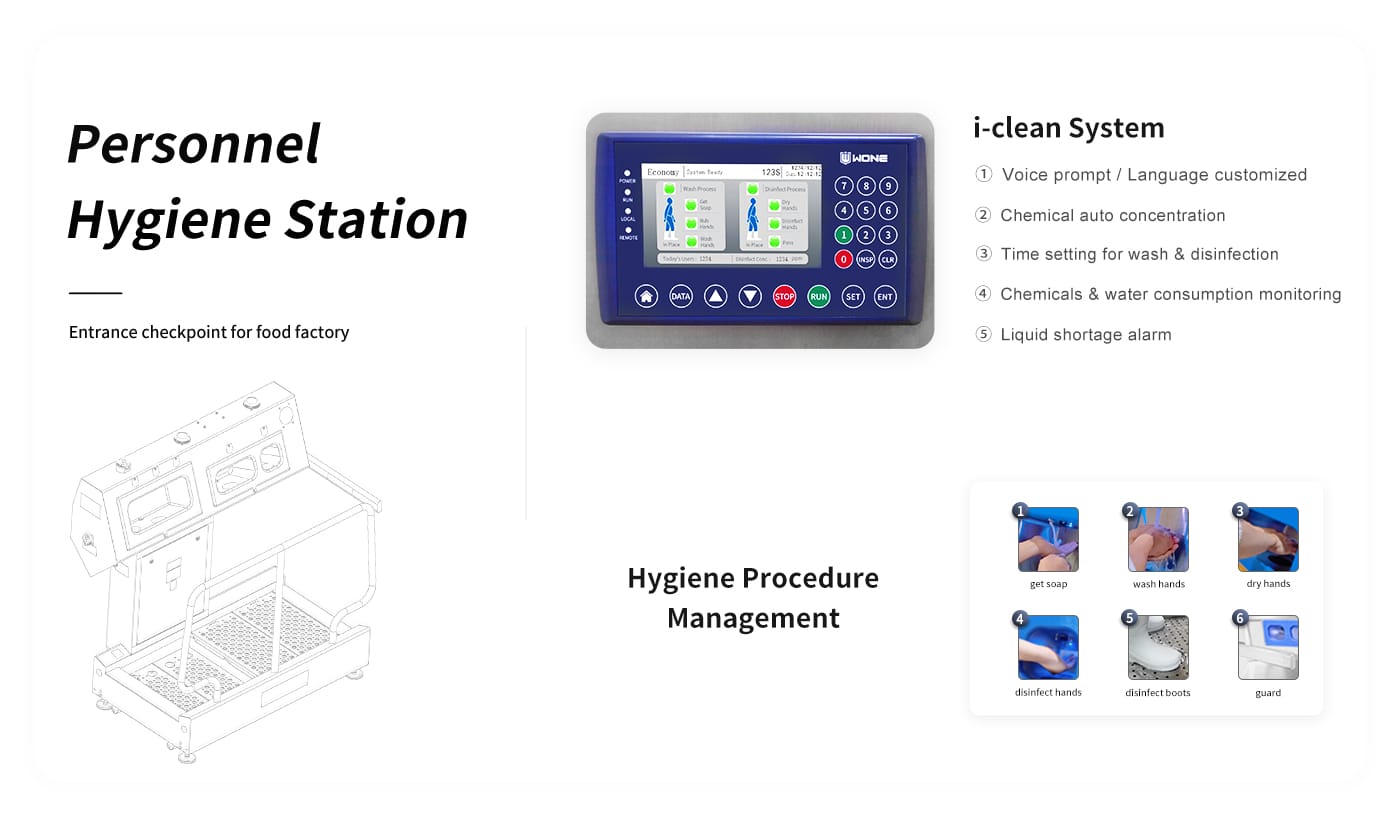
Therefore, personnel hygiene should be built into the production flow rather than treated as a separate activity. A properly designed hygiene entrance may combine hand washing, soap dispensing, hand disinfection, boot cleaning, boot disinfection, dedicated footwear, controlled access, and one-way personnel flow.
More importantly, the objective is not simply to make workers’ hands or footwear clean. The real goal is to prevent microorganisms from crossing hygiene zones and reaching areas where products are exposed.
Why Post-Pasteurization Hygiene Matters
Pasteurization is an important microbial control step. However, it does not eliminate contamination risks after the kill step.
A simplified dairy process is:
Raw Milk → Pasteurization → Processing → Filling → Packaging → Cold Storage
Once pasteurization is complete, contamination may still occur through filling equipment, operators, gloves, footwear, water, condensation, packaging equipment, or maintenance activities.
This issue becomes especially important for ready-to-eat dairy products. In other words, protecting the product after pasteurization is just as important as controlling the raw material before pasteurization.
The Rizo-López investigation provides a clear example. FDA found environmental samples containing L. monocytogenes that matched the outbreak strain.
As a result, dairy factories should give additional attention to post-pasteurization processing, filling, and packaging areas. Personnel movement, equipment sanitation, water management, condensation control, and environmental monitoring should all be considered when assessing contamination risks.
Five Key Dairy Hygiene Control Points
An effective dairy factory hygiene program should focus on five connected areas. Together, these controls help reduce opportunities for microorganisms to survive, spread, and reach the product.
1. Hygienic Design
First, reduce potential harborage sites by controlling dead spaces, water accumulation, product residues, difficult-to-clean surfaces, damaged seals, and poor drainage.
Good hygienic design makes cleaning easier. At the same time, it reduces opportunities for microorganisms to survive inside equipment and production areas.
For this reason, equipment selection and factory layout should consider not only production efficiency but also accessibility, drainage, cleaning requirements, and long-term maintenance.
2. Personnel Hygiene
Next, control hand hygiene, footwear, protective clothing, personnel movement, and hygiene barriers.
In practice, controlled personnel flow can significantly reduce the chance of transferring contamination between zones. Hygiene barriers should therefore be positioned according to the actual movement of workers rather than added as an isolated piece of equipment.
A well-designed entry system can also help standardize hygiene procedures and reduce the possibility of workers bypassing critical hygiene steps.
3. Cleaning and Sanitation
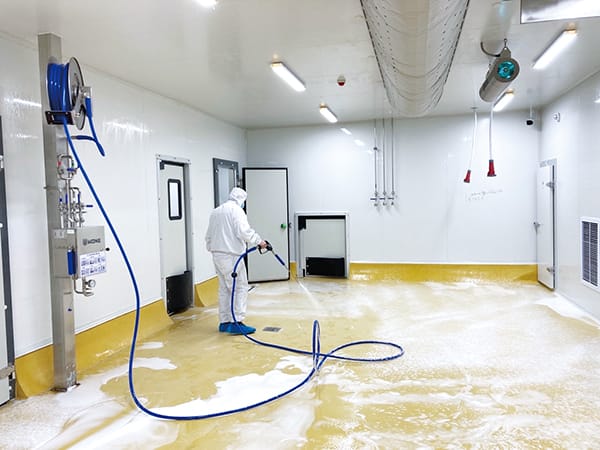
A controlled cleaning process should follow:
Pre-Rinse → Foam/Detergent → Mechanical Cleaning → Rinse → Sanitization → Verification
Furthermore, key parameters such as chemical concentration, contact time, mechanical action, water conditions, and cleaning sequence should be controlled.
Cleaning should therefore be treated as a food-safety process, not simply a routine worker task. In addition, verification is important because completing a cleaning procedure does not automatically mean that the target area has been effectively controlled.
Where recurring contamination is found, the cleaning procedure itself should also be reviewed. The issue may involve insufficient mechanical action, incorrect chemical concentration, poor equipment accessibility, or ineffective water management.
4. Environmental Monitoring
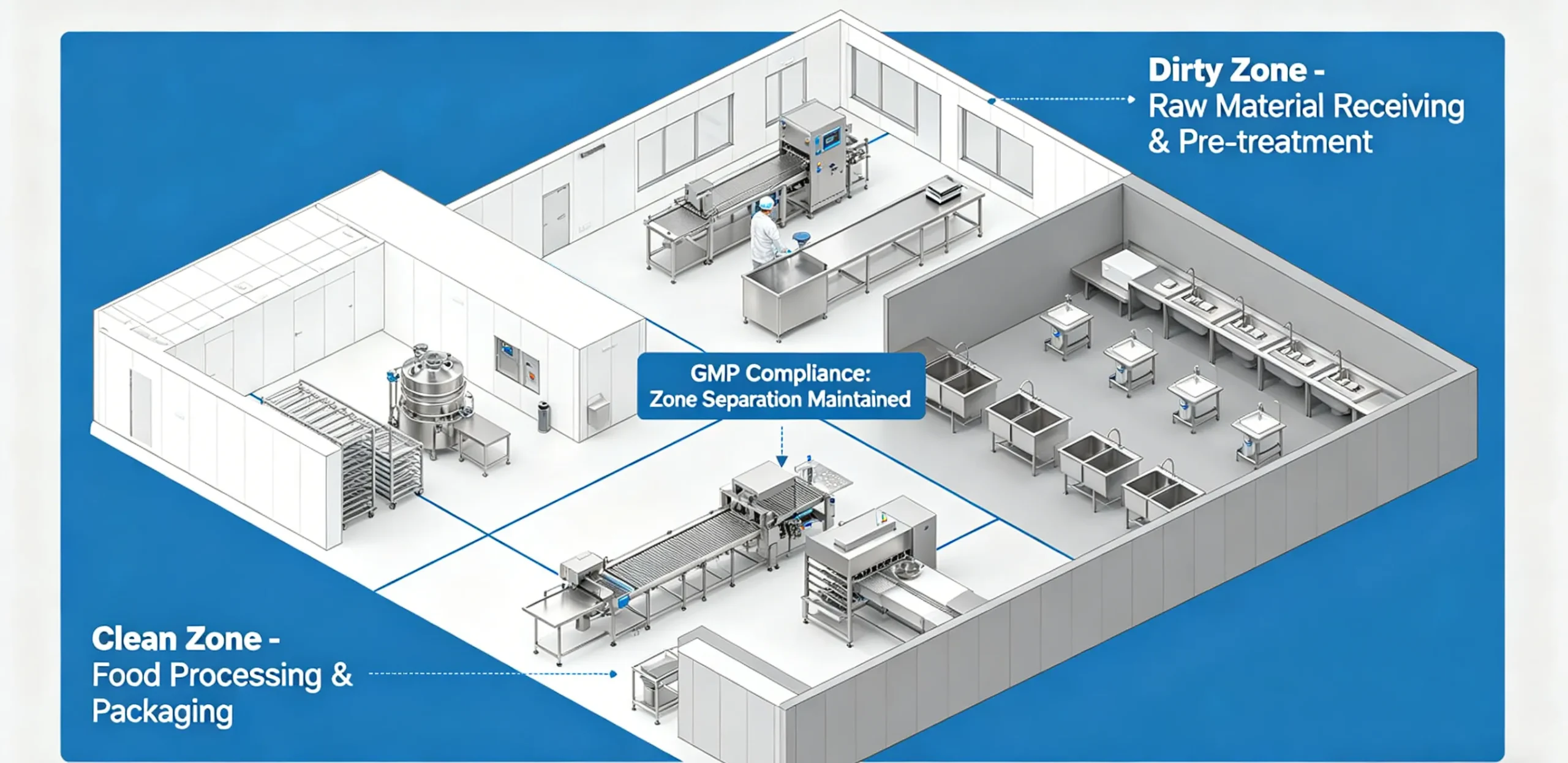
Environmental monitoring should not focus only on food-contact surfaces. Instead, a risk-based program should consider different areas according to their proximity to the product and their potential role in contamination.
Zone 1: Food-contact surfaces
Zone 2: Areas adjacent to food-contact surfaces
Zone 3: Floors, drains, wheels, and the processing environment
Zone 4: Corridors, warehouses, and other remote areas
FDA recognizes environmental sampling as an important tool for identifying pathogens such as Listeria monocytogenes and Salmonella in food-production environments.
More importantly, monitoring should help QA teams understand where contamination starts and how it could move toward the product. Sampling results become much more useful when they are evaluated as part of a broader contamination pattern rather than as isolated test results.
5. Traceability and Corrective Action
Finally, connect:
Cleaning Records → Production → Maintenance → Environmental Results → Corrective Action → Verification
This connection allows QA teams to identify recurring problems instead of treating every positive result as an isolated incident.
Consequently, traceability can help turn individual environmental results into useful information for root-cause investigation and preventive action. Over time, these records can also reveal patterns related to specific equipment, production shifts, cleaning activities, or areas of the facility.
What Should You Do After a Positive Environmental Result?
A positive environmental result should not simply lead to cleaning the same area again. Instead, it should trigger a structured investigation that considers both the contamination source and the possible route toward the product.
A practical investigation may follow this sequence:
Positive Result
↓
Check Product Exposure
↓
Expand Environmental Sampling
↓
Inspect Drains and Equipment
↓
Review Cleaning and Maintenance
↓
Identify Harborage or Transfer Route
↓
Correct the Root Cause
↓
Resample and Verify
For repeated positives, investigators should determine whether there is a persistent reservoir or contamination pathway. In many cases, the pattern may look like:
Reservoir → Movement → Cross-Contamination → Product Exposure
Therefore, the objective is not simply to clean more often. Instead, the priority is to identify the source, remove the underlying cause, and break the contamination pathway.
Practical Hygiene Solutions for Dairy Factories
A complete dairy hygiene strategy can combine several types of controls.
Personnel Hygiene Stations can control hand washing, hand disinfection, and footwear hygiene before employees enter controlled production areas. Meanwhile, boot cleaning and disinfection systems can help reduce contamination carried through footwear at hygiene barriers.
For production areas, Foam Cleaning Systems can provide controlled application of detergents to floors, walls, and equipment surfaces. As a result, cleaning teams can achieve more consistent coverage across large processing areas.
Hygiene Barriers can also separate clean and dirty personnel flows, thereby reducing unnecessary cross-contamination. In addition, Data Traceability can connect hygiene activities with production, environmental monitoring, and corrective actions.
However, equipment should not be treated as an isolated solution. Instead, it should support the complete hygiene system:
Process Flow → Hygiene Zoning → Personnel Flow → Cleaning → Environmental Monitoring → Corrective Action
When these controls work together, dairy factories can move from reactive cleaning toward a more systematic approach to microbial risk management.
Dairy Factory Hygiene Checklist
Before considering a production area under control, ask:
- Are drains clean and free-flowing?
- Is standing water eliminated?
- Can wastewater move toward clean areas?
- Are equipment seals and joints easy to inspect and clean?
- Are cleaning tools separated by hygiene zone?
- Are personnel crossing hygiene barriers?
- Is footwear properly cleaned and disinfected?
- Are post-pasteurization areas receiving additional hygiene attention?
- Are environmental results being trended?
- Are repeated positives investigated for root causes?
- Are corrective actions verified?
If the same contamination problem keeps returning, do not ask only:
“How can we clean this better?”
Instead, ask:
“Why does contamination keep coming back?”
That question often leads to the real root cause.
Conclusion
Effective dairy factory hygiene is about controlling the complete microbial pathway:
Source → Survival → Harborage → Movement → Product Exposure
Although raw materials are an important source, significant risks can also exist in drains, wet areas, equipment joints, footwear, cleaning practices, and post-pasteurization environments.
Therefore, the solution is not simply more cleaning. Rather, dairy manufacturers need an integrated system that combines hygienic design, personnel hygiene, controlled cleaning, environmental monitoring, and traceable corrective action.
Ultimately, the goal is simple:
Fewer places for microorganisms to survive.
Fewer opportunities for them to spread.
Fewer routes for them to reach the product.
That is the difference between cleaning a dairy factory and controlling dairy food safety.
Frequently Asked Questions
What are the main microbial risks in a dairy factory?
The main risks include equipment, drains, water, personnel, cleaning activities, and post-pasteurization environments. In particular, areas where moisture, organic residues, and difficult-to-clean surfaces exist may require additional attention.
Why is Listeria important in dairy processing?
Listeria monocytogenes can survive and grow under refrigeration. Therefore, persistent environmental contamination is an important food-safety concern, particularly in facilities producing ready-to-eat dairy products.
Can pasteurization eliminate all contamination risks?
No. Even after pasteurization, contamination can still occur through equipment, personnel, water, packaging, or the processing environment. For this reason, post-pasteurization hygiene remains an important part of dairy food safety.
What should a dairy factory do after a positive environmental result?
First, investigate nearby areas and possible product exposure. Then, identify potential harborage and transfer routes, review sanitation and maintenance, correct the root cause, and verify effectiveness through follow-up monitoring.
Why are drains important in dairy hygiene?
Drains can collect organic residues and microorganisms. If contamination is transferred through water, personnel, footwear, or equipment, the drain can become part of the contamination pathway. Consequently, drains should be included in both sanitation programs and environmental monitoring.