APPLICATION
BAKING INDUSTRY
The baking industry requires reliable baking industry hygiene solutions to prevent contamination, manage allergens, and comply with HACCP, GHP, GMP, and ISO 22000 standards. Unlike heavy-soil industries, bakeries face unique airborne risks caused by flour dust, warm airflow, and humidity changes. These conditions create an ideal environment for microbial growth, especially during cooling and final packaging stages. Effective, automated hygiene processes are essential to ensure product quality, consistency, and audit readiness.
Industry Pain Points Unique to Baking Environments
Baking facilities deal with contaminants that are often invisible yet difficult to control. Flour dust spreads quickly through air circulation systems, settling on racks, mixers, dough-handling tables, and packaging zones. When humidity rises—particularly in fermentation rooms—dust absorbs moisture and becomes a carrier for mold and bacteria.
Temperature transitions between baking, cooling, and storage areas further accelerate airborne movement. These contaminants frequently bypass manual cleaning routines and are commonly identified as high-risk points in third-party audits.
Cold and cooling zones are especially sensitive. A single mold spore can lead to shelf-life failure, product recalls, and expensive waste. As a result, bakeries increasingly rely on automated, traceable, and consistent hygiene systems rather than traditional manual cleaning.
Key Hygiene Risks in Bakery Plants
Airborne Dust and Mold Spores
Flour particles, yeast, and mold spores easily travel through open spaces and settle on exposed baked goods.
Humidity-Driven Microbial Growth
Moist conditions near proofing and fermentation rooms accelerate mold development.
Cooling & Packaging Exposure
Open-air cooling stages increase the risk of environmental contamination.
Surface Microbial Film
Light dust mixed with oil vapors forms a thin microbial layer on surfaces, equipment, trays, and conveyors.
Poor Hand and Footwear Hygiene
Human movement transfers microorganisms into high-care zones.
Why Automated Baking Industry Hygiene Solutions Are Essential
Manual cleaning cannot effectively control airborne particles or micro-dust. Automated hygiene solutions provide:
Hands-free hand sanitizing to remove human error
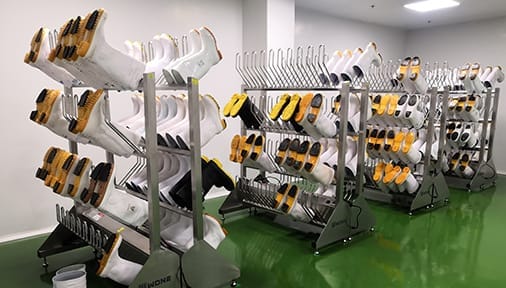
Automatic sole and boot disinfection at entry and transition zones
Foam cleaning for mixers, racks, trays, ovens, belts, and trolleys
Air disinfection units to reduce airborne mold and spores
Standardized workflows for HACCP and ISO documentation
Traceable sanitation records for brand audits
These systems create consistent hygiene control in areas where lightweight contaminants quickly return after manual cleaning.
Recommended Hygiene Workflow for Bakery Plants
Step 1 — Entry Control Zone
Step 2 — Pre-Cleaning of Equipment
Foam Cleaning Machine
High-pressure rinsing for mixers, racks, and ovens
Step 3 — Air Quality Stabilization
Step 4 — Production Area Hygiene
Regular surface sanitation
Mold-control programs
Step 5 — Cooling & Packaging Area Protection
Air filtration and circulation management
Critical Control Points (CCPs) for Baking Hygiene
CCP1: Cooling Area Air Quality
Open products are the most vulnerable to contamination.
CCP2: Hand Hygiene at Ingredient Handling Points
Flour dust clings to hands and becomes a contamination carrier.
CCP3 – Footwear Hygiene at Zone Transitions
Shoes transfer spores between low-risk and high-care areas.
CCP4: Humidity & Temperature Control
Uncontrolled humidity accelerates mold growth on surfaces and racks.
CCP5: Cleaning of High-Level Surfaces
Dust frequently accumulates on overhead beams, lights, and pipes.
Compliance & International Standards for Bakery Hygiene
HACCP — Focuses on airflow, dust, and cooling zone risks.
GHP/GMP — Requires cleanable structures, controlled dust, and scheduled sanitation.
ISO 22000 / FSSC 22000 — Prioritizes traceability and documented hygiene workflows.
FDA Food Code — Emphasizes zoning, air handling, and surface sanitation for export-oriented bakeries.
Case Study — Mold Reduction in a Mid-Size Bakery
A mid-size baking plant experienced recurring mold issues in its cooling and packaging areas. Heavy flour dust and unstable humidity caused frequent shelf-life failures and audit non-conformities. After installing Air Disinfection Units, Automatic Sole/Boot Sanitizers, and Foam Cleaning Systems, mold presence dropped by 65%, and the facility successfully passed both customer audits and HACCP renewal without major findings.
Related Articles
Outbound Links
Industry Standards & References
For more detailed guidance on international hygiene and food safety requirements, you may refer to the following authoritative resources:
FDA HACCP Guidelines: https://www.fda.gov/food/hazard-analysis-critical-control-point-haccp
WHO – Food Safety & Hygiene: https://www.who.int/health-topics/food-safety
These organizations provide globally recognized standards that help ensure proper hygiene management in food processing environments.
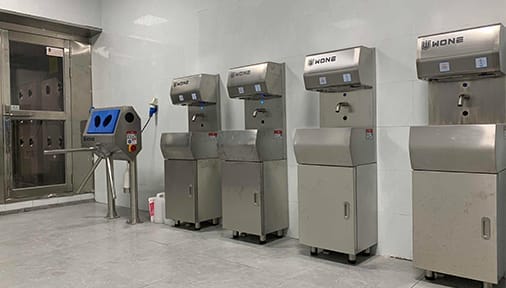
hand hygiene in changing room of baking factory
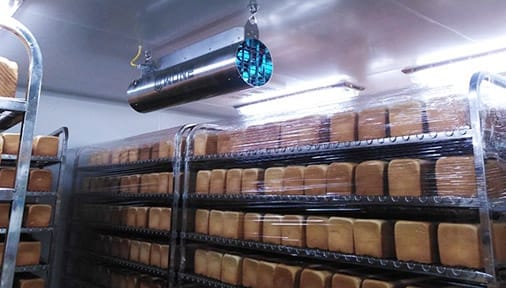
WONE air disinfection machine for baking factory
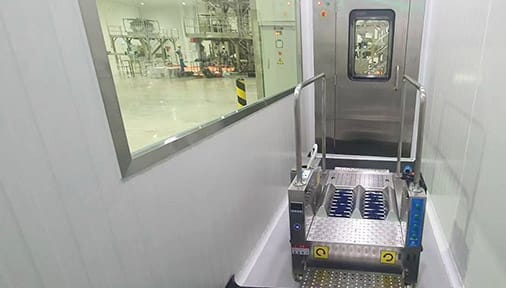
boot washer in changing room of baking factory