Introduction
Baking kills many microorganisms, but the hygiene risks do not end when products leave the oven. During cooling, bread, cakes and pastries may be exposed to airborne particles, contaminated equipment and unnecessary handling.
For bakery managers, keeping the cooling room clean means more than washing the floor. Here are five common mistakes and how to address them.
1. Treating the Cooling Room as a Low-Risk Area
Cooling rooms are sometimes overlooked because the baking process is already complete. However, products may remain exposed before packaging, creating opportunities for contamination.
How to improve:
- Include cooling areas in routine hygiene inspections.
- Limit unnecessary personnel movement.
- Keep exposed products away from potential contamination sources.
- Clean racks and nearby surfaces before production.
Key point: The cooling stage is part of food safety management, not simply a waiting period.
2. Ignoring Air Quality and Airflow
Air circulation helps products cool, but poorly maintained ventilation and dust from nearby production areas can introduce contaminants.
How to improve:
- Inspect air intakes and ventilation systems regularly.
- Remove accumulated dust from overhead surfaces.
- Check whether airflow carries contaminants from raw-material areas toward finished products.
- Assess whether additional air treatment is appropriate.
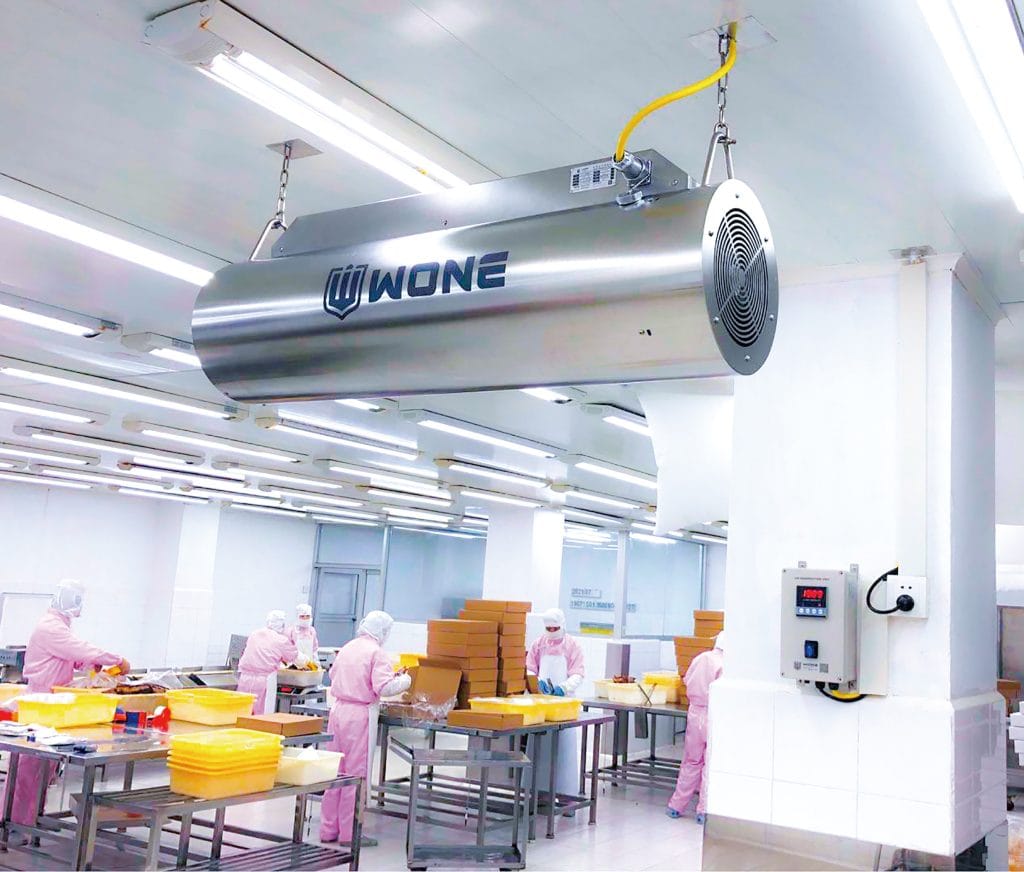
Air disinfection equipment can support an environmental hygiene programme when airborne microbial risks justify its use. It does not replace ventilation maintenance or surface cleaning.
3. Cleaning Racks and Conveyors Only When They Look Dirty
Crumbs and residues can accumulate around conveyor edges, rollers, rack joints and other difficult-to-reach areas. Equipment may look clean while residues remain in hidden spots.
How to improve:
- Establish cleaning schedules based on production needs and risk.
- Remove loose crumbs before wet cleaning.
- Use suitable detergents and follow the required contact time.
- Verify cleaning effectiveness before restarting production.
For suitable washable equipment, industrial foam cleaning systems can help distribute detergent consistently across complex surfaces.
4. Overlooking Condensation and Moisture
Temperature differences can cause condensation on ceilings, pipes and refrigeration equipment. Dripping water may contaminate exposed products or food-contact surfaces.
Moisture left after cleaning can also delay equipment returning to production.
How to improve:
- Inspect overhead pipes, ceilings and refrigeration units.
- Check for standing water and drainage problems.
- Investigate recurring condensation instead of repeatedly wiping it away.
- Confirm that equipment meets cleaning, sanitation and drying requirements before use.
Remember: cleaning, disinfection and drying are different steps. Each serves a specific purpose.
5. Relying on Employees to Remember Every Hygiene Step
Even with written procedures, cleaning quality can vary between employees and shifts, especially during busy production periods.
How to improve:
- Use simple cleaning checklists.
- Assign clear responsibilities for each area.
- Provide appropriate hand hygiene facilities at entry points.
- Establish footwear hygiene procedures where necessary.
- Check cleaning records and inspect equipment before production.
Automated hygiene stations can help standardize handwashing and disinfection procedures. Footwear hygiene equipment can support controls between designated hygiene zones.
However, equipment works best alongside clear procedures, staff training and regular verification.
A Simple Bakery Cooling Room Hygiene Checklist
Before production, check:
-
Cooling racks and conveyors are clean.
-
Overhead surfaces show no signs of condensation or dripping.
-
Ventilation openings and accessible areas are maintained.
-
Personnel follow hand and footwear hygiene procedures.
-
Cleaning tasks are recorded and completed.
Inspection frequency should reflect the product, production process and facility risk assessment.
How WONE Clean Supports Bakery Hygiene
WONE Clean provides industrial hygiene equipment for food-processing environments, including:
- Industrial cleaning equipment for suitable washable surfaces and equipment.
- Air disinfection equipment for appropriate applications.
- Personnel hygiene stations for handwashing and disinfection.
- Footwear hygiene equipment for selected hygiene-zone transitions.
The right equipment depends on the room layout, production workflow and specific hygiene risks.
Explore WONE Clean’s Baking Industry Hygiene Solutions to learn more.
Conclusion
Bakery cooling room hygiene depends on controlling contamination from the air, equipment, moisture and personnel. Regular inspections, consistent cleaning procedures and appropriate hygiene equipment can help reduce risks before packaging.
Rather than adding equipment without a clear purpose, start by identifying where contamination could enter and which controls need improvement.
FAQs
Why is cooling room hygiene important?
Products may be exposed to environmental contamination after baking and before packaging.
Can air disinfection equipment prevent mould?
It may help control certain airborne microorganisms, but it cannot guarantee mould prevention. Moisture control, ventilation and surface hygiene remain essential.
How often should cooling racks be cleaned?
Set cleaning frequencies according to product residues, production schedules, equipment design and the facility’s food safety procedures.