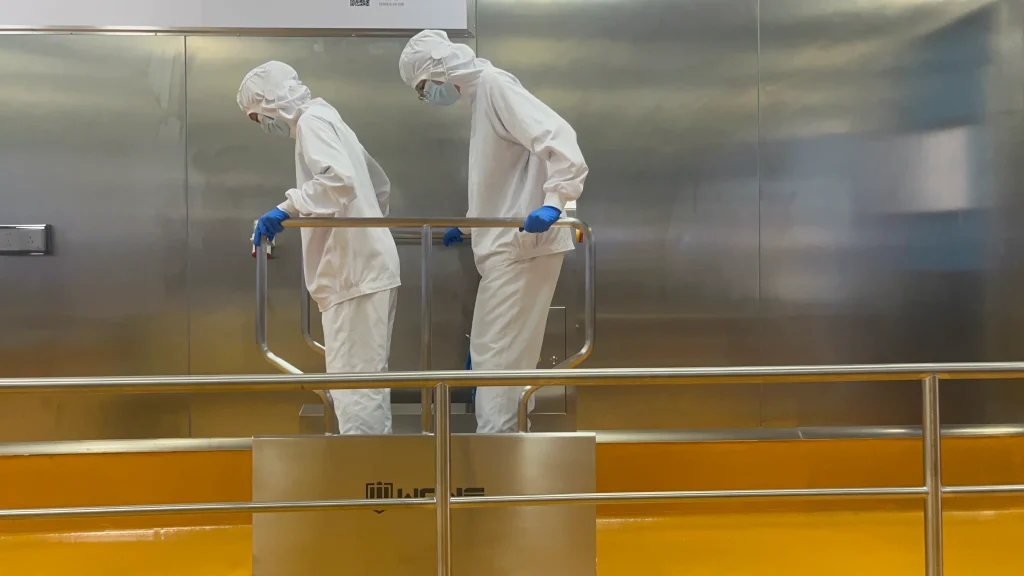
A boot sole cleaning machine can help food factories remove dirt from work boots before workers enter production areas. However, cleaning performance depends on more than brush rotation and water flow. Brush coverage, sole design, and the type of residue all affect how effectively dirt is removed. Understanding these factors helps food manufacturers choose equipment that fits their actual hygiene requirements.
1. Why Boot Soles Are Harder to Clean Than They Look
Work boots come into contact with production floors, drainage areas, raw materials, and food residues. What sticks to them depends heavily on the production process.
For example:
- Meat processing: Fat, blood, and protein residues can stick to the sole and collect in its grooves.
- Bakeries: Flour mixed with water can form a sticky layer that is harder to remove than dry flour.
- Seafood processing: Wet floors and organic residues can leave dirt on the bottom and edges of footwear.
- Dairy production: Milk and other product residues can create cleaning challenges when they accumulate on footwear.
These environments do not all require the same cleaning intensity.
A bakery dealing mainly with flour may have different requirements from a meat processing plant dealing with fat and protein. A cleaning method that works well for loose dirt may be less effective against sticky residues.
The practical lesson: Choose boot cleaning equipment according to the actual contamination, not simply the number of employees or the size of the factory.
2. Brush Coverage Matters More Than Many Factories Expect
One common mistake is choosing a sole cleaning machine based on its overall size without checking how its brush contacts the footwear.
A brush may rotate correctly and use plenty of water, yet still leave parts of the sole insufficiently cleaned.
There are three areas worth checking:
The centre of the sole
This is where the main brush usually makes contact. It needs enough contact with the sole to loosen attached dirt.
The heel and toe
These areas can be missed if the brush is too short or the worker does not position their footwear correctly.
The edges and textured grooves
Dirt can collect around the edges and in deep tread patterns. Brush design, contact, and the condition of the footwear all affect the result.
This is particularly relevant for factories using larger work boots or footwear with pronounced tread patterns.
A useful equipment test is straightforward: run the actual work boots through the machine, then inspect the heel, toe, edges, and grooves. Repeat the test with the type of residue commonly found in production.
This is more useful than judging performance from a demonstration using clean shoes or light dust alone.
3. Why Water Alone May Not Be Enough
Water helps rinse away loose dirt, but some production residues need additional cleaning action.
Grease, fat, and sticky organic material may require an appropriate cleaning chemical alongside mechanical brushing and rinsing.
A practical boot sole cleaning process typically involves three actions:
- Mechanical brushing: Loosen attached dirt from the sole surface and tread.
- Water rinsing: Carry away loosened material.
- Detergent application: Help remove suitable residues that water alone may not remove effectively.
The detergent must be compatible with the equipment, footwear, and cleaning procedure. Concentration and contact time should follow the chemical supplier’s instructions.
It is also important to distinguish cleaning from disinfection. Removing visible soil is not the same as achieving a validated disinfection result. Where disinfection is required, it should follow an appropriate cleaning step and use a suitable, correctly applied disinfectant.
For factories with heavy or persistent contamination, testing the complete cleaning procedure under actual operating conditions is essential.
4. Keep Footwear Hygiene From Becoming a Production Bottleneck
Cleaning performance is only one part of the problem. A machine must also fit the way people move through the factory.
Consider a production area where workers enter or leave in groups during shift changes. If each person must stop, bend down, operate a control, and manually scrub their footwear, the cleaning point can slow down movement.
A pass-through sole cleaning machine offers a different approach.
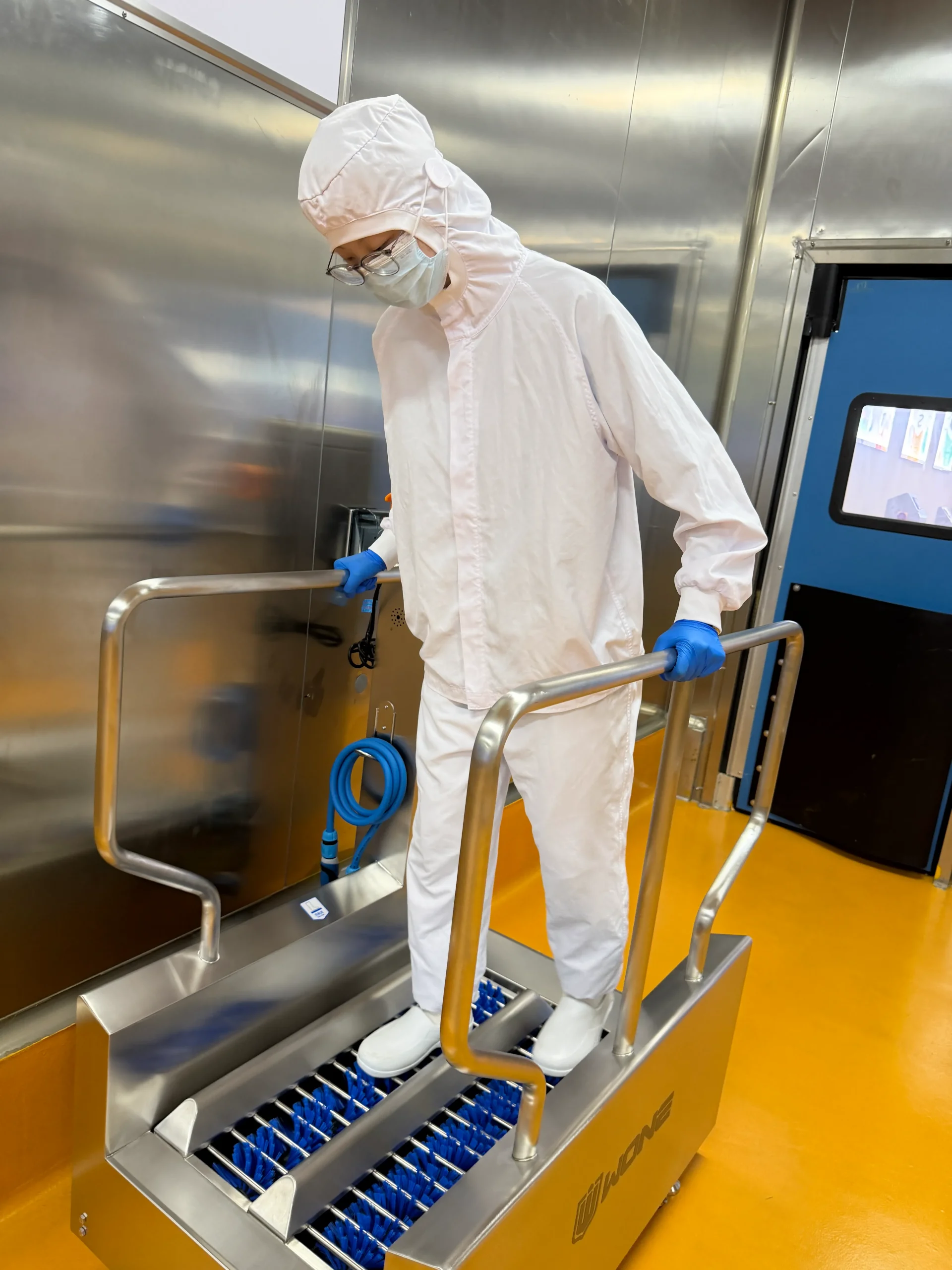
Workers walk through the cleaning channel, and a sensor activates the brushes automatically. This reduces the need for manual operation and helps maintain a more continuous flow of people.
However, actual throughput depends on walking speed, cleaning settings, footwear, and site layout. A published cycle time should not be treated as a guarantee that every shift change will run without queues.
Before selecting equipment, check:
- How many employees pass through the checkpoint during the busiest period?
- Is the machine positioned on the natural route between hygiene zones?
- Is there enough space for workers to approach and leave safely?
- Can the water supply and drainage handle the installation?
- Will workers use the machine consistently without creating unnecessary delays?
An important planning point: A cleaning machine works best when it is integrated into the worker’s normal route, rather than placed somewhere employees can easily bypass.
5. What to Look for in an Automatic Boot Sole Cleaning Machine
When comparing equipment for a food processing plant, look beyond the motor power and machine dimensions.
Brush design and footwear compatibility
Check the effective brush length and the contact area against the boots used in your facility. Larger footwear may require a longer brush to achieve suitable coverage.
Automatic operation
Sensor activation makes the process easier to repeat and reduces the need for workers to operate switches manually.
Cleaning modes
Different production areas may require different cleaning intensities. Adjustable modes can help operators match the cleaning process to the actual soil level.
Hygienic construction
Stainless steel construction, accessible surfaces, and removable brushes can make routine cleaning and maintenance easier.
Debris removal and maintenance
A brush collects material during operation. If the brush and debris filter are neglected, accumulated dirt can undermine the cleaning process. Check how easily the brush can be removed, rinsed, and reinstalled.
Water supply and drainage
A machine that fits the available floor space may still be unsuitable if the water connection, drainage, or electrical supply is incompatible with the site.
These details affect everyday usability just as much as the machine’s headline specifications.
6. Where the WONE PBW-21G Fits
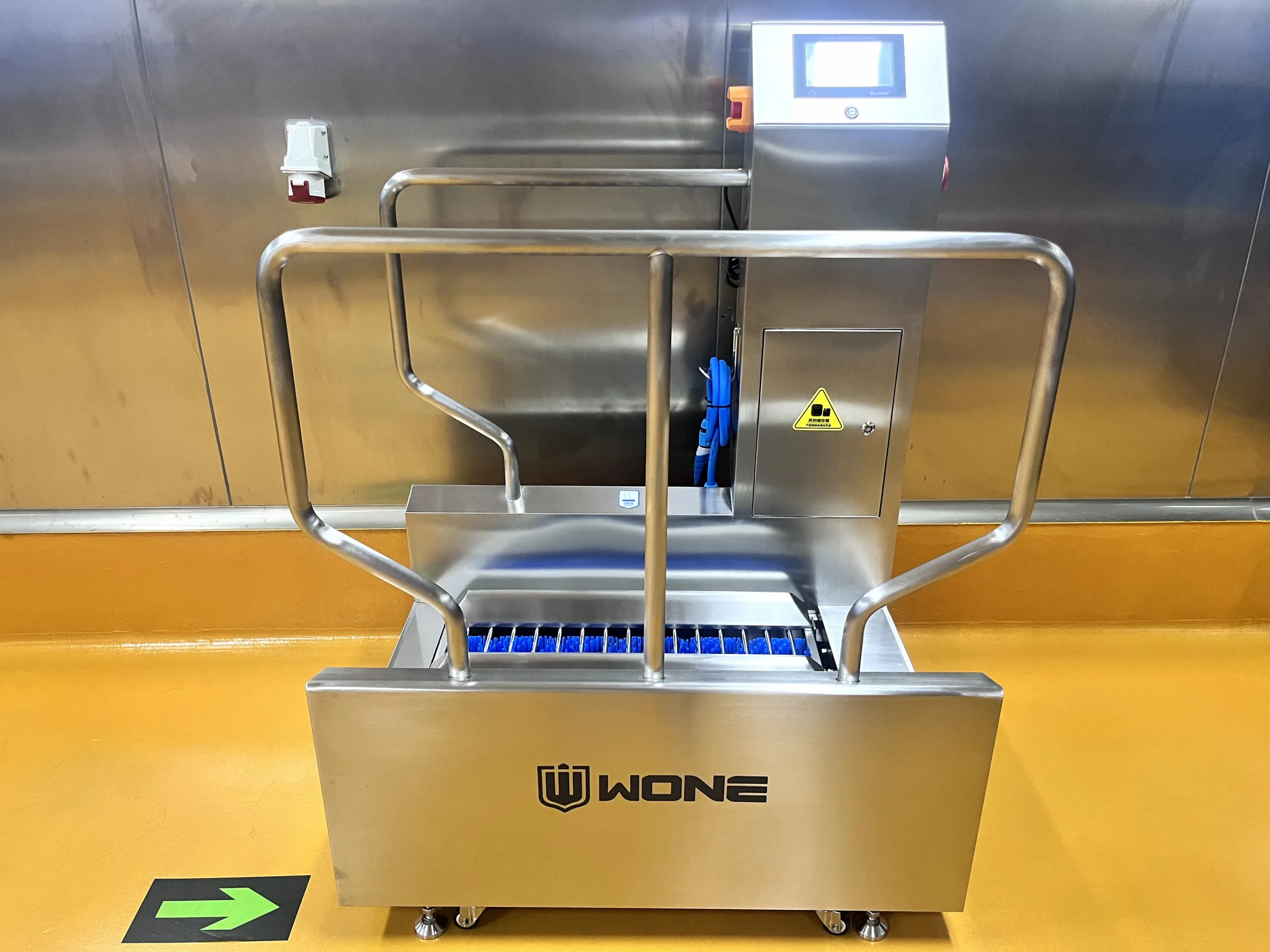
For food factories that need automatic sole cleaning without requiring workers to stop for manual scrubbing, the WONE PBW-21G Channel Sole Cleaning Machine is designed around a pass-through cleaning process.
Its extended horizontal brush is intended to provide a wider cleaning area for work boots, including larger footwear commonly used in food production facilities.
The machine combines rotating brush action, water rinsing, and a compatible low-foam cleaning detergent to help remove dirt from boot soles.
Key features include:
- Extended horizontal brush: Designed to provide wider sole coverage.
- Sensor-activated operation: Starts the brushes automatically when footwear enters the cleaning area.
- Three cleaning modes: Eco, Strong, and Custom settings through the i-clean controller.
- 304 stainless steel construction: Designed for wet industrial hygiene environments.
- Maintenance-friendly design: Quick-release brushes and a debris filter simplify routine cleaning.
- Usage monitoring: The controller provides usage statistics and a low-liquid alarm.
The published specifications list a power rating of 500 W, a 220 V / 50 Hz supply, an IP54 protection rating, a DN15 water inlet, and an OD40 mm drainage connection. The listed dimensions are 1,085 × 800 × 1,455 mm.
The product page also specifies a nominal passage time of approximately 15 seconds per person. Actual performance should be confirmed against the factory’s footwear, cleaning requirements, and traffic conditions.
The PBW-21G focuses on boot sole cleaning, rather than washing the entire boot shaft. Factories that need to remove heavy contamination from the sides and uppers of tall boots should evaluate a full boot washing machine instead.
View the WONE PBW-21G Automatic Sole Cleaning Machine for product details and technical specifications.
7. A Simple Way to Evaluate Your Current Boot Cleaning Process
Before investing in new equipment, review the existing process on the production floor.
Step 1: Identify the main residues.
Determine whether the primary problem is loose dirt, flour paste, grease, blood, or other organic material.
Step 2: Inspect the footwear.
Check the tread depth, sole width, boot size, and areas where dirt remains after cleaning.
Step 3: Observe the cleaning process.
See whether workers use the equipment correctly, whether the brush reaches the necessary areas, and whether cleaning time is sufficient.
Step 4: Check cleaning consistency.
Inspect footwear at the end of the cleaning step rather than assuming that brush rotation alone means the job is complete.
Step 5: Review maintenance and traffic flow.
Check brush condition, debris removal, detergent replenishment, drainage, and queues during busy periods.
Record the results and repeat the assessment after making changes. This gives the hygiene team a practical basis for deciding whether to adjust procedures, improve maintenance, or upgrade equipment.
Final Thoughts
Boot sole cleaning is a small step in a food factory’s daily routine, but poor execution can undermine the separation between production areas.
The best solution is not necessarily the machine with the highest power or the most complicated controls. It is the one that matches the footwear, the type of contamination, the required cleaning procedure, and the movement of workers through the facility.
For factories using larger work boots and looking for a continuous, sensor-activated cleaning process, the WONE PBW-21G is one option worth evaluating.
Planning a footwear hygiene upgrade? Share your industry, the type of work boots you use, and the main residues you need to remove. The right equipment choice starts with understanding the actual cleaning problem.