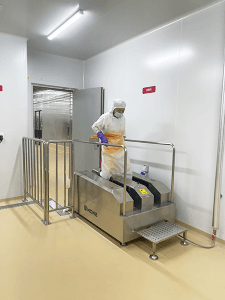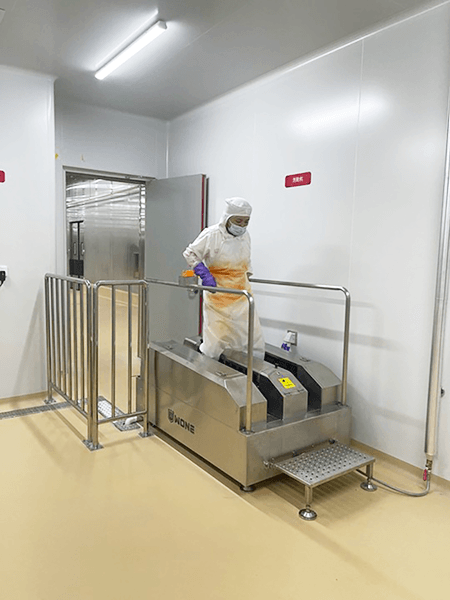
Work boot hygiene is an important part of preventing cross-contamination in food factories. Work boots can carry dirt, food residues, grease, and microorganisms from one production area to another.
For food factories, meat processing plants, bakeries, dairy plants, and central kitchens, work boot hygiene is an important part of controlling cross-contamination.
According to the CDC, cross-contamination of foods was identified as a contributing factor in 12.0% of foodborne illness outbreaks with contributing factors reported in the U.S. from 2014–2022. For bacterial outbreaks, cross-contamination was among the top five contributing factors in two of the three periods analyzed.
That is why footwear should not be ignored in a factory hygiene program.
How Much Can One Pair of Work Boots Move?
A simple way to understand the risk is to look at employee movement.
| Example | Daily Movement |
|---|---|
| Employees entering production | 50–100+ |
| Production shifts | 2–3 |
| Hygiene-zone crossings per employee | Multiple |
| Potential boot cleaning points | Entry / zone change / exit |
For a factory with 100 employees and 2 shifts, footwear can pass through hygiene control points hundreds of times every day.
The goal is to make each crossing a controlled hygiene step, rather than relying only on employees remembering to clean their boots.
1. Clean the Boot Sole First
The sole is the first area to focus on because it is constantly in contact with the production floor.
Depending on the contamination level, factories may use:
- Sole cleaning machines
- Boot washers
- Rotating brushes
- Water spraying
- Detergent or foam cleaning
A bakery may mainly deal with flour and food residues, while a meat processing plant may have grease, blood, fat, and organic residues.
The cleaning method should match the contamination.
2. Clean Before Disinfecting
Disinfection works best as part of a proper cleaning process.
A practical footwear hygiene sequence is:
Remove dirt → Wash → Disinfect → Dry
| Step | Main Purpose |
|---|---|
| Cleaning | Remove dirt and organic residues |
| Rinsing | Remove remaining contamination |
| Disinfection | Reduce microorganisms |
| Drying | Remove excess moisture |
Simply spraying disinfectant onto a heavily dirty boot is not the same as properly cleaning and disinfecting it.
3. Control Movement Between Hygiene Zones
Many food factories divide production into different hygiene levels.
For example:
Low-care → Hygiene station → High-care → Packaging
A boot cleaning and disinfection station can be placed at the transition point.
Instead of allowing employees to walk directly from a dirty floor into a clean production area, the factory creates a physical control point.
This makes the process easier to standardize.
4. Choose the Right Boot Cleaning Machine
Not every factory needs the same equipment.
| Factory Environment | Typical Contamination | Possible Solution |
|---|---|---|
| Bakery | Flour, food residues | Sole cleaning |
| Dairy plant | Milk, food residues, wet floors | Boot cleaning + disinfection |
| Seafood plant | Water, organic residues | Boot washer |
| Meat processing | Blood, fat, organic matter | Heavy-duty boot washer |
| Slaughterhouse | Heavy organic contamination | Full boot washing system |
For light contamination, a compact boot sole cleaning machine may be enough.
For heavy contamination, a full industrial boot washer with multiple brushes and water spraying can provide more complete cleaning.
5. Do Not Forget Boot Drying
After washing and disinfection, boots may remain wet.
A boot drying system can help remove moisture before storage or the next working period.
A simple workflow is:
Wash → Disinfect → Dry → Store
Clean boots should also be kept away from dirty floors and contaminated footwear.
6. Make Boot Hygiene Easy to Follow
Employees are more likely to follow a hygiene procedure when the process is simple.
A hygiene station can combine several steps in one location:
Hand washing + Hand disinfection + Boot cleaning + Boot disinfection
For larger factories, automated systems can also help standardize the process and reduce dependence on manual operation.
A Simple Example: 100 Employees
Consider a production facility with 100 employees.
If every employee must pass through a footwear hygiene point before entering a high-care area:
| Item | Example |
|---|---|
| Employees | 100 |
| Working shifts | 2 |
| Daily employee entries | 200 |
| Boot hygiene requirement | Every entry |
| Daily controlled boot-cleaning events | Up to 200 |
The exact number depends on the factory’s shift pattern and hygiene procedure, but the example shows why manual, inconsistent footwear cleaning can become difficult to manage as a factory grows.
What Should a Factory Check?
A practical work boot hygiene checklist includes:
- Are boots cleaned before entering high-care areas?
- Is visible dirt removed before disinfection?
- Is the disinfectant correctly prepared and applied?
- Are dirty and clean footwear separated?
- Are boots dried after washing?
- Is the boot washer cleaned regularly?
- Are brushes and spray nozzles maintained?
- Are employees following the same procedure every shift?
These controls should form part of the factory’s overall sanitation program.
Final Thoughts
Work boots are easy to overlook, but they can move contaminants between production areas throughout the working day.
The solution is straightforward:
Clean → Disinfect → Dry → Store
The right combination of boot cleaning machines, boot washers, hygiene stations, and boot dryers can help factories create a more consistent footwear hygiene process.
For food manufacturers, controlling cross-contamination is not only about the food-contact surface. The floor, footwear, equipment, and employee movement all form part of the hygiene chain.