In a food processing plant, cleaning is not simply a task performed after production. It is an essential part of daily operations.
Floors, walls, conveyors, processing equipment, drains, tools, and personnel can all become sources of contamination if they are not properly managed. At the same time, manual cleaning can consume significant amounts of labor, water, chemicals, and production time.
This is why professional hygiene equipment matters more than many food processors realize.
The right equipment does not replace a sanitation procedure. Instead, it makes that procedure more consistent, efficient, and easier to control.
The Problem With Traditional Manual Cleaning
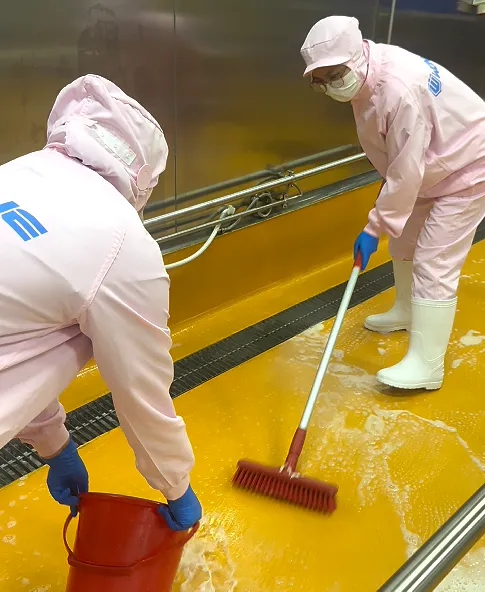
Many food factories still rely on hoses, brushes, buckets, and manually mixed cleaning chemicals.
These methods can work, but the results often depend heavily on the operator.
One worker may apply enough detergent and spend sufficient time scrubbing. Another may use less chemical, rinse too early, or miss difficult areas.
Over time, this creates inconsistent cleaning results.
The problem becomes more obvious in large plants with multiple production lines and multiple shifts.
A professional cleaning system helps turn cleaning from an operator-dependent task into a repeatable process.
Foam Cleaning Improves Coverage and Consistency
Foam cleaning is widely used in meat, dairy, seafood, bakery, beverage, and other food processing facilities.
The main advantage is not simply that foam is easy to see.
Foam allows cleaning chemicals to be distributed more evenly across large surfaces and remain in contact with the surface during the required cleaning stage.
A typical wet-cleaning process may include:
Pre-rinse → Foam application → Mechanical scrubbing → Rinse → Disinfection → Final rinse
A foam cleaning machine can help standardize detergent application while reducing the need for workers to manually mix and apply chemicals.
However, foam is only one part of the process. Heavy protein, fat, starch, or dried food residues may still require mechanical action.

Better Cleaning Can Mean Better Use of Labor and Water
Cleaning can take a significant amount of time in food processing plants, especially when equipment and production areas are large.
Inefficient cleaning often means:
- Longer sanitation downtime
- More manual labor
- Higher water consumption
- Higher chemical consumption
- More frequent re-cleaning
Professional cleaning equipment helps control how water, detergent, and disinfectant are applied.
For example, a suitable foam cleaning system can provide more controlled chemical application, while high-pressure cleaning equipment can improve the removal of stubborn residues.
The objective is not simply to use more water or more chemical.
The objective is to use the right amount in the right way.
Cleaning Equipment Also Helps Reduce Cross-Contamination
In a food factory, contamination can move through people, footwear, tools, carts, and equipment.
This is particularly important when workers move between raw-material areas, processing areas, and higher-hygiene production zones.
Personnel hygiene equipment can create an additional control point before workers enter production areas.
Depending on the facility, this may include:
- Hand washing stations
- Hand disinfection
- Boot washing
- Boot sole disinfection
- Protective clothing cleaning
- Controlled hygiene gates
For example, a hygiene station can combine several personnel hygiene steps into one controlled entry process. This makes it easier to establish a consistent hygiene procedure instead of relying entirely on individual worker habits.
Cleaning Is Not Complete Until It Is Verified
A clean-looking surface does not necessarily mean a hygienically controlled surface.
Food processing plants may use visual inspection, ATP testing, microbiological testing, and environmental monitoring to verify sanitation effectiveness.
FDA guidance on environmental sampling recognizes the importance of sampling both food-contact and non-food-contact areas, including equipment, floors, drains, carts, and other locations where contamination may persist.
This is why modern sanitation management follows a simple cycle:
Clean → Sanitize → Verify → Record → Improve
Good hygiene equipment should support this process by making cleaning procedures more consistent and easier to document.
Choosing the Right Hygiene Equipment
Not every food processing plant needs the same cleaning system.
Equipment selection should be based on:
Product and soil type
Protein, fat, starch, sugar, and dairy residues have different cleaning requirements.
Production area
Processing equipment, floors, walls, drains, and personnel entrances may require different solutions.
Plant size
Larger facilities may require centralized or mobile cleaning systems to improve coverage and reduce operator movement.
Cleaning chemicals
The equipment should be compatible with the detergents and disinfectants used by the plant.
Hygiene zoning
Raw and high-hygiene areas should be managed differently to reduce cross-contamination risks.
The Real Value of Hygiene Equipment
The value of professional hygiene equipment is not simply faster cleaning.
It is about making the cleaning process more controlled, repeatable, and efficient.
A well-designed sanitation system can help food processors:
- Standardize cleaning procedures
- Improve chemical coverage
- Reduce unnecessary water and chemical use
- Reduce cleaning labor
- Shorten sanitation downtime
- Improve personnel hygiene
- Reduce cross-contamination risks
- Support sanitation verification
For this reason, hygiene equipment should be considered part of the food processing plant’s overall sanitation system, not simply another piece of maintenance equipment.

Conclusion
Effective cleaning in food processing requires more than hoses and brushes.
It requires the right combination of cleaning procedures, chemicals, personnel practices, equipment, and verification.
From foam cleaning machines and high-pressure cleaners to hygiene stations and boot washing systems, the right equipment can make daily sanitation easier to standardize and manage.
The goal is not simply to make the factory look clean.
The goal is to make the cleaning process controlled, repeatable, and reliable.