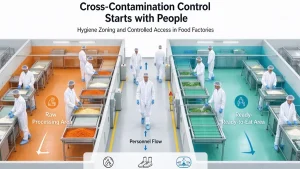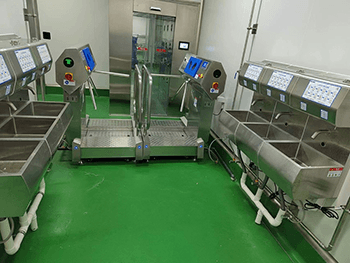
In food processing plants, the changing room acts as a critical barrier between the external environment and clean production areas. Proper planning of the changing room ensures effective isolation of external contamination, maintains a hygienic environment, and prevents cross-contamination. This article explains the key considerations for designing a food processing changing room, based on international food safety standards and industry best practices.
01 Clean Zone Design: How to Determine the Layout of the Changing Room?
The changing room’s design must align with production processes, cleanliness standards, and product characteristics. International food safety standards, such as ISO 22000 and HACCP, require food processing areas to be divided into zones with varying cleanliness levels. These zones include:
- General Working Zone
- Semi-Clean Working Zone
- Clean Working Zone
Each zone needs a separate changing room to prevent cross-contamination. For example, employees should change clothes when moving from a general to a semi-clean zone. If moving to a clean zone, like the inner packaging area, they need to pass through a secondary changing room.
Planning Advice:
- Create separate changing rooms for each cleanliness zone.
- Use independent changing rooms to ensure proper isolation between zones.
02 Changing Process and Functional Partitioning: How to Design Efficiently?
The changing room must meet cleanliness standards while considering the cleaning process for employees. According to HACCP and ISO 22000, employees must remove contaminants before entering the production area, ensuring they stay clean.
Basic Process:
- Entry Process: Change shoes → Store personal items → Change into outer clothes → Wash hands → Change into workwear → Change into work shoes → Disinfect → Enter the production area.
- Exit Process: Remove work clothes → Clean shoe soles → Exit.
Functional Partition Design:
- In high cleanliness zones (like Class III clean rooms), make each process step an independent compartment. This will prevent cross-contamination.
- For moderate cleanliness areas, combine some processes, but always maintain sanitation isolation.
03 Footwear Sanitation Management: How to Ensure Clean Shoe Soles?
Shoes are a significant source of contamination. HACCP and ISO 22000 require effective shoe sanitation before employees enter the production area.
Key Measures:
- Separate Placement: Use separate racks for personal shoes and work shoes to prevent contact.
- Sole Disinfection: Provide disinfection stations for shoes before entering the work area and cleaning stations after exiting.
- Drying Facilities: Wet areas or areas with high-top rubber boots should have shoe dryers to prevent microbial growth.
04 Flow Design: How to Avoid Cross-Contamination?
Proper flow design is essential to ensure employees follow sanitation processes. The single-direction flow principle helps avoid cross-contamination by preventing the overlap of incoming and outgoing personnel.
Flow Design:
- Single-Direction Flow: Separate entrance and exit paths for employees. This allows for a gradual transition from “dirty” to “clean.”
- Space Configuration: Ensure each functional area (e.g., shoe racks, hand washing, air shower) has enough space to meet peak demand and avoid congestion.
05 Environmental Control: Ventilation, Drainage, and Pressure Requirements
The environmental quality of the changing room affects its role as a sanitation barrier. International food safety standards like ISO 22000 and HACCP emphasize the need for proper ventilation, drainage, and pressure control.
Key Controls:
- Ventilation: Install effective ventilation systems in all areas to keep the air fresh and remove moisture and odors.
- Pressure Control: Maintain positive pressure in clean areas to keep contaminated air out. Shoe-changing areas should maintain negative pressure to expel contaminants.
- Drainage System: Design wet areas with efficient drainage systems and separate them physically from dry zones to keep the entire changing room dry.
06 Equipment Selection and Configuration: How to Choose Appropriate Sanitation Facilities?
Choosing the right sanitation equipment is crucial to meeting international standards. According to HACCP and ISO 22000, the following equipment is recommended:
Equipment Configuration Recommendations:
- Storage and Changing Facilities: Use stainless steel lockers for personal items and outerwear. For workwear in clean zones, use UV sterilizing cabinets instead of open racks.
- Hand Washing and Disinfection Facilities: Install touchless faucets, hand dryers, and disinfection stations at clean zone entrances. Ensure handwashing stations match the maximum number of employees per shift.
- Air Purification: Equip clean areas with air purifiers, maintaining positive pressure to prevent contamination.
Conclusion
Designing a changing room for a food processing plant is a comprehensive task that requires careful consideration of cleanliness zones, flow design, environmental controls, and appropriate equipment selection. Following international food safety standards such as ISO 22000 and HACCP will help isolate external contamination, ensure product safety, and meet regulatory requirements.
By addressing the six key areas outlined in this article, food processing plants can build a changing room that enhances food safety, protects product integrity, and boosts operational efficiency.
Sources:
- ISO 22000: Food Safety Management Systems — Requirements for any organization in the food chain. ISO 22000 Official Website
- HACCP: Hazard Analysis and Critical Control Points — A management system for food safety. HACCP Official Website
By following these standards, food processing plants can ensure a clean and safe environment while meeting global food safety requirements.