Introduction: Why the Cleaning Stage is Crucial in BRC Audits
The BRC Global Standards for Food Safety are an essential part of ensuring food quality and safety, especially in the food processing industry. However, many food processing plants still struggle with passing the cleaning stage of BRC audits. This crucial step is a common point of failure, despite the apparent simplicity of the task. So, why do BRC audits fail during cleaning, and how can food factories address these challenges?
In this article, we’ll dive into the reasons behind cleaning stage failures, provide actionable insights, and recommend steps for improving your cleaning practices to avoid audit failures.
Understanding the Cleaning Stage in BRC Audits
The cleaning stage in a BRC audit is not just about wiping down surfaces; it’s a rigorous process that evaluates how well a facility prevents cross-contamination and maintains hygienic conditions. BRC auditors scrutinize everything from cleaning procedures and frequencies to the effectiveness of sanitation equipment and chemicals. Non-compliance in this area could lead to audit failure.
Key Areas BRC Auditors Focus On During the Cleaning Stage:
- Cleaning protocols: Are there written and validated cleaning procedures?
- Sanitation frequency: How often are cleaning protocols followed?
- Employee training: Are staff members adequately trained in sanitation practices?
- Cleaning records: Are there proper documentation and logs to verify cleaning processes?
Why Do BRC Audits Fail During the Cleaning Stage?
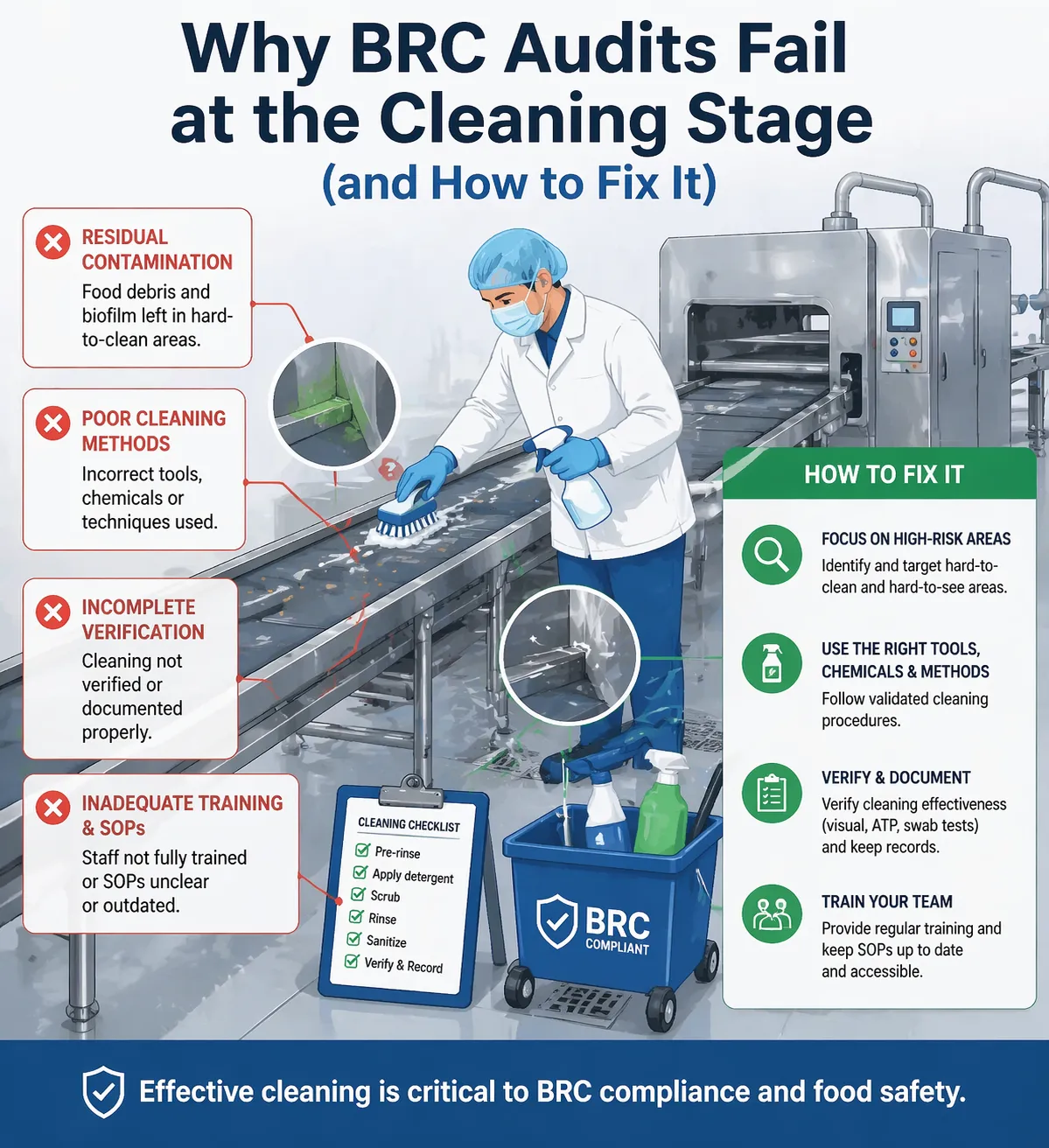
- Inconsistent Cleaning Practices
One of the most frequent reasons BRC audits fail at the cleaning stage is inconsistent cleaning practices. In some facilities, cleaning may not be performed as often as required, or it might not meet the required standards. Inconsistent cleaning is often a result of poorly written protocols or ineffective employee training.
How to Fix It:
- Ensure that cleaning schedules are clearly defined and adhered to.
- Use checklists to monitor and validate every cleaning task.
- Regularly review and update cleaning protocols based on audit feedback.
- Lack of Proper Training
Cleaning processes can often be misunderstood or inadequately implemented due to a lack of proper training. Employees might not understand the importance of each task or how to perform them correctly, leading to gaps in sanitation.
How to Fix It:
- Invest in regular, comprehensive cleaning training programs for all relevant employees.
- Provide specialized training on the BRC cleaning requirements to all staff involved in sanitation.
- Ineffective Cleaning Equipment or Chemicals
If cleaning equipment or chemicals are not properly maintained or are inappropriate for the task, it can significantly impact the cleanliness of the facility. Using the wrong chemical for a specific type of contamination or malfunctioning equipment can result in failed audits.
How to Fix It:
- Regularly inspect and maintain all cleaning equipment to ensure it’s functioning properly.
- Invest in high-quality cleaning chemicals that are suitable for your facility’s needs.
- Poor Documentation and Record Keeping
Proper documentation of cleaning processes is a critical part of BRC audits. If cleaning records are incomplete, inconsistent, or missing, it can result in audit failure, even if the actual cleaning process was performed correctly.
How to Fix It:
- Implement a robust cleaning log system to record all cleaning activities, including dates, times, and responsible employees.
- Use digital tracking tools for real-time record keeping and easier access during audits.
The Impact of BRC Cleaning Failures on Food Safety
When cleaning procedures fail during a BRC audit, it’s not just about non-compliance—it’s about food safety. Poor cleaning practices can lead to cross-contamination, spoilage, and even foodborne illness outbreaks. These failures can damage a brand’s reputation, result in legal issues, and cause a loss of consumer trust.
According to a study by the Food Safety Authority, cleaning-related failures account for up to 30% of foodborne illness outbreaks. This statistic highlights the critical role proper sanitation plays in maintaining public health and regulatory compliance.
How to Improve Cleaning Practices to Ensure BRC Compliance
Here are some expert solutions to enhance your cleaning procedures and increase your chances of passing the cleaning stage in your BRC audit:
- Adopt a Hazard Analysis and Critical Control Points (HACCP) Approach
Ensure that your cleaning procedures are aligned with HACCP principles. This will help you identify areas where contamination could occur and ensure that you apply corrective actions when necessary. - Use an Advanced Cleaning System
Investing in automated cleaning systems or high-pressure cleaning equipment can improve cleaning efficiency and effectiveness, especially in hard-to-reach areas. - Integrate Technology
Implementing cleaning management software can track cleaning schedules, verify employee compliance, and provide real-time updates. These digital systems can also store cleaning records for future audits. - Conduct Regular Internal Audits
Performing internal audits before the official BRC audit can help identify any weak points in your cleaning processes. This proactive approach allows you to make adjustments before the audit. - Establish a Continuous Improvement Plan
BRC audits require ongoing compliance, not just a one-time effort. Create a continuous improvement plan for cleaning processes, including regular reviews and updates based on audit results.
Conclusion: How to Ensure Success at the Cleaning Stage of BRC Audits
Cleaning is a critical part of BRC audits, but it’s also an area that can easily lead to failure if not done correctly. By understanding why BRC audits fail during the cleaning stage and implementing the recommended solutions, food processing plants can dramatically improve their chances of passing the audit. Consistency, proper training, effective equipment, and diligent record-keeping are key to achieving success in this area.
To further optimize your cleaning practices, consider investing in expert training programs, advanced cleaning systems, and digital management tools. This will not only ensure compliance with BRC standards but also enhance your overall food safety management system.
Related Resources:
Call to Action
Are you ready to improve your cleaning processes and ensure BRC audit success? Reach out to us at Woneclean for expert solutions and training programs tailored to your needs. Ensure compliance, elevate food safety standards, and protect your brand’s reputation today.
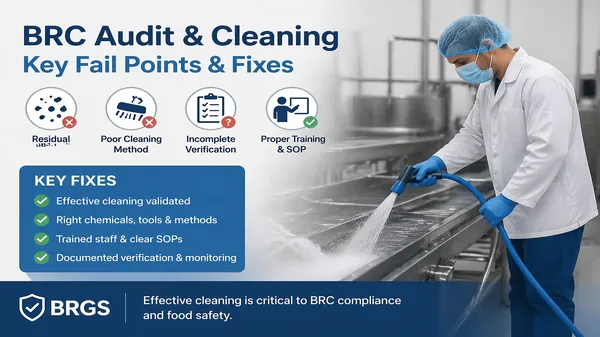
This blog targets food processing factories struggling with cleaning issues during BRC audits, offering clear solutions and practical steps to improve their processes.