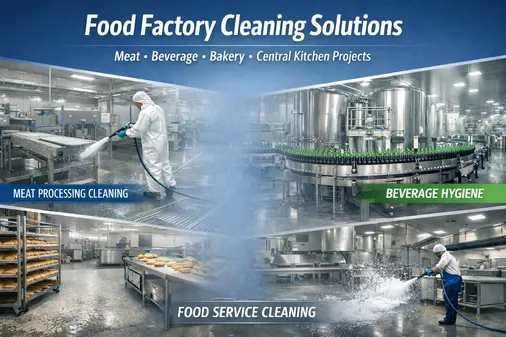
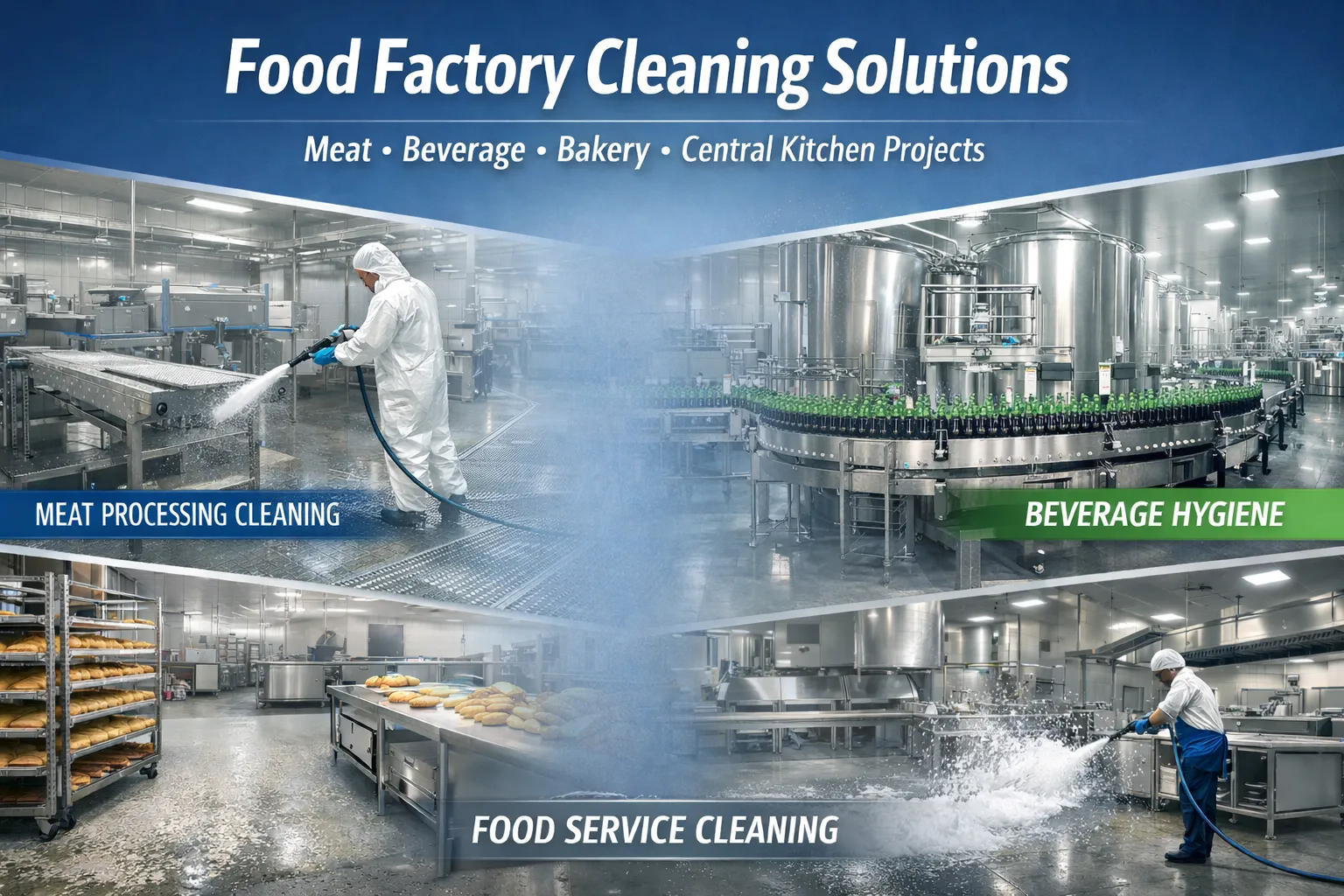
Food factory cleaning solutions are critical for maintaining hygiene, passing audits, and improving operational efficiency.
Over the past quarter, we’ve worked on several food factory cleaning solutions projects across different production environments.
1. Meat Processing Plants: High-Intensity Cleaning Requirements
Meat processing facilities typically require the most demanding cleaning systems.
Common challenges include:
- Heavy organic contamination (blood, fat, protein residues)
- High risk of bacterial growth
- Strict audit requirements such as HACCP and BRC
In recent projects, cleaning system layouts focused on:
- High-pressure cleaning for primary rinsing
- Stable foam application for surface coverage
- Defined cleaning zones (processing areas, floors, drainage)
These layouts help ensure that cleaning is not only effective, but also repeatable and audit-ready.
2. Beverage Production: Controlled and Consistent Cleaning
Beverage factories require a different approach.
Instead of heavy contamination, the focus is on:
- Consistency across production lines
- Avoiding cross-contamination
- Controlling water and chemical usage
Recent project layouts show a shift toward:
- Balanced pressure systems
- Controlled foam and rinsing processes
- Zone-based cleaning strategies
This allows facilities to maintain hygiene standards while optimizing resource use.
3. Bakery Production: Managing Residue and Daily Cleaning Efficiency
In bakery environments, cleaning challenges are often underestimated.
Typical issues include:
- Flour dust accumulation
- Sticky residues from dough and sugar
- Frequent cleaning cycles required
In recent layouts, the focus has been on:
- Easy-to-operate cleaning stations
- Flexible hose and foam systems
- Fast daily cleaning turnaround
These setups help reduce downtime while maintaining hygiene standards.
4. Central Kitchens: Fast and Practical Cleaning Systems
Central kitchens operate under tight time constraints.
Key challenges:
- Limited cleaning windows
- High-frequency production cycles
- Dependence on manual operations
Recent project designs prioritize:
- Quick switching between rinse and foam
- Simplified operation for staff
- Efficient coverage in large preparation areas
The goal is to make cleaning faster, simpler, and more consistent, even with changing staff.
5. What These Projects Show
Across all these different facilities, a few practical conclusions stand out:
- Cleaning systems must match the production type
- Standardized processes are more important than manual effort
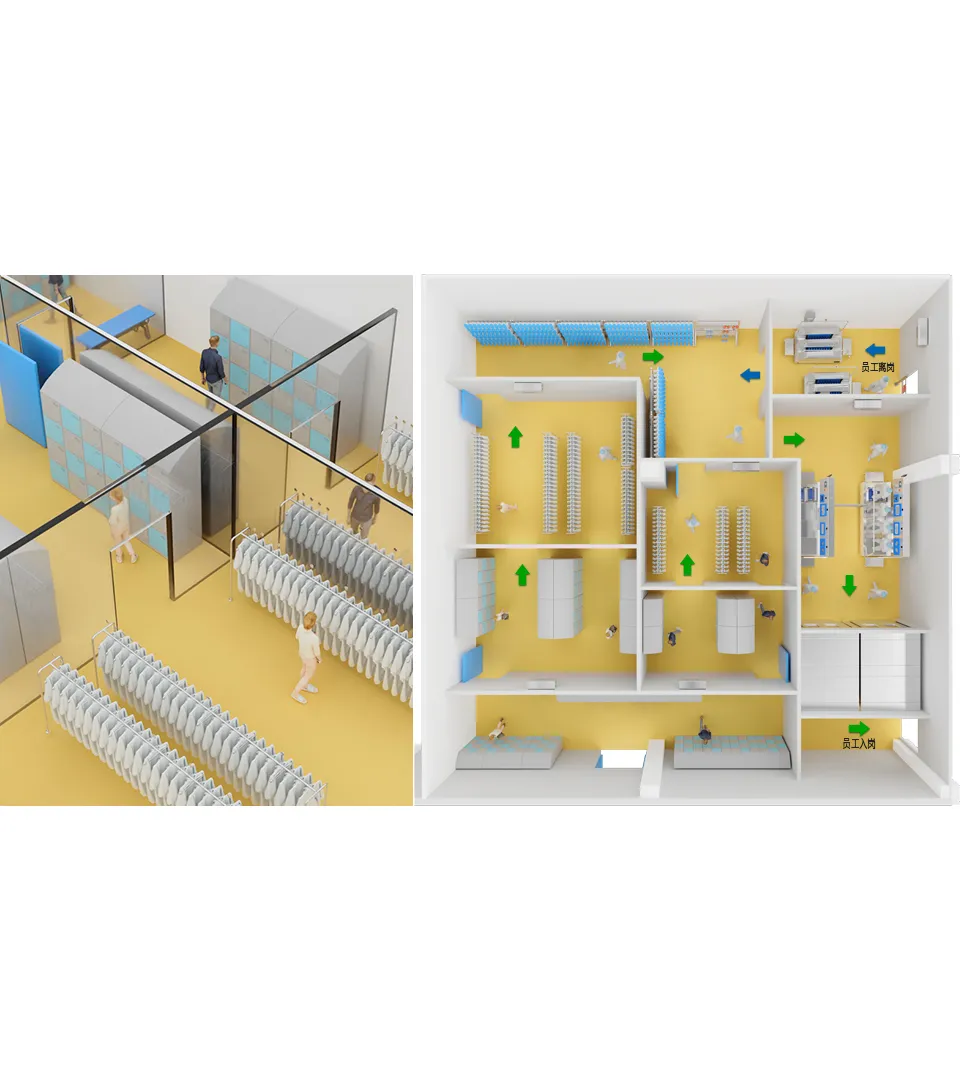
- Layout design plays a key role in efficiency
- Well-designed systems help reduce water, labor, and re-cleaning
Many food factories follow international food safety standards such as FAO guidelines for hygiene and sanitation in food production facilities.
Final Thoughts
Every food factory has unique requirements, but the need for efficient, reliable, and compliant cleaning systems is consistent across all sectors.
These food factory cleaning solutions are becoming increasingly important as factories focus more on hygiene consistency and audit readiness.
If you are evaluating cleaning solutions for your facility, understanding how different systems are applied in real environments is a good place to start.