Choosing a meat processing boot washer starts with understanding the dirt and residues on workers’ boots. In meat processing plants, work boots can quickly become covered with blood, fat, meat residue and dirty water. A quick rinse may remove loose dirt, but it may not clean the boot sides or sole grooves properly.
A small meat cutting room and a large slaughterhouse do not necessarily need the same machine. Before comparing models or prices, it is worth looking at how boots become contaminated and what the cleaning equipment actually needs to do.
1. Start With the Type of Contamination
The first step is to understand what your employees’ boots come into contact with during production.
In meat processing, different areas create different cleaning challenges.
- Slaughtering areas: Blood, tissue, fat and other organic residues can stick to boot surfaces.
- Meat cutting rooms: Small pieces of meat, fat and process residues can collect around the boot soles and tread grooves.
- Washing areas: Water, detergent and loosened dirt can accumulate on footwear and floors.
- Cold rooms and packing areas: Cleaning requirements depend on the production process, floor conditions and hygiene zoning.
These conditions affect the type of boot washer you should choose.
For example, a machine designed mainly to clean shoe soles may be suitable for removing dirt from footwear before entering a controlled area. However, when workers wear full rubber boots in a slaughterhouse, cleaning only the soles may not be enough. The sides and upper parts of the boots may also need mechanical cleaning.
The key question is not simply whether a machine can wash boots. It is whether it can reach the parts of the boots that become contaminated in your production area.
2. Choose Between a Sole Cleaner and a Full Boot Washer
Not every food factory needs a full boot washing machine. Choosing the correct equipment type helps avoid paying for functions that are not necessary.
| Equipment type | Main cleaning area | Suitable applications |
|---|---|---|
| Automatic shoe sole cleaner | Soles and tread grooves | General food production entrances and areas with mainly sole contamination |
| Industrial boot washer | Boot soles, sides and upper surfaces, depending on brush design | Slaughterhouses, meat cutting rooms and wet processing areas |
| Hygiene entrance station | Functions may include sole cleaning, hand washing, hand disinfection and access control | Factories that need several personnel hygiene steps at one entrance |
If your main concern is dirt carried on shoe soles, a dedicated sole cleaning machine may be enough.
If workers wear tall rubber boots and regularly encounter blood, fat or meat residue, look for an industrial boot washer with brushes designed to clean both the soles and the boot uppers.
It is also important to check the actual brush arrangement. The term “boot washer” does not automatically mean that every part of the boot is cleaned.
3. Check the Brush Arrangement and Cleaning Coverage
Brush design has a direct effect on which parts of the boot the machine can reach.
For meat processing plants, pay particular attention to three areas:
Soles and tread grooves
The tread pattern can trap dirt and organic residues. Bottom brushes help reach the sole surface and its grooves, reducing reliance on employees scrubbing their own boots manually.
Boot sides
The sides of rubber boots can come into contact with contaminated floors, wastewater and production residues. Horizontal or side brushes can help clean these surfaces.
Upper boot surfaces
In areas with heavy contamination, the upper part of a boot may also need cleaning. Check the brush height and arrangement against the actual height of the boots used in your plant.
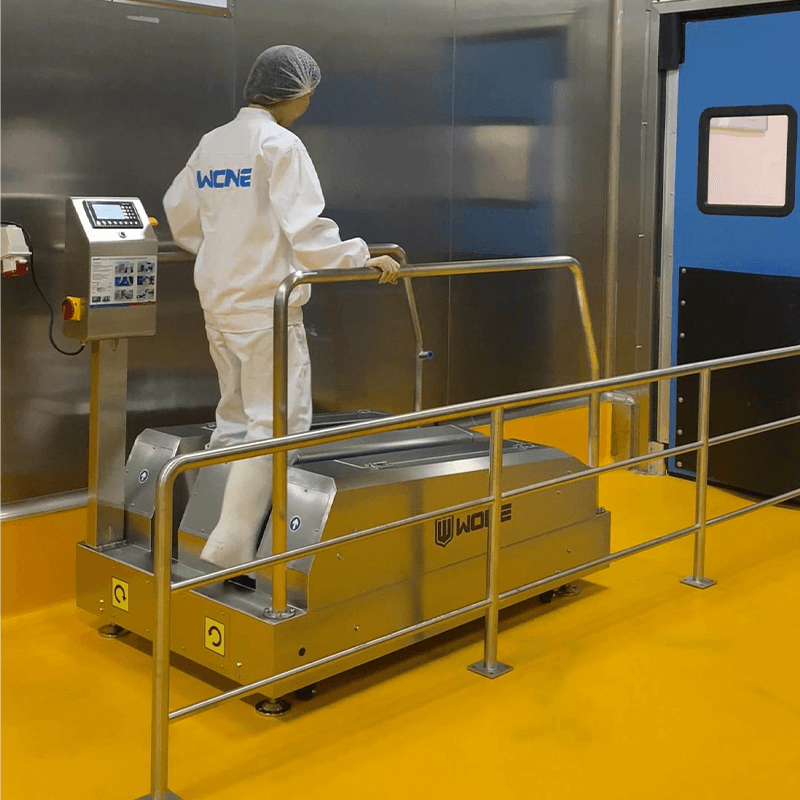
For example, the WONE PBW-61E heavy-duty automatic boot washer uses six rotating brushes: four horizontal brushes and two bottom brushes. Its inclined brush arrangement is designed to help clean the sides, upper surfaces and soles of work boots.
How Do These Three Options Compare?
| Equipment | Main purpose | Best suited for |
|---|---|---|
| PBW-61E | Cleaning boot soles and external boot surfaces | Heavy contamination in slaughterhouses and meat processing areas |
| PBW-21G | Automatic shoe sole cleaning | Entrances where sole contamination is the main concern |
| PBW-24B | Combined hand hygiene and brush-based sole cleaning | Personnel entrances requiring several hygiene steps |
The right choice depends on the contamination level, footwear type and hygiene process. A factory may use different equipment at different entrances rather than rely on one machine for every cleaning requirement.
4. Checklist Before Requesting a Boot Washer Quotation
To help an equipment supplier recommend a suitable configuration, prepare the following information before requesting a quotation.
| Information | What to provide |
|---|---|
| Industry | Slaughterhouse, meat cutting, poultry processing or other meat production |
| Number of workers | Total staff and the number entering during peak periods |
| Footwear | Low shoes, safety shoes or full rubber boots |
| Contamination | Blood, fat, meat residues, mud or general dirt |
| Cleaning requirement | Sole cleaning only or cleaning of soles, sides and uppers |
| Installation space | Available length, width and height |
| Utilities | Voltage, frequency, water pressure and drainage |
| Hygiene process | Whether separate disinfection or access control is required |
A factory layout, entrance photo and photo of the footwear can also help the supplier assess the application.
The more accurately you describe the working conditions, the easier it is to compare suitable models and avoid selecting equipment with unnecessary or insufficient functions.
5. Match the Boot Washer to Your Daily Production
Before choosing a machine, consider how many workers need to clean their boots and how often the equipment will be used.
A small meat processing workshop with a limited number of employees may only need a compact cleaning solution. A large slaughterhouse with workers entering production areas in batches may need equipment designed for higher throughput.
Also consider the available installation space, water supply, drainage and the time workers can spend cleaning their boots.
For heavily contaminated rubber boots, a machine with both side and bottom brushes may be more suitable than a sole-only cleaner. However, the cleaning result also depends on the contamination, brush contact, cleaning method and maintenance.
If you are comparing industrial boot washers for a meat processing plant, start with your actual footwear, contamination level and daily worker flow. These details will help you narrow down the right equipment before comparing prices.