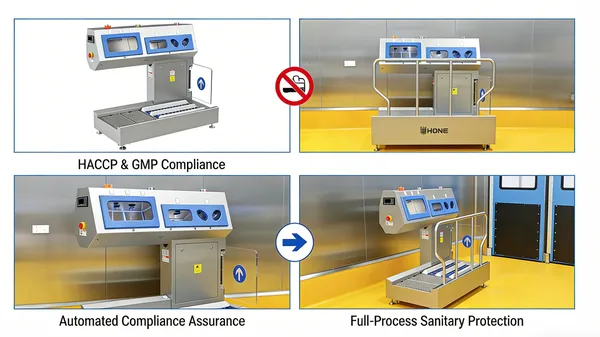
Food Hygiene Station for Factory Entrances: Ensuring HACCP & GMP Compliance
A food hygiene station is essential for controlling contamination at factory entrances. In food processing plants, proper hygiene procedures help prevent risks from employees and footwear.
According to the World Health Organization, poor hand hygiene is a leading cause of foodborne illness. Their official guideline clearly emphasizes the importance of proper hand sanitation in preventing contamination:
👉 https://www.who.int/publications/i/item/9789241597906
At the same time, footwear can carry dirt, bacteria, and organic residues directly into production areas.
This is why modern food safety systems define factory entrances as Critical Control Points (CCPs) under the Hazard Analysis and Critical Control Points framework.
Without proper control at this stage, contamination can spread throughout the entire production line.
Regulatory Requirements: HACCP, GMP & Global Standards
Food factories must comply with strict global food safety regulations, including:
- Food and Drug Administration (FSMA)
👉 https://www.fda.gov/food/food-safety-modernization-act-fsma - Codex Alimentarius Commission (General Principles of Food Hygiene)
👉 https://www.fao.org/fao-who-codexalimentarius/en/ - Food and Agriculture Organization food safety guidance
👉 https://www.fao.org/food-safety/en/
What Do These Regulations Require?
Across these standards, there are several consistent requirements:
1. Mandatory Hand Washing & Sanitizing
Personnel must wash and sanitize hands before entering production areas.
2. Controlled Hygiene Process
Factories must ensure employees follow hygiene steps in a defined sequence.
3. Footwear Hygiene Control
Shoes or boots must not introduce contamination into clean zones.
4. Enforced Compliance (Not Optional)
Hygiene procedures must be controlled and verifiable, not based on personal habits.
👉 This is why automated hygiene systems are increasingly becoming standard in modern factories.
The Solution: Integrated Hygiene Station for Entrance Control
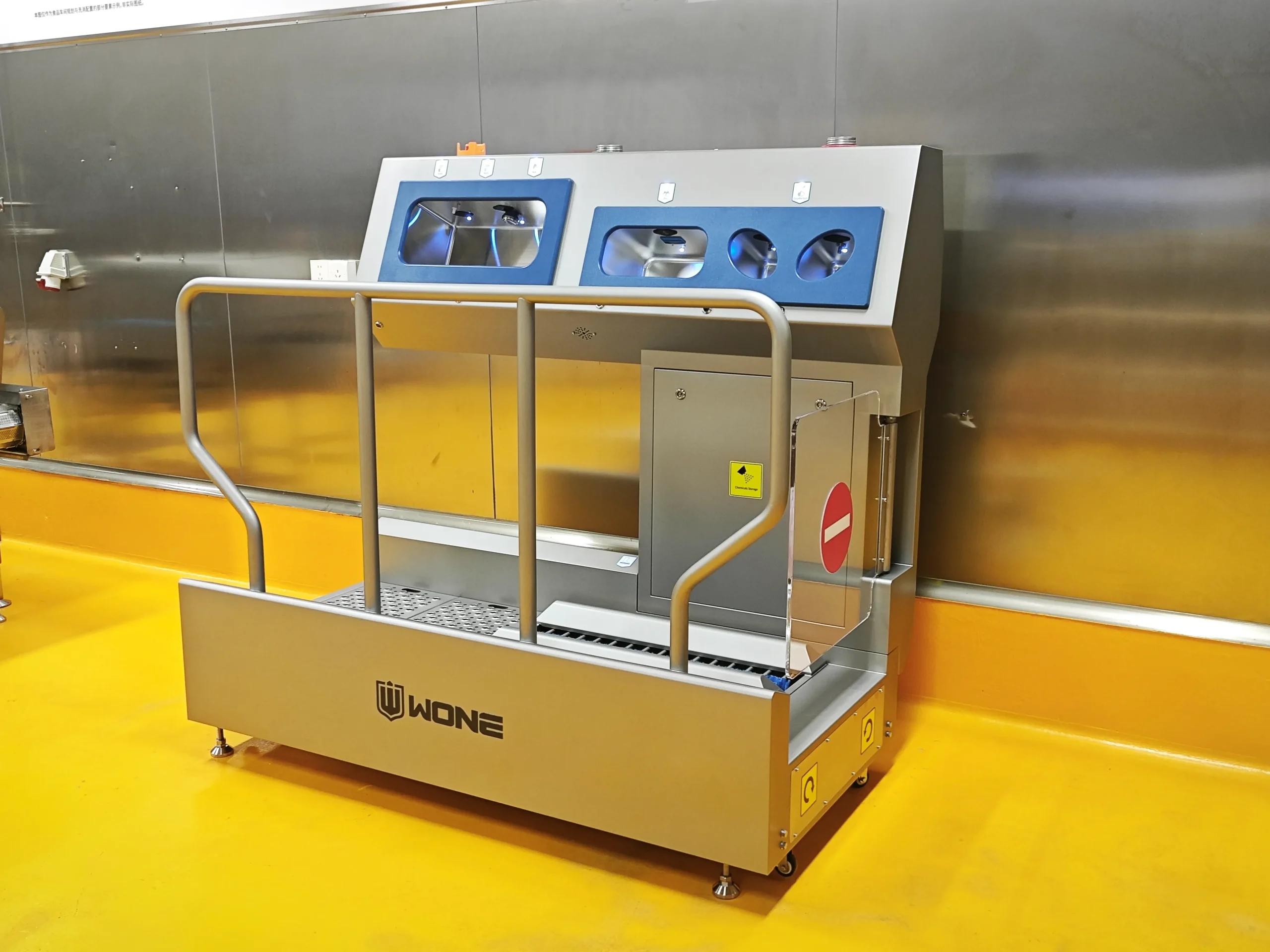
To meet these requirements, more factories are implementing a food factory hygiene station at entry points.
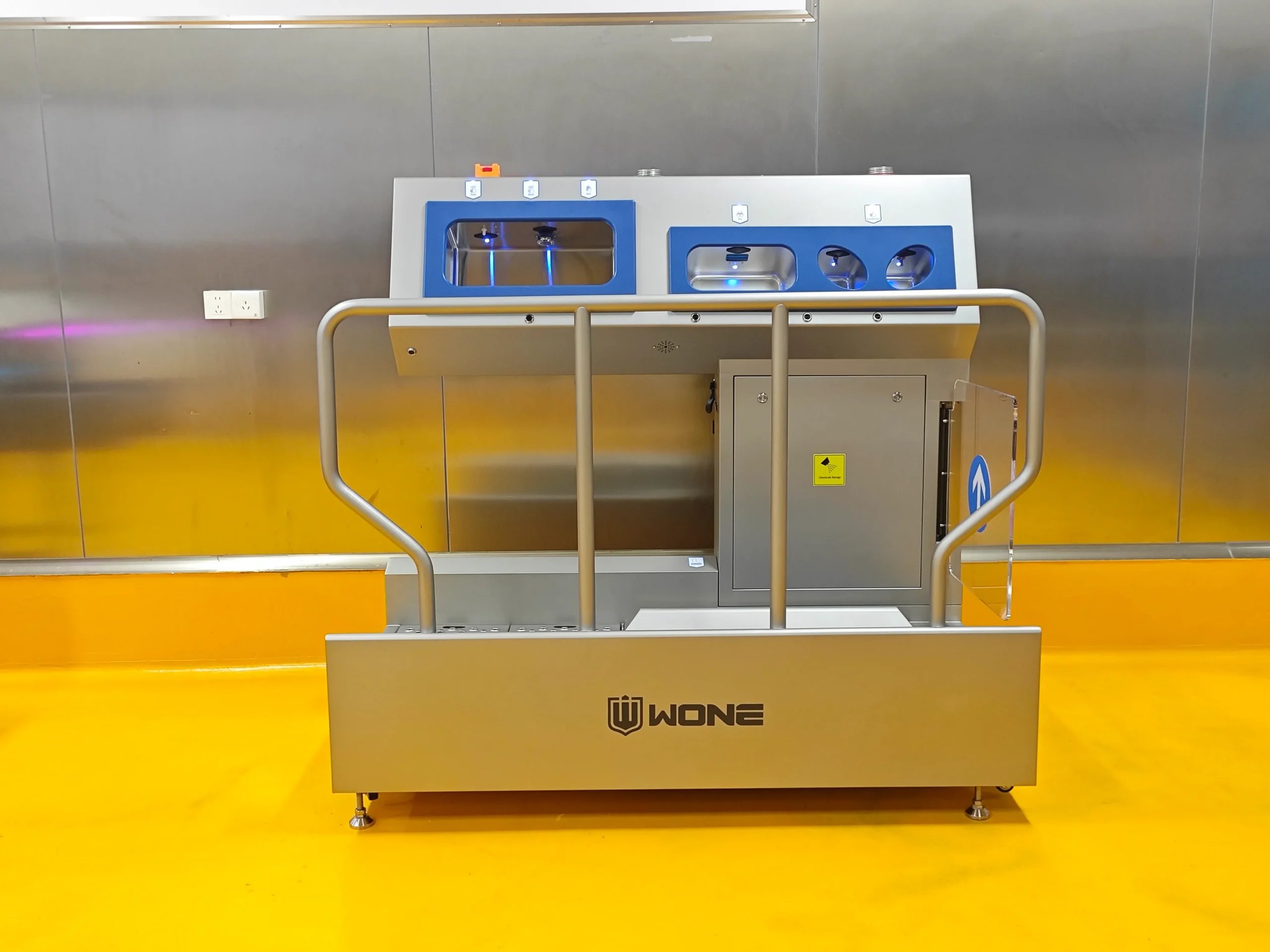
The Woneclean hygiene station integrates:
- Hand washing
- Hand drying
- Hand sanitizing
- Boot sole cleaning
This creates a complete hygiene barrier system, ensuring every worker follows the correct sanitation process before entering production areas.
How the Hygiene Station Ensures Compliance
Step-by-Step Controlled Workflow
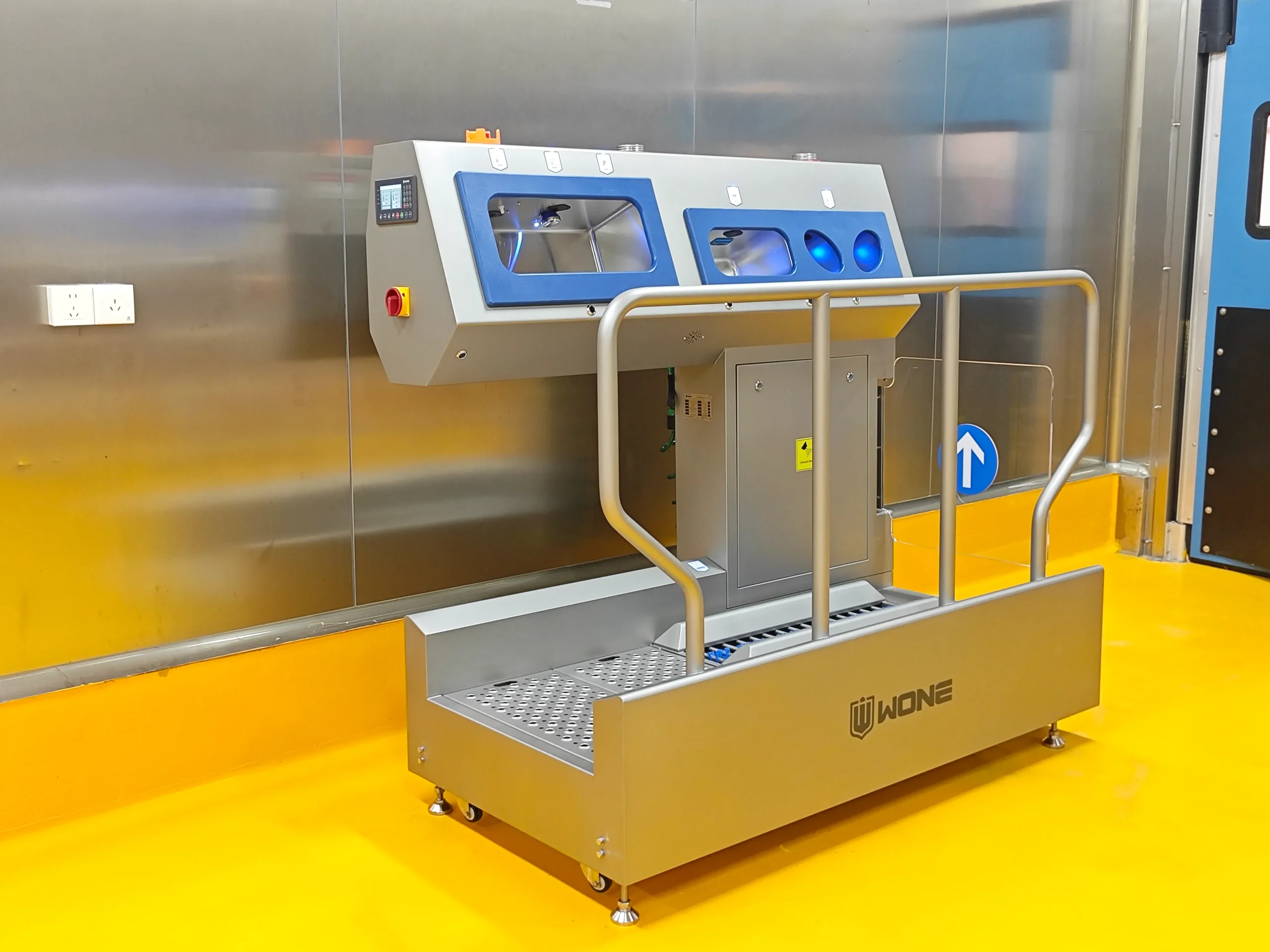
Instead of relying on manual discipline, the system enforces a structured process:
- Hand washing
- Hand drying
- Hand sanitizing
- Boot sole cleaning
Only after completing all required steps can personnel proceed.
This aligns directly with HACCP requirements for controlled and repeatable hygiene procedures.
Three Operation Modes for Different Risk Levels
1. Mandatory Mode (Forced Compliance)
Workers must complete all hygiene steps before access is granted.
✔ Ideal for:
- Meat processing plants
- Ready-to-eat food production
- High-risk zones
2. Custom Mode (Flexible Configuration)
Factories can define specific hygiene steps and sequences.
✔ Ideal for:
- Multi-zone factories
- Facilities with different hygiene levels
3. Open Mode (Free Access)
Allows flexible use without strict enforcement.
✔ Ideal for:
- Low-risk areas
- Internal movement zones
Why Boot Sole Cleaning Is Essential
Many factories focus only on hand hygiene—but footwear is a major contamination source.
According to research and guidance from the Food and Agriculture Organization, contaminants on floors can easily spread via foot traffic:
👉 https://www.fao.org/3/y1579e/y1579e03.htm
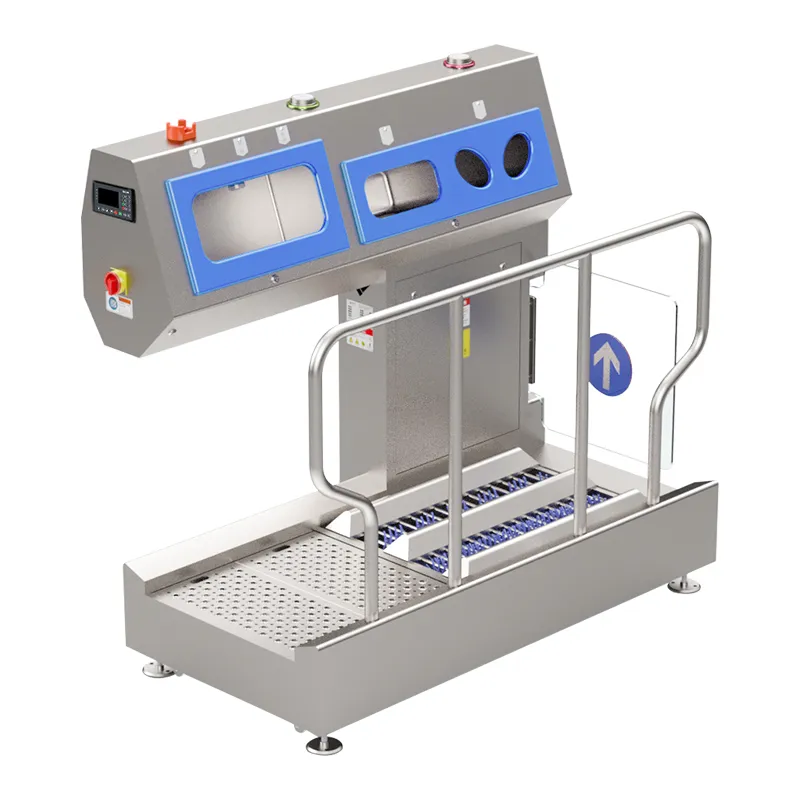
Boot sole cleaning systems help to:
- Remove dirt and organic residues
- Reduce microbial contamination
- Prevent cross-contamination between zones
This is especially critical in high-moisture and high-risk environments.
Automation: The Key to Real Compliance
Manual hygiene processes often fail due to:
- Human error
- Lack of supervision
- Time pressure
An automated hygiene station ensures:
- Standardized procedures
- Consistent execution
- Audit-ready compliance
This is particularly important for certifications such as:
- HACCP
- ISO 22000
- BRCGS
Built for Industrial Environments
The Woneclean hygiene station is designed for durability and hygiene:
- Stainless steel construction
- Corrosion-resistant design
- Easy cleaning and maintenance
- Hygienic structure with minimal contamination points
Applications
This system is widely used in:
- Food processing plants
- Meat processing facilities
- Central kitchens
- Bakeries
- Beverage factories
- Pharmaceutical cleanrooms
Business Value for Decision-Makers
For factory owners and QA managers, implementing a hygiene station provides:
- Reduced contamination risk
- Improved audit success rate
- Stronger food safety compliance
- Better operational efficiency
- Enhanced brand credibility
Conclusion
Food safety starts at the entrance.
A food factory hygiene station transforms hygiene procedures from manual actions into a controlled, automated system.
For companies aiming to meet international standards and scale globally, this is not just equipment—it is a critical investment in safety, compliance, and long-term success.
CTA
Looking to upgrade your factory hygiene system?
Contact Woneclean today for a customized hygiene station solution.