Introduction
Food factory flow design is a critical part of modern food safety management. Poor movement of people and materials can easily lead to cross contamination, microbial risks, and audit failures.
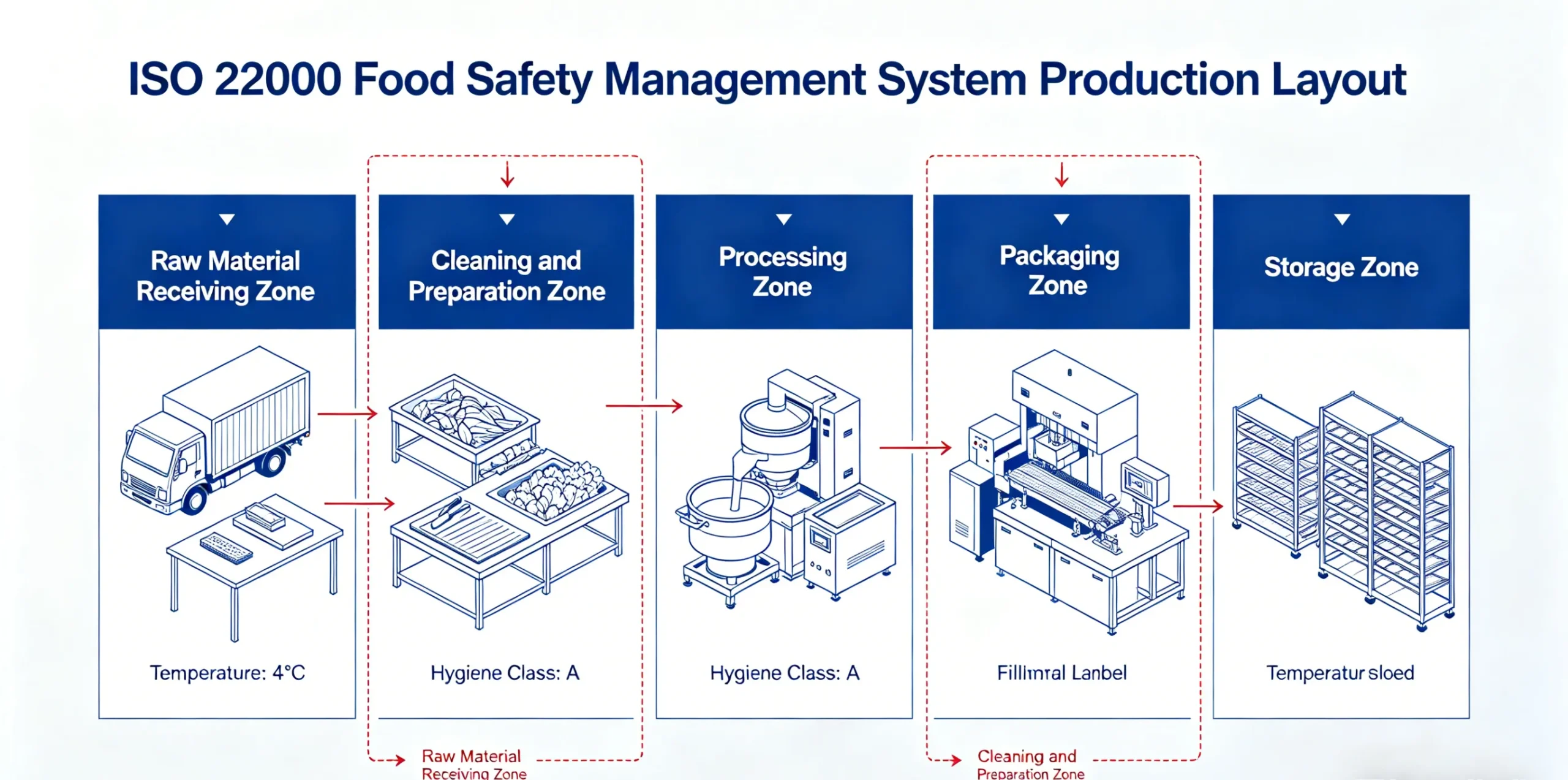
International standards such as ISO 22000, Codex Alimentarius Commission, U.S. Food and Drug Administration FSMA, and European Commission Regulation 852/2004 all require proper zoning and controlled movement in production areas.
01. Types of Flow in Food Factories
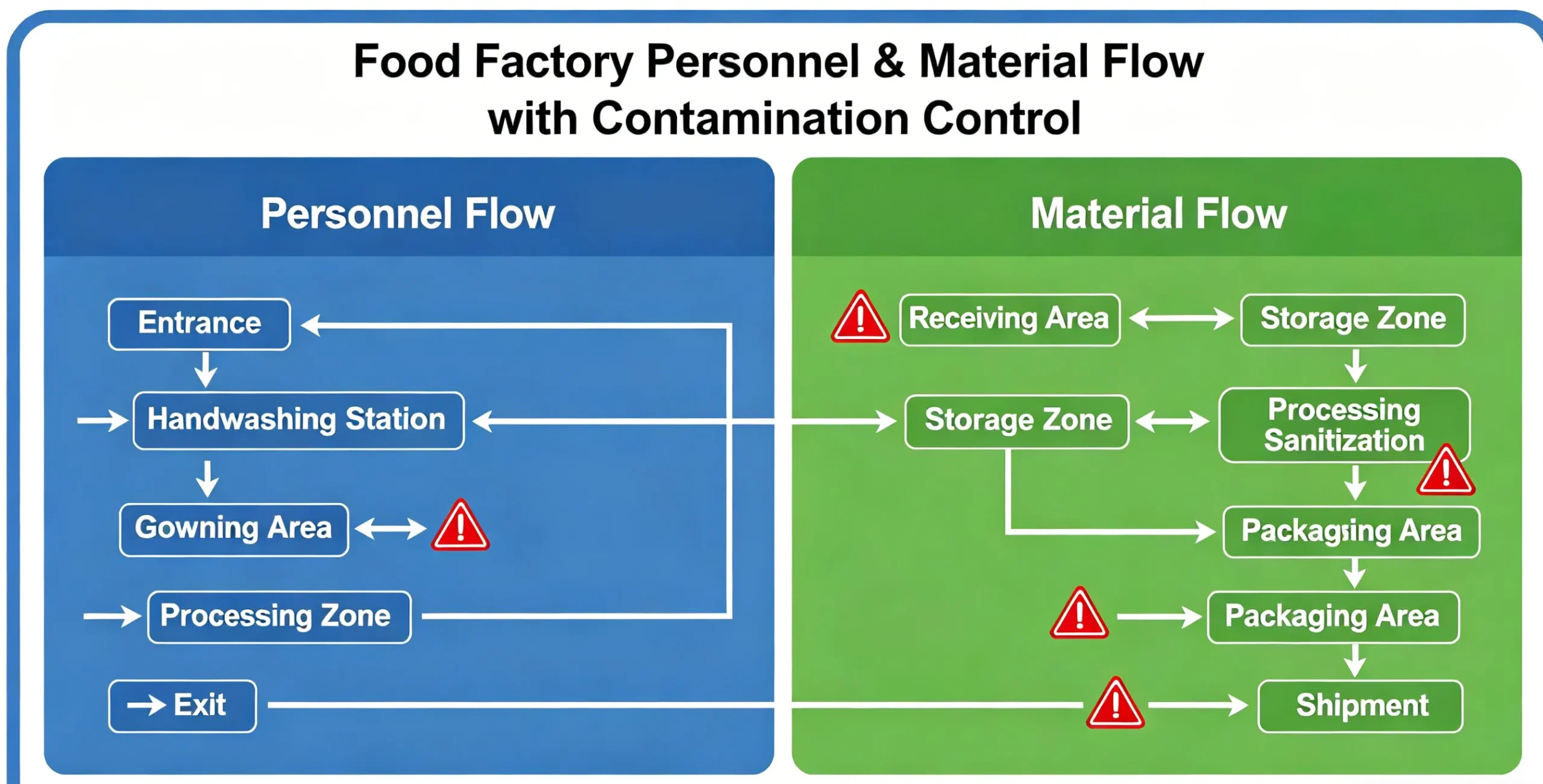
Personnel Flow
Includes:
- Production workers
- Maintenance staff
- QA/QC inspectors
- Visitors
Risk: contamination from clothing, hands, and movement.
2. Material Flow in Food Factory Flow Design
Material flow includes:
- Raw materials
- Packaging materials
- Semi-finished products
- Finished goods
- Clean tools and equipment
✔ Requirement:
Material must remain protected during movement inside production areas.
3. Waste Flow in Food Factory Flow Design
Waste flow includes:
- Food waste
- Used disposable items
- Dirty tools
- Contaminated uniforms
✔ Requirement:
Waste flow must be completely separated from clean flow.
02. Key Principles of Food Factory Flow Design
1. Separate Entry and Exit Routes
- Personnel and raw materials must use separate entrances
- Finished products and waste must use separate exits
- Clean and dirty flows must never share pathways
2. Hygiene Control for Flow Design
Personnel control steps:
- Change into clean uniform
- Hand washing and disinfection
- Hairnet, gloves, mask required
- Air shower (for high hygiene zones)
Material control steps:
- Remove outer packaging
- Clean and disinfect surface
- Use buffer room
- Transfer via pass box
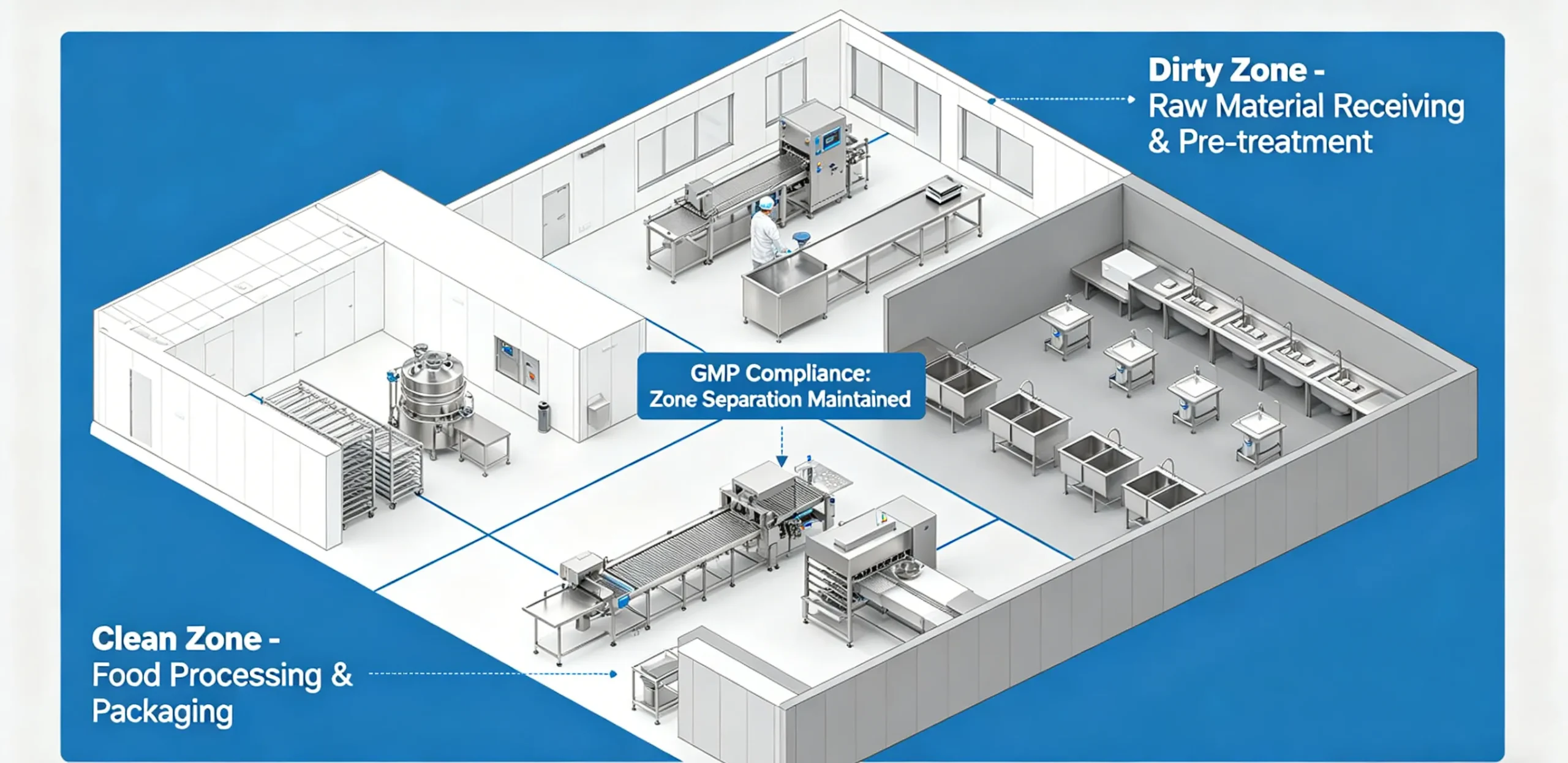
3. Hygienic Zoning in Flow Design
Food factory flow design must define:
- Low hygiene zone
- Medium hygiene zone
- High hygiene zone
✔ Rule: No uncontrolled crossing between zones.
4. Equipment Placement in Flow Design
- Non-production equipment must stay outside clean zones
- HVAC systems must avoid contamination airflow
- Allergen production must be separated
5. Vertical Transport in Flow Design
- Personnel elevators and material elevators must be separated
- Elevator shafts are contamination risk areas
- If unavoidable:
- Install airlock system OR
- Use positive pressure clean air system
03. Material Handling Rules
1. Semi-finished Product Control
- Must be treated as finished goods
- Must be labeled (batch/date/traceability)
- Stored under controlled conditions
- Re-entry = treated as raw material
2. Reusable Equipment Flow Control
- Must follow one-way movement
- Transition from dirty → clean requires:
- Cleaning
- Disinfection
- Buffer zone
- No direct return without sanitation
04. Reality of Flow Design
In real factories:
- Full automation is limited
- Human handling is still required
- Crossings cannot be fully eliminated
Therefore, food factory flow design focuses on:
✔ Controlled risk
✔ Hygiene barriers
✔ Process management
This aligns with ISO 22000 risk-based thinking.
05. Conclusion
Food factory flow design is not about eliminating all crossings, but about controlling them.
A proper system ensures:
- Separation of clean and dirty flows
- Controlled movement pathways
- Hygiene zoning discipline
- Risk-based contamination prevention
🌐 Outbound Links
- ISO 22000: https://www.iso.org/iso-22000-food-safety-management.html
- Codex GMP: https://www.fao.org/fao-who-codexalimentarius
- FDA FSMA: https://www.fda.gov/food/food-safety-modernization-act-fsma
- EU Hygiene Regulation: https://eur-lex.europa.eu/legal-content/EN/TXT/?uri=CELEX:32004R0852