Introduction: The Importance of BRC Audit in Meat Processing
For meat processing plants, BRC certification is more than just a compliance requirement. It signifies a commitment to food safety and quality management, which is increasingly crucial for gaining trust in the marketplace. However, meeting BRC standards—especially in terms of cleanliness and hygiene—can be challenging, as the audit process examines every aspect of a plant’s operations.
The good news is that, with the right equipment and approach, meat plants can not only pass the BRC audit but can also streamline their operations and reduce overhead costs. In this article, we’ll discuss how Woneclean’s Hygiene Stations and Foam Cleaning Systems can significantly improve the cleaning processes, making it easier for plants to meet BRC requirements.
The BRC Audit Process: What You Need to Know
Understanding the steps involved in the BRC audit process is the first step toward success. Here’s a quick breakdown:
1. Preparation Phase: Self-Assessment and Documentation
- Cleaning Audit: The first step is to ensure your plant meets BRC cleaning standards. This involves checking all areas of your facility, including production lines, storage, and processing areas.
- Employee Training: It’s crucial that employees are trained on the BRC standards, particularly regarding cleaning and hygiene protocols.
- Document Organization: BRC requires detailed records of cleaning schedules, equipment maintenance logs, and hygiene practices. Be sure to have these documents ready and up to date. For more on BRC standards and documentation, check the official BRC Global Standards website.
2. Cleaning and Sanitizing Before the Audit
- Equipment Cleaning: Prior to the audit, ensure all production equipment, storage areas, and surfaces are thoroughly cleaned and sanitized. This is especially important for areas prone to contamination, such as cutting equipment.
- Employee Hygiene: Employees must go through thorough sanitation before entering the production area to prevent cross-contamination. You can learn more about food plant cleaning practices from Food Safety News.
3. BRC Audit Implementation
Once the audit begins, BRC auditors will check various elements, including the cleanliness of equipment, the consistency of cleaning procedures, and the effectiveness of sanitizing practices. Any gaps will be flagged.
4. Report and Improvement
After the audit, a report will outline areas for improvement. The plant will need to take corrective actions within a specified time frame and submit an improvement plan.
Key Equipment to Improve Your BRC Audit: Hygiene Stations and Foam Cleaning Systems
1. Hygiene Stations: Automated Disinfection for Employees
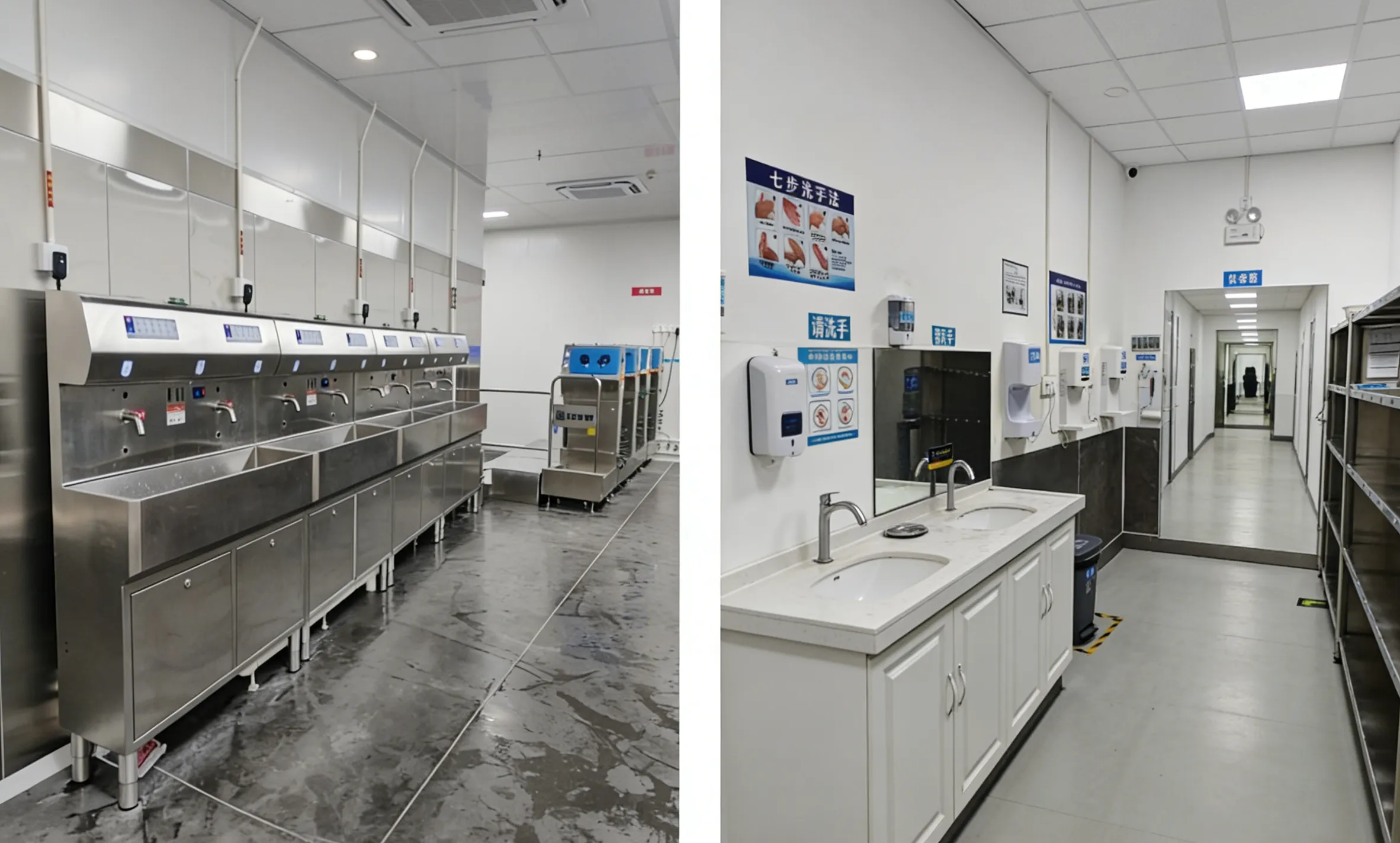
Hygiene stations are essential in the BRC audit, particularly in ensuring that employees are disinfected before entering production areas. Woneclean’s Hygiene Stations offer automated disinfecting solutions that ensure every employee follows the proper sanitization procedures.
- Automated Disinfection: Unlike manual hand sanitizing methods, Woneclean’s Hygiene Stations ensure each employee undergoes the same thorough disinfection process, meeting the BRC requirements.
- Time Efficiency: By automating the process, these stations save time, allowing for smoother transitions between shifts and reducing the risk of human error. Learn more about automated sanitation solutions in food safety at Food Safety Magazine.
2. Foam Cleaning Systems: Thorough Equipment Cleaning
Foam Cleaning Systems are an invaluable tool in meat processing plants where thorough cleaning is critical. These systems use high-pressure foam and water to clean every surface, including the hard-to-reach areas of equipment.
- Effective Deep Cleaning: The Foam Cleaning System’s high-pressure cleaning power penetrates deep into equipment surfaces and corners, ensuring no residue or bacteria is left behind.
- Meets BRC Standards: BRC requires that equipment cleaning is comprehensive and detailed. Foam Cleaning Systems provide a level of cleaning that manual methods often miss, ensuring compliance with the strict standards of the audit. Check out this guide on food equipment cleaning for further insights.
3. Standardized Cleaning Procedures: Ensuring Consistency and Traceability
To ensure your cleaning is up to BRC standards, you must follow a standardized cleaning process and maintain traceable records. Woneclean’s equipment offers comprehensive tracking and reporting tools that allow plants to maintain clean records.
- Cleaning Logs: All sanitation and cleaning activities are documented, ensuring full traceability for BRC auditors.
- Consistency Across Shifts: Standardized procedures ensure that cleaning is consistent across shifts, reducing variability and improving compliance.
Case Study: How Woneclean Products Helped a Meat Plant Pass the BRC Audit
Client Profile: A Large Meat Processing Plant
Industry: Meat Processing
Size: Over 5,000 tons of meat processed annually
Challenge: Previous failure to pass the BRC audit due to equipment cleaning issues, lack of traceable cleaning records, and inconsistent employee hygiene practices.
Issues Faced:
- Cleaning Dead Zones: Certain production equipment and surfaces were not thoroughly cleaned, leading to contamination risks.
- Inconsistent Employee Hygiene: The manual sanitation process failed to consistently meet BRC hygiene standards.
- Missing Cleaning Documentation: The plant lacked a standardized system for tracking cleaning activities, resulting in poor audit records.
Woneclean’s Solution:
- Hygiene Stations: The plant implemented Woneclean’s automated Hygiene Stations, ensuring all employees were properly disinfected before entering the production area.
- Foam Cleaning Systems: The plant used Woneclean’s Foam Cleaning Systems to clean hard-to-reach areas of production equipment, ensuring thorough sanitation and compliance with BRC guidelines.
- Standardized Procedures: Woneclean helped the plant implement a standardized cleaning procedure, complete with logging tools to maintain detailed records for auditing.
Results:
- Increased Audit Success Rate: The plant passed the BRC audit with a significantly higher score, especially in the areas of hygiene and equipment cleanliness.
- Efficiency Gains: Cleaning time decreased by 40%, leading to improved overall plant efficiency.
- Cost Savings: By reducing the need for manual labor in cleaning, the plant saved 25% in cleaning costs.
Conclusion: How Woneclean Products Can Help You Pass the BRC Audit
For meat processing plants, passing the BRC audit is an essential part of maintaining a high level of food safety and quality. Implementing Woneclean’s Hygiene Stations and Foam Cleaning Systems can dramatically improve cleaning efficiency, ensure compliance, and help you pass the BRC audit with confidence.
By choosing the right equipment, plants can address common audit challenges, streamline operations, and reduce costs, all while ensuring that they meet the rigorous requirements of the BRC standard. For more information on how Woneclean products can support your plant’s BRC journey, visit our official website.
Equipment Comparison Table: How Woneclean’s Products Aid in BRC Compliance
| Equipment | BRC Compliance Contribution | Key Benefits | Relevant External Resources |
|---|---|---|---|
| Hygiene Stations | Ensures consistent employee hygiene, vital for BRC audits. | Automated disinfection, reduces human error, improves time efficiency. | Food Safety Magazine on Automated Sanitation |
| Foam Cleaning Systems | Provides deep cleaning for equipment, ensuring compliance with BRC equipment hygiene standards. | High-pressure foam removes residue, bacteria, and contaminants from equipment. | FDA Food Equipment Cleaning |
| Standardized Procedures | Ensures cleaning consistency across shifts and traceability, a requirement for BRC audit records. | Clear documentation and reporting, standardized cleaning procedures. | [FDA Guide to Food Plant Cleaning](https://www.foodsafety.gov/food-safety-education/ |