Introduction: The Biggest Misunderstanding in Bakery Food Safety
When it comes to bakery contamination risks, many factories still rely on a common assumption:
“Everything is baked at high temperature, so contamination risk is low.”
Technically, baking does kill most microorganisms.
But in real factory environments, contamination rarely comes from the oven—it comes from everything before and after it.
👉 It comes from everything before and after baking.
According to the World Health Organization, 600 million people fall ill due to contaminated food each year.In bakery production, the pattern is clear:
- Products leave the oven safe
- They become contaminated during cooling, handling, or packaging
This is why modern audits like BRC and HACCP focus heavily on process control—not just temperature.
1. Raw Materials: The First Source of Bakery Contamination Risks
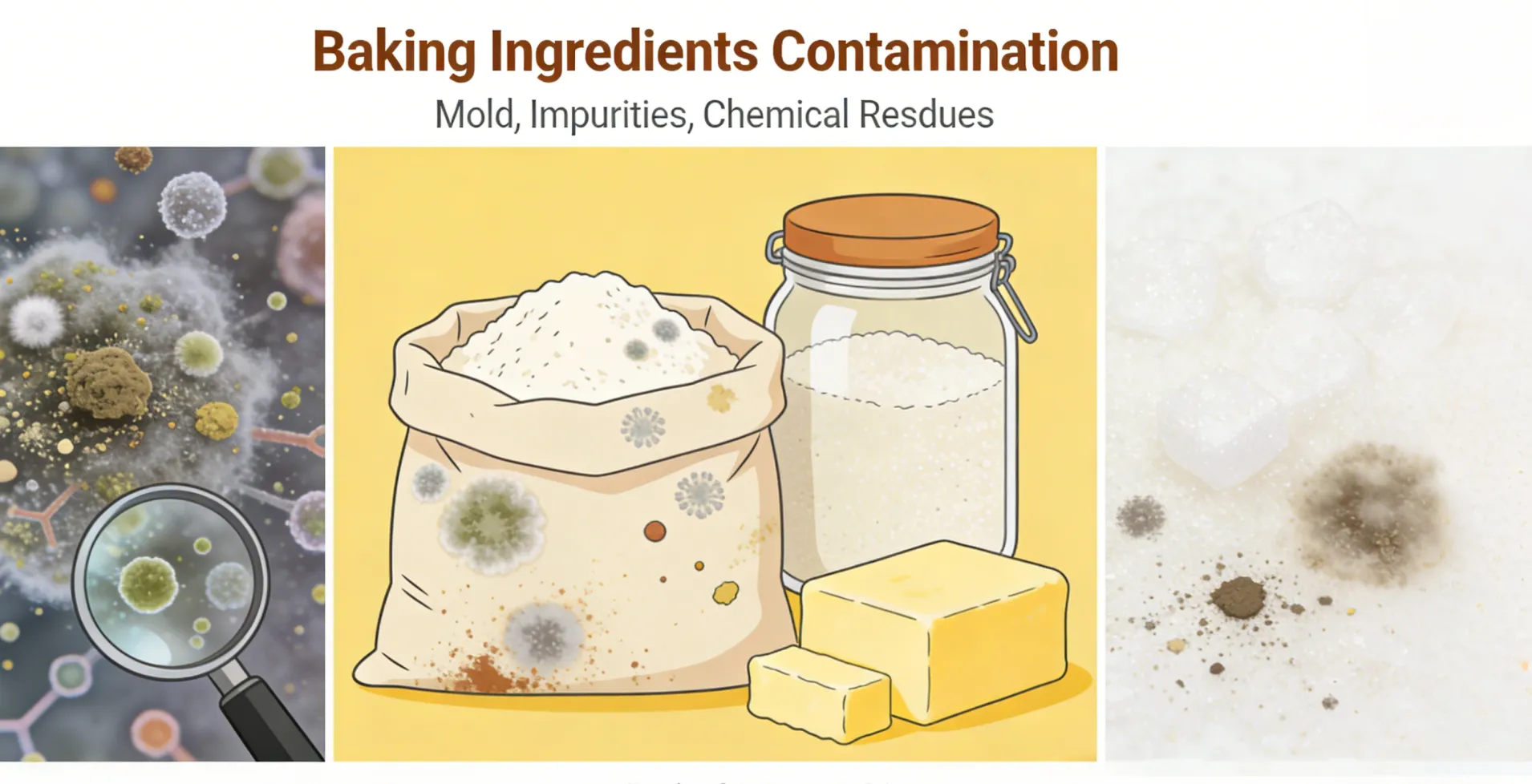
Many bakery operations underestimate the microbiological risk of dry ingredients.
Flour is not sterile. It can carry pathogens such as Salmonella and E. coli, which can survive for long periods.
You can read more about HACCP-based risk control here:
🔗 https://www.fda.gov/food/hazard-analysis-critical-control-point-haccp
Common gaps in bakeries:
- Over-reliance on supplier certificates
- No incoming raw material testing
- Poor storage control
- Powder handling contamination
Practical solutions:
- Risk-based raw material testing
- Segregated storage zones
- Controlled ingredient handling
👉 Internal reading:
🔗 https://www.woneclean.com/blog/raw-material-hygiene-food-factory
2. Cross-Contamination: A Common Risk in Bakery Production
Cross-contamination is one of the most common causes of food safety incidents.
Typical sources include:
- Shared equipment
- Employee movement
- Improper cleaning practices
The FDA highlights cross-contamination as a key food safety risk:
High-risk points:
- Dough handling
- Cooling transfer
- Packaging lines
What works:
- Hygienic zoning
- Color-coded cleaning tools
- Scheduled sanitation
3.Cooling Area: The Highest Bakery Contamination Risk After Baking
The cooling zone is where many bakery products become contaminated.
After baking, products are exposed to:
- Airborne microorganisms
- Dust
- Equipment surfaces
Industry analysis shows post-processing contamination is a major cause of bakery incidents:
🔗 https://www.foodsafetynews.com/
Common problems:
- Dirty conveyor belts
- No mid-shift cleaning
- Open cooling environments
Practical improvements:
- Treat cooling as a high-hygiene area
- Add cleaning during production
- Improve airflow control
👉 Internal reading:
🔗 https://www.woneclean.com/blog/conveyor-cleaning-food-industry
4. Cream-Filled Products: High-Risk Areas for Contamination in Bakery
Products with fillings carry significantly higher risk.
Why?
- No secondary heat treatment
- High moisture content
- Longer exposure time
Common issues:
- Filling equipment contamination
- Poor temperature control
- Residue buildup
Solutions:
- Cleaning validation
- Temperature monitoring
- Reduced exposure time
5. Allergen Cross-Contact: The Leading Cause of Bakery Contamination Incidents
Allergen contamination is now the leading cause of bakery recalls.
You can explore recall data here:
🔗 https://www.fda.gov/safety/recalls-market-withdrawals-safety-alerts
Common allergens:
- Wheat
- Milk
- Eggs
- Nuts
Where problems happen:
- Incomplete cleaning
- Mislabeling
- Shared equipment
Solutions:
- Allergen segregation
- Production scheduling
- Cleaning verification
👉 Internal reading:
🔗 https://www.woneclean.com/blog/brc-audit-bakery
6. Equipment Hygiene: Hidden Contamination Risks in Bakery Cleaning
Most factories have cleaning procedures—but execution is inconsistent.
Common issues:
- Hard-to-reach areas missed
- Conveyor undersides ignored
- Inconsistent cleaning quality
Hidden risk: Biofilm
Biofilms protect bacteria and make cleaning difficult.
Learn more about sanitation best practices:
🔗 https://www.ecolab.com/insights
Better approach:
- Foam cleaning systems
- Standardized cleaning procedures
- Focus on critical equipment
7. Summary Table: Key Risks and Controls
| Risk Type | Source | Risk Level | Control Strategy |
|---|---|---|---|
| Raw materials | Flour, eggs | High | Testing, supplier control |
| Cross-contamination | Equipment, personnel | High | Zoning, sanitation |
| Cooling contamination | Air, conveyors | Very High | Hygiene control, cleaning |
| Filling contamination | Equipment, temperature | Very High | Validation, monitoring |
| Allergen cross-contact | Shared lines | Critical | Segregation, verification |
| Equipment hygiene | Residue, biofilm | High | Standardized cleaning |
Conclusion: Consistency Is What Makes the Difference
The best-performing bakery factories are not the ones that clean the most, but the ones that consistently control bakery contamination risks across every stage of production.
They are the ones that clean consistently and effectively.
They focus on:
- Real contamination points
- Process control
- Reducing human variability
This leads to:
- Better audit performance
- Lower risk
- Higher customer trust
How Woneclean Supports Bakery Factories
In real production, the challenge is not knowing what to do—it’s doing it consistently.
Woneclean helps bakeries:
- Improve conveyor cleaning
- Standardize sanitation
- Reduce contamination risks
Explore more solutions here:
🔗 https://www.woneclean.com/