Employee hygiene training is essential in food manufacturing. Workers need to understand when to wash their hands, how to wear protective clothing, and why personal cleanliness matters.
But there is a problem: knowing what to do does not always mean doing it correctly.
An employee may complete hygiene training, understand the correct handwashing procedure, and still enter a production area without following every required hygiene step. Sometimes the problem is not a lack of knowledge. It is the way the factory is designed and how employees move through different hygiene zones.
A handwashing station placed too far from an entrance, unclear footwear cleaning procedures, or an uncontrolled route between raw material and finished product areas can create opportunities for cross-contamination.
This is why employee hygiene should not depend on training alone. It needs to be supported by appropriate hygiene equipment, facility layout, and effective personnel movement management.
1. Why Hygiene Training Alone Is Not Enough
Training helps employees understand hygiene requirements, but it cannot guarantee that every procedure will be followed consistently during daily operations.
In a busy factory, employees may need to:
- Enter and leave production areas several times during a shift.
- Move between different processing zones.
- Handle raw materials, packaging, equipment, and finished products.
- Take breaks and return to their workstations.
- Change protective clothing or footwear when entering different hygiene areas.
Every movement creates a potential opportunity for contamination if the correct hygiene controls are not followed.
For example, an employee working in a raw meat processing area may later enter a higher-hygiene packaging area. If the transition does not include appropriate footwear changes, hand hygiene, and protective clothing controls, contamination may be transferred between zones.
The same problem can occur when employees touch door handles, shared equipment, waste containers, or other potentially contaminated surfaces before handling food or food-contact equipment.
Training explains the correct behavior. However, factory management must also make sure that the working environment supports that behavior.
The real question is not only whether employees know the rules, but whether the factory makes it practical to follow them.
2. Employee Movement: Where Does Cross-Contamination Begin?
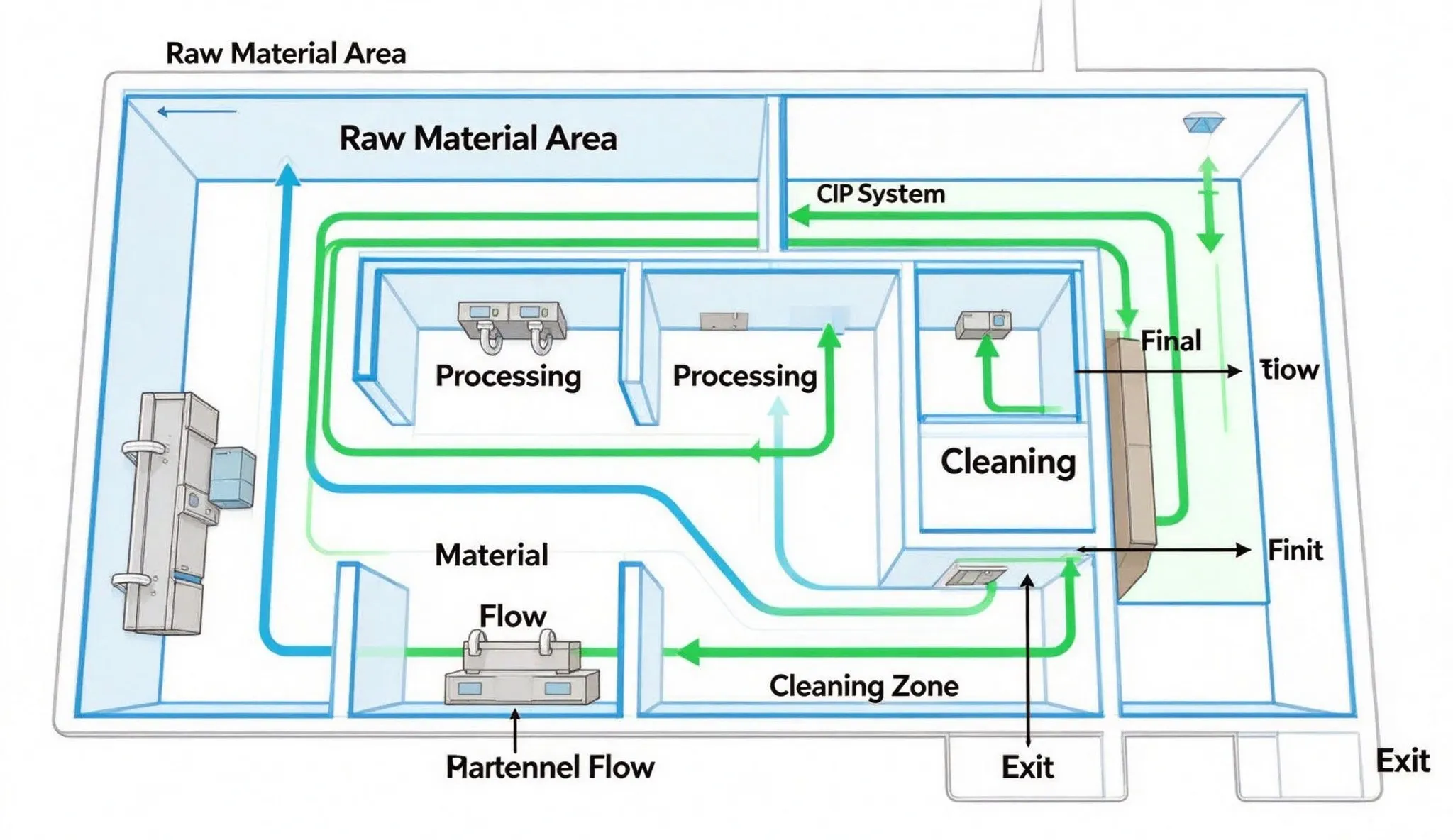
Personnel movement is an important consideration when planning hygiene controls in food factories.
Employees do not move directly from outside the factory into production. They usually pass through several areas, including changing rooms, handwashing areas, footwear cleaning points, and production entrances.
If these transitions are poorly planned, employees may carry contamination from one area into another.
2.1 Separate Different Hygiene Zones
A factory should identify areas according to their operational and contamination risks.
For example:
| Area | Typical hygiene consideration |
|---|---|
| External and receiving areas | Control dirt and contamination brought in from outside |
| Changing rooms | Separate personal clothing from factory workwear |
| General production areas | Maintain appropriate personal and footwear hygiene |
| Raw material processing areas | Prevent contamination from spreading to other operations |
| High-care or ready-to-eat areas | Apply stricter personnel and material entry controls |
The exact zoning system depends on the product, process, facility design, and food safety risk assessment.
Employees should not move freely between areas with different hygiene requirements without following the appropriate transition procedures.
Where practical, factories should establish controlled personnel routes and separate the movement of raw materials, finished products, waste, and employees.
This helps reduce unnecessary contact between different operational zones.
2.2 Plan Personnel Routes Before Installing Hygiene Equipment
One common planning mistake is choosing hygiene equipment first and deciding where to install it afterward.
A better approach is to understand how employees actually move through the factory.
For example:
- Where do employees enter the building?
- Where do they change into protective clothing?
- Where should they wash and disinfect their hands?
- Where do they clean their footwear?
- Which production areas require additional hygiene controls?
- Can employees enter production without passing through the required hygiene checkpoints?
These questions should be considered during factory layout planning.
A well-designed personnel route should guide employees through the required hygiene procedures before they enter controlled production areas.
3. Handwashing Facilities Must Be in the Right Place
Handwashing is one of the most important personal hygiene practices in food manufacturing.
However, simply installing handwashing equipment does not guarantee effective hand hygiene.
Location and accessibility matter.
These requirements highlight two important considerations: facilities must be available, and employees must be able to use them at the appropriate times.
3.1 Common Handwashing Facility Problems
| Problem | Potential consequence |
|---|---|
| Handwashing stations are too far from production entrances | Employees may skip the procedure |
| Insufficient washing positions | Employees may rush during shift changes |
| Soap or hand-drying supplies are unavailable | The handwashing process becomes incomplete |
| Poorly designed handwashing equipment | Employees may not follow the intended procedure |
| No clear hygiene checkpoint | Employees may enter production without completing required steps |
3.2 Make Hand Hygiene Part of the Entry Process
Handwashing facilities should be placed at suitable locations based on employee movement and production risks.
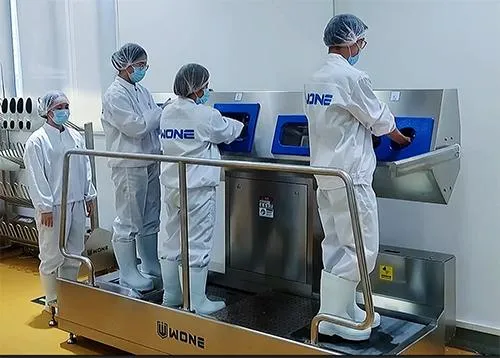
For factories with frequent personnel entry, a dedicated hygiene station can combine several functions in one controlled area.
Depending on the model and process requirements, a personnel hygiene station may integrate:
- Automatic handwashing.
- Soap dispensing.
- Hand drying.
- Hand disinfection.
- Footwear sole cleaning.
- Access control.
For example, WONE Clean’s PBW series personnel hygiene stations can integrate multiple hygiene functions into a single entry point.
This helps factories organize personnel hygiene procedures without installing every function as a separate station.
However, equipment selection should always match the actual hygiene requirements, employee volume, available space, and factory layout.
4. Footwear Hygiene: An Often-Overlooked Part of Personnel Control
Employees can carry contamination not only through their hands but also through their footwear.
Shoes and boots may come into contact with:
- Raw material residues.
- Organic matter.
- Mud and dirt.
- Contaminated floors.
- Waste and wastewater.
If employees move between different hygiene zones without appropriate footwear controls, contaminants may be transferred through the factory.
This is particularly important in meat processing, poultry processing, seafood production, dairy manufacturing, and other wet processing environments.
4.1 Cleaning and Disinfection Are Not the Same
Footwear hygiene procedures should distinguish between removing visible dirt and reducing microbial contamination.
A typical control approach may include:
- Remove visible contamination: Clean footwear surfaces and soles to remove accumulated dirt and organic residues.
- Apply disinfection where required: Use an appropriate disinfectant under the specified concentration and contact-time conditions.
- Control movement between zones: Prevent footwear used in one hygiene zone from entering another zone without the required transition procedure.
A disinfection step should not be treated as a replacement for cleaning.
Organic matter and accumulated dirt can interfere with the effectiveness of disinfectants. Therefore, footwear cleaning should be considered as part of the overall hygiene process.
4.2 Choose Equipment According to the Actual Requirement
Different factories have different footwear hygiene needs.
For example:
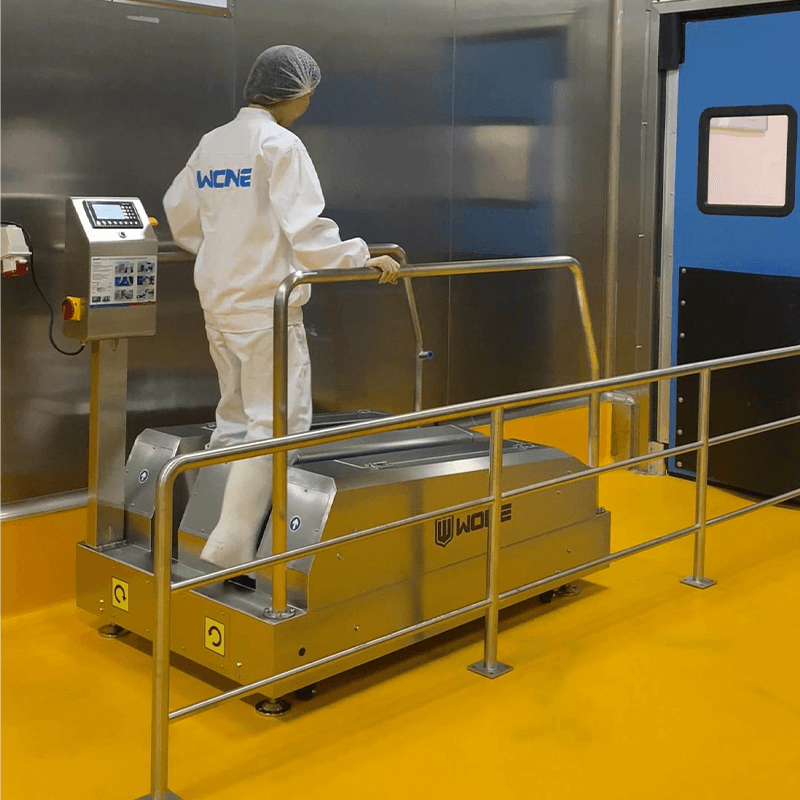
- Sole cleaning equipment can help remove dirt from footwear soles.
- Boot cleaning equipment can support the cleaning of boot surfaces in wet processing environments.
- Integrated hygiene stations can combine sole cleaning with other personnel hygiene functions.
The important point is to select equipment based on the footwear type, contamination level, cleaning frequency, and hygiene zoning requirements.
Not every factory needs the same equipment configuration.
5. Can Employees Easily Bypass Hygiene Procedures?
This is an important question for factory managers.
Even when hygiene rules are clearly written, employees may find alternative routes if the facility layout does not support the intended process.
For example:
- A side door allows employees to enter production without passing through the hygiene station.
- Employees use another entrance during busy shift changes.
- Handwashing facilities are available, but not located along the normal personnel route.
- Footwear cleaning equipment is installed away from the actual production entrance.
- Visitors and maintenance workers enter controlled areas without following the same hygiene procedures.
These situations create gaps between written hygiene procedures and actual factory operations.
5.1 Design Hygiene Checkpoints Around Real Employee Behavior
Factories should evaluate whether employees can bypass required hygiene steps.
Practical measures include:
- Positioning hygiene stations along normal personnel entry routes.
- Controlling access to higher-hygiene production areas.
- Separating employee entrances from material and waste routes where practical.
- Providing clear signs and visible hygiene instructions.
- Using access control systems where appropriate.
- Establishing procedures for visitors, contractors, and maintenance personnel.
For facilities with stricter access requirements, integrated personnel hygiene stations can combine hygiene functions with access control.
For example, selected PBW series models can connect personnel hygiene procedures with access management, helping factories establish more controlled entry points.
Access control should support hygiene management, not replace it. Employees must still complete the required cleaning and disinfection procedures correctly.
6. Changing Rooms and Personnel Facilities Are Part of the Hygiene System
Personnel hygiene management begins before employees reach the production entrance.
Changing rooms and lockers help separate personal belongings from work clothing and protective equipment.
Without appropriate storage arrangements, personal clothing, footwear, and workwear may become mixed together.
A properly planned changing room should consider:
- Separate storage for personal clothing and workwear where required.
- Sufficient locker capacity for the number of employees.
- Suitable space for changing footwear.
- Clear routes from changing rooms to handwashing and footwear hygiene areas.
- Appropriate arrangements for storing clean protective clothing.
For larger factories, personnel movement should also be considered during shift changes.
If too many employees need to use the same changing and hygiene facilities at the same time, congestion may lead to rushed or incomplete procedures.
The number and capacity of lockers, handwashing positions, and hygiene stations should therefore be planned according to actual employee numbers and peak usage.
7. How to Build a More Effective Personnel Hygiene System
Effective personnel hygiene requires several elements to work together.
| Management element | What factories should consider |
|---|---|
| Employee training | Explain hygiene procedures and contamination risks |
| Personnel movement | Establish controlled routes between hygiene zones |
| Changing rooms | Separate personal clothing and workwear |
| Hand hygiene | Provide accessible handwashing and disinfection facilities where required |
| Footwear hygiene | Establish appropriate cleaning and disinfection procedures |
| Access management | Prevent uncontrolled entry into higher-hygiene areas |
| Supervision | Check whether employees follow procedures during actual operations |
Factories can also conduct regular hygiene inspections to identify gaps between written procedures and actual employee behavior.
Useful inspection questions include:
- Do employees pass through the required hygiene checkpoints?
- Are handwashing facilities accessible and properly maintained?
- Are footwear cleaning procedures followed before entering controlled areas?
- Are raw material and finished product routes adequately separated?
- Can employees or visitors bypass hygiene controls?
- Are hygiene facilities sufficient during peak shift changes?
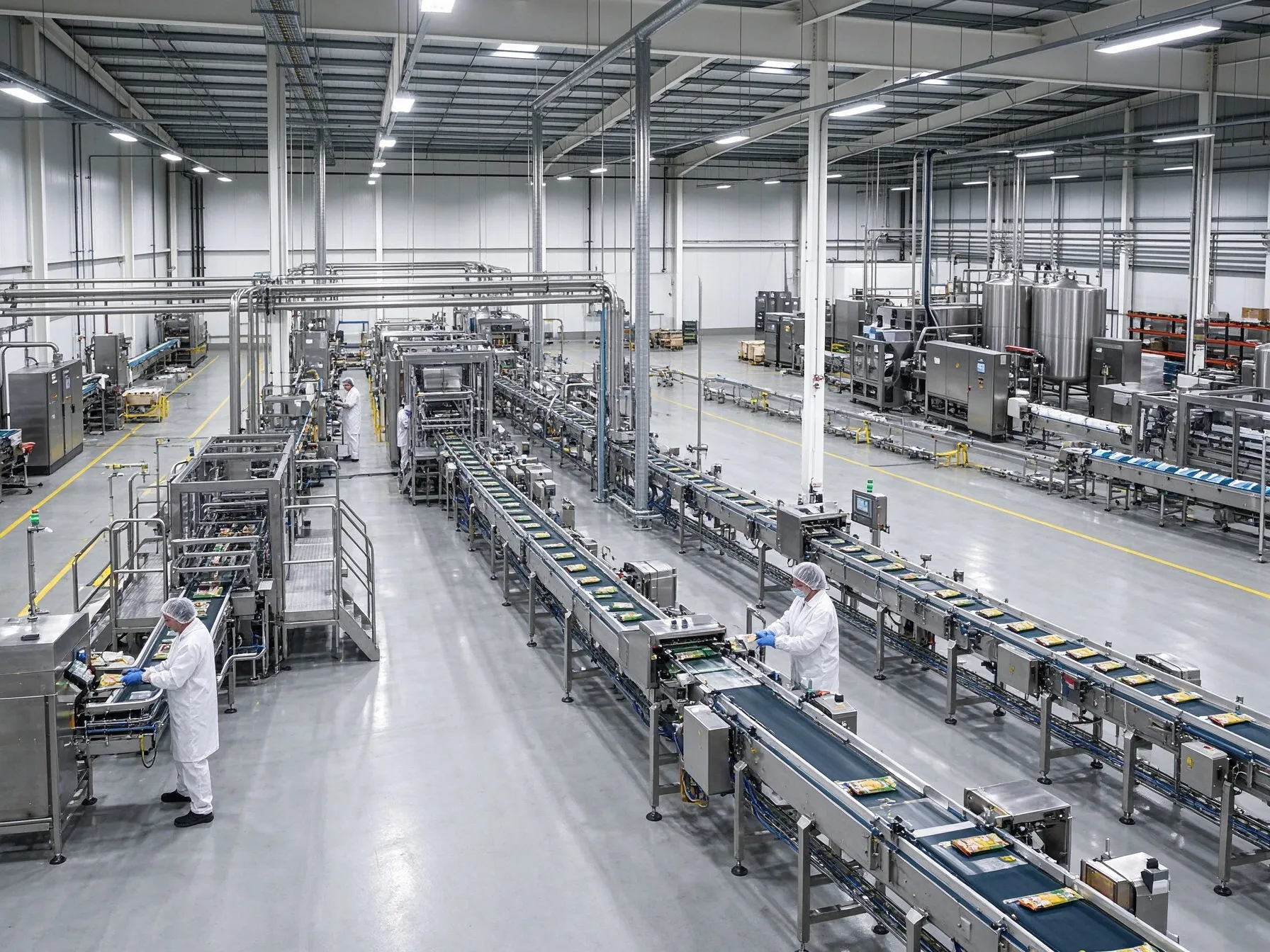
The purpose is not simply to check whether equipment has been installed. It is to verify whether the complete personnel hygiene system works as intended.
8. Plan Personnel Hygiene Before Problems Occur
Employee hygiene is not just an individual responsibility. It is also a facility planning and management issue.
Training tells employees what they should do. Hygiene equipment provides the tools to perform those tasks. Factory layout determines whether employees can follow the procedures consistently.
For food manufacturers planning a new facility, expanding production capacity, or upgrading existing hygiene controls, personnel routes and hygiene checkpoints should be considered early in the design process.
WONE Clean provides personnel hygiene stations, handwashing equipment, footwear cleaning equipment, and stainless steel changing room storage solutions for factories with demanding hygiene requirements.
Depending on the project, different equipment can be combined to create a personnel hygiene arrangement based on employee numbers, production zones, available space, and entry procedures.
A hygiene procedure should be easy to follow, not just easy to explain.
The goal is to build a working environment where the correct hygiene behavior becomes part of the normal production process, helping reduce opportunities for cross-contamination.
Planning a personnel hygiene area for your factory?
Contact WONE Clean to discuss your employee numbers, production layout, and hygiene requirements.