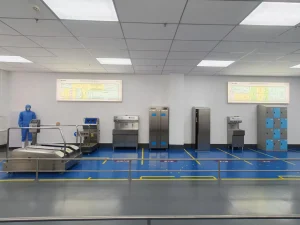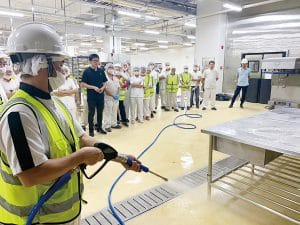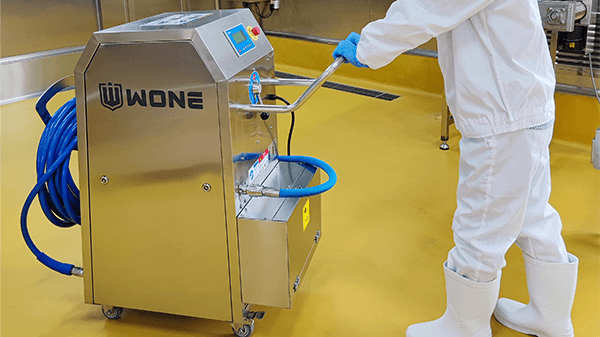
In central kitchens and food processing facilities, heavy grease on cooking pans, kettles, and other equipment can become a difficult cleaning challenge. A mobile foam cleaning machine provides an efficient solution by combining foam cleaning, high-pressure rinsing, and disinfection in one mobile system.
Cooking equipment faces high temperatures, oil, grease, and food residues every day. Over time, these contaminants can build up and become difficult to remove. As a result, food processing facilities need an efficient cleaning method that can reduce manual scrubbing while maintaining consistent hygiene standards.
In this article, we explain how to use a mobile foam cleaning machine to remove heavy grease from cooking pans and improve cleaning efficiency in central kitchens.
Why Use Foam Cleaning for Heavy Grease?
Effective cleaning depends on several key factors, including chemical action, mechanical action, temperature, and contact time. By combining these factors, foam cleaning can improve the removal of stubborn grease and food residues.
1. Chemical Action and Foam Coverage
First, the right cleaning chemical plays an important role in removing heavy grease.
For cooking oils, animal fats, and food residues, an appropriate alkaline cleaning chemical can help break down and emulsify grease. As a result, the grease becomes easier to remove from equipment surfaces.
At the same time, foam improves surface coverage. Unlike liquid cleaners that quickly run down vertical surfaces, foam can stay on the surface for longer. Therefore, the cleaning chemical has more time to work on grease and other contaminants.
2. High-Pressure Water for Mechanical Cleaning
Next, high-pressure water provides the mechanical force needed to remove softened grease and food residues.
After the cleaning chemical breaks down the grease, operators can use high-pressure water to rinse away the loosened contaminants. As a result, they can reduce manual scrubbing and complete the cleaning process more efficiently.
3. Suitable Water Temperature
In addition, water temperature can affect grease removal.
Warm water can help soften oil and fat deposits, making them easier to remove. Depending on the cleaning chemical and equipment requirements, operators can use water around 40–60°C for pre-rinsing and final rinsing.
However, operators should always follow the equipment specifications and the cleaning chemical manufacturer’s recommendations.
4. Sufficient Contact Time
Finally, cleaning chemicals need enough contact time to work effectively.
After applying the foam, allow it to remain on the surface for approximately 10–15 minutes, or follow the contact time recommended by the chemical manufacturer.
For heavier grease buildup, operators may need a longer contact time. However, do not allow the foam to dry on the equipment surface. Keeping the foam wet helps maintain effective chemical action.
Mobile Foam Cleaning Machine for Central Kitchens
A mobile foam cleaning machine provides a flexible cleaning solution for central kitchens, food factories, and other food processing environments.
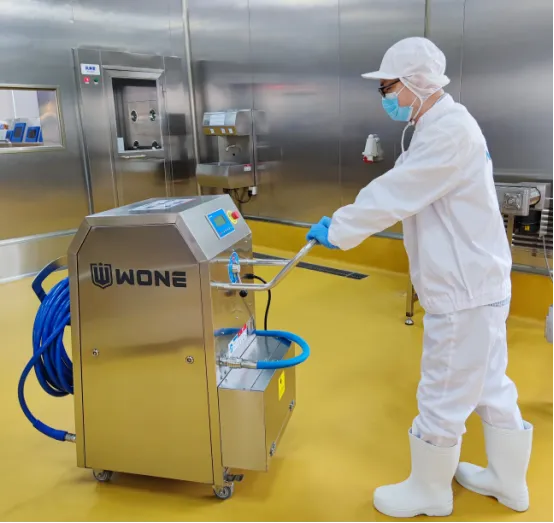
The system combines high-pressure water rinsing, foam cleaning, and disinfection in one mobile unit. Because of its mobile design, operators can move the machine between different production areas without installing a separate fixed cleaning station in every location.
Key Advantages of Mobile Foam Cleaning Equipment
1. Flexible Cleaning in Different Areas
Central kitchens often contain different production zones, equipment areas, and physical partitions. Therefore, a fixed cleaning system may not provide convenient access to every location.
A mobile foam cleaning machine solves this problem by allowing operators to move the equipment directly to the required cleaning area.
With a suitable water and power supply, operators can perform cleaning in different areas without installing extensive fixed piping systems.
As a result, the same cleaning machine can support multiple areas within a central kitchen or food processing facility.
2. Simple Mode Switching
In addition, the mobile foam cleaning machine simplifies daily operation.
A multifunctional valve allows operators to switch between water rinsing, foam cleaning, and disinfection. Instead of adjusting several valves manually, operators can select the required cleaning function more easily.
This means the cleaning process becomes simpler and easier to standardize across different operators and production areas.
3. Secure Chemical Storage
Chemical management also plays an important role in food processing hygiene.
For this reason, WONE can equip the mobile cleaning machine with a lockable chemical cabinet. Operators can store cleaning and disinfection chemicals in one designated area.
As a result, the system helps reduce unauthorized chemical use and prevents chemical containers from being placed randomly around the production area.
4. Color-Coded Accessories
Moreover, color-coded nozzles help operators identify different cleaning functions quickly.
For example, operators can use the designated nozzle for water rinsing, foam application, or disinfection. The equipment also provides dedicated storage positions for spray guns, hoses, and nozzles.
Therefore, operators can keep accessories organized and reduce the risk of losing or incorrectly using cleaning components.
5. Cleaning Data Management
Furthermore, the i-clean intelligent controller helps operators monitor water and chemical consumption during cleaning and disinfection.
This information can support daily cleaning management and resource control. As a result, food processing facilities can better understand their cleaning consumption and improve their cleaning procedures.
For facilities that need stronger cleaning traceability, digital monitoring can also support more standardized hygiene management.
How to Clean a Cooking Pan with a Mobile Foam Cleaning Machine
For heavy grease on cooking pans and other kitchen equipment, operators can follow a standardized cleaning procedure.
First, prepare the equipment, cleaning chemicals, and personal protective equipment. Then, follow the cleaning steps below.
Step 1: Prepare the Area and Protect Employees
Before starting the cleaning process:
- Remove all food, ingredients, and semi-finished products from the cooking area.
- Switch off electrical equipment where necessary.
- Protect electrical components, control panels, motors, and other water-sensitive parts.
- Wear appropriate PPE, including chemical-resistant gloves, protective clothing, and safety goggles.
- Use a scraper or suitable manual cleaning tool to remove large food residues and heavy grease deposits.
By completing these preparations first, operators can create a safer and more effective cleaning environment.
Step 2: Pre-Rinse the Cooking Pan
Next, connect the mobile foam cleaning machine to the appropriate water and power supplies.
Select the water rinsing mode and install the correct rinsing nozzle.
Rinse the cooking pan and surrounding surfaces to remove loose food residues, surface grease, and other contaminants.
As a result, the surface becomes cleaner and ready for the foam cleaning stage.
Step 3: Apply Cleaning Foam
After pre-rinsing, switch the system to foam mode and install the foam nozzle.
Place the appropriate cleaning chemical in the chemical container and connect the chemical suction system.
Then, apply the foam evenly over the internal and external surfaces of the cooking pan.
For heavy grease, make sure the foam covers the contaminated areas evenly. Avoid excessive chemical use and always follow the chemical manufacturer’s recommended concentration.
Step 4: Allow the Foam to Work
After applying the foam, allow it to remain on the surface for approximately 10–15 minutes, or follow the recommended contact time provided by the chemical manufacturer.
During this period, the cleaning chemical works on the grease and food residues.
For particularly heavy contamination, operators may extend the contact time according to the chemical manufacturer’s instructions.
However, do not allow the foam to dry on the surface. If necessary, apply additional foam to keep the surface wet.
Step 5: Scrub Stubborn Areas
In some cases, heavy or carbonized grease may require additional mechanical action.
Use a suitable cleaning brush or pad to scrub stubborn areas, corners, edges, and other difficult-to-clean surfaces.
This additional step helps remove residues that chemical action alone may not completely eliminate.
Step 6: Perform the Final High-Pressure Rinse
After the cleaning chemical has had enough contact time, switch the system back to water rinsing mode.
Use high-pressure water to remove the foam, loosened grease, and food residues from the cooking pan.
For better coverage, rinse systematically from top to bottom and from one side to the other.
After rinsing, inspect the surface carefully. The equipment should show no visible grease, food residues, or cleaning foam.
Step 7: Disinfect the Equipment
Once the cleaning stage is complete, switch the system to disinfection mode and install the appropriate disinfection nozzle.
Apply the approved disinfectant according to the chemical manufacturer’s instructions. In particular, follow the required concentration and contact time.
After the required contact time, complete a final potable-water rinse when the disinfectant instructions require it.
This step helps complete the cleaning and sanitation process before the equipment returns to production.
Step 8: Inspect and Store the Equipment
Finally, inspect the cooking pan and surrounding equipment.
Check all surfaces for visible grease, food residues, or chemical residue. If necessary, repeat the relevant cleaning step.
After completing the inspection, return the spray gun, hose, and nozzles to their designated storage positions.
Keeping the equipment clean and organized helps operators prepare quickly for the next cleaning cycle.
How Mobile Foam Cleaning Improves Central Kitchen Hygiene
Heavy grease cleaning does not have to rely entirely on repeated manual scrubbing.
Instead, a mobile foam cleaning machine can combine chemical cleaning, foam application, high-pressure rinsing, and disinfection into one structured cleaning process.
For central kitchens and food processing facilities, this approach can help:
- Reduce manual cleaning workload
- Improve cleaning efficiency
- Improve foam coverage on equipment surfaces
- Standardize daily cleaning procedures
- Improve water and chemical management
- Support better hygiene control
- Make cleaning equipment easier to move between production areas
Most importantly, a standardized cleaning process can help operators achieve more consistent cleaning results while reducing unnecessary labor.
Choose a Mobile Cleaning Solution for Your Food Processing Facility
For central kitchens, catering facilities, food factories, and other food processing environments, heavy grease can create a significant daily cleaning challenge.
With the right cleaning equipment, however, operators can make this process more efficient and easier to manage.
WONE’s mobile foam cleaning systems combine foam application, high-pressure water cleaning, and disinfection in one flexible solution. The mobile design allows operators to move the equipment between different cleaning areas, while the intelligent control system supports better cleaning management.
If you are looking for a mobile foam cleaning machine for your central kitchen or food processing facility, contact WONE to discuss your cleaning requirements and find a suitable solution.